


Trade Show TalesBlog

Author Archive

Seven Questions You’ll Never Ask About Your Trade Show Display

October 13th, 2015 COMMENTS
Questions

Do you believe the expression “There’s no substitute for experience”?

Let’s say you live in Topeka, KS. You’ve tried all the pizza shops in Topeka and have concluded that Johnny’s Pizza is the best pizza — anywhere. I could be wrong, but I suspect there are a few New Yorkers, Bostonians, or Chicagoans who would disagree. But what do they know… they haven’t tried Johnny’s Pizza.

We’ll concede that you know Topeka pizzas. Now, it’s time to buy a trade show display. Unlike lawn mowers, cameras, or smartphones, there’s no Consumer Reports and your experience is limited. So, you do your research on the web, and if you are smart, you consult with a trade show exhibit professional. You ask the right questions about design, assembly, and how much it weighs. You even ask to see the warranty.

However, there are questions you won’t ask. How do I know? Because no exhibit manager has ever asked me these questions… and they should.

Q1. Will the Metal Look the Same After 10 Shows?

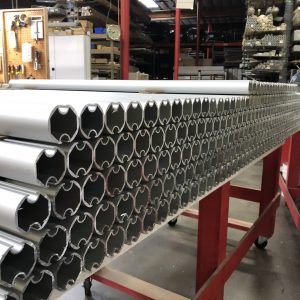
Engineered Aluminum Extrusion

Have you ever bought a screwdriver at a discount store only to have the tip twist? So you throw it away and realize that a Kraftsman isn’t a Craftsman. About 60-70% of all trade show exhibits have a skeleton of aluminum extrusion. Sometimes it’s visible, sometimes not. The dirty little secret is that it’s cheaper to use low quality extrusions with thin walls and a sub-par finish. Over time, it distorts, mars, and looks tarnished. Your new booth becomes a used booth before you’ve wrapped-up your current marketing campaign.

Ask about the manufacturer of the extrusion? There are recognized names and then there are Kraftsman. You may not recognize the name but that’s the beauty of Google. If someone tells you, “an extrusion is an extrusion,” walk away.

Q2. What’s the Quality of the Fabric Graphics

The rise of Fast Fashion has revolutionized the apparel industry (think H&M and Forever 21).  There’s a market for disposable fashion. It’s cheap and attractive. But no one expects it to last or have the attention to detail of high-quality apparel.

Fabric for graphics, like clothing, is not all the same. Most inexpensive displays are shrouded with thin, stretchy fabric made with low quality zippers or cheap velcro. And yes, there’s a pecking order to hook and loop as well. The fabric graphic is meant to be disposable… even if it’s not sold that way. You can feel the difference. Trust your hand.

Q3. What’s the Quality of the Fabric Printing

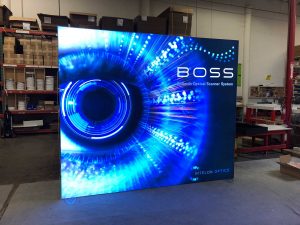
Backlit Fabric Graphics

One ever thinks about this but they should. Dye-sublimated printing, the predominant type of printing for fabric graphics, is a high-tech process. And with any technology, the latest and greatest is old news in about 12-18 months. The previous generation of dye-sub printers get sold to second or third-tier printers. If you’ve ever seen the difference between an HD dye-sub graphic and a 4-color one, you know what I mean. Skin tones are more realistic. Black is black not dark grey. There’s no color banding . You get the picture.

Ask when was the printer was manufactured (not re-manufactured or purchased). And even if it’s only been owned by a little old lady in Pasadena and stored in a garage, it’s still an AMC Hornet.

Q4. Is the Packaging Material Reusable?

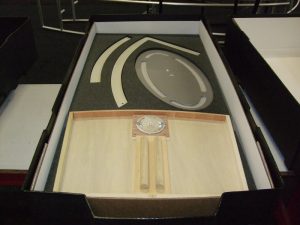
Reusable Foam Packaging

You just bought a new pair of Beats by Dre headphones. They sound great, but you’ve decide you want them in black and not fushia. Good luck getting it back in the packaging. It was meant for marketing, not for re-marketing. Far too many trade show displays are packed to prevent damage before the first show. But what about damage after the second, third, or thirty-third show?

High-quality reusable packaging costs more than bubble wrap and thin foam. Smart, well-engineered packaging is like finding $20 in your wedding, funeral, and holiday party pants. It’s an unexpected miracle that keeps on giving.

Q5. Are Replacement Parts Available? 

Folks send me photos asking me to identify a part. That’s rarely an issue if it’s from a major display manufacturer. However, it’s usually from a $699 pop-up or tube structure. Let’s be honest. There are no parts. There never were any parts. It wasn’t sold to have replacement parts any more than a $17 toaster.  It’s meant to go into the landfill after a half-a-dozen uses.

Now if that idea appalls you, then ask your supplier if quality replacement parts are available, what is the cost, and how quickly can you get them? Oh… and if they are only available through Smiling Sammy’s Display Store, then that’s a really, really bad omen. He’s gotta a guy who knows a guy. Good luck with that.

Q6. How Do You Handle Wire Management?

Wireless Charging

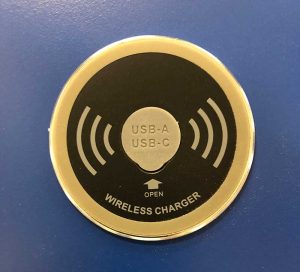
There’s no middle ground on this. It looks good or it looks really, really bad. Those electrical and A/V cords have to go somewhere. More often than not, the cord management for most exhibits resembles a hairball. But it doesn’t have to be that way.

You have to share what electrical devices will be in the booth and where they’ll be located with your supplier, and that includes anything you maybe renting. Ask your supplier about their solution for lights, monitor cords, etc. If they stumble — run. It means the solution is likely to resemble white twist ties from plastic garbage bags.

Q7. What are the Designer’s (Exhibit and Graphic) Qualification?

Everyone is creative. To a point — chainsaw sculpture, toilet roll cozies, saw blade paintings. I’m not here to judge. Well, maybe a little. Most of us are out of our element when it comes to exhibit and graphic design. And like wire management, there’s no middle ground. Great exhibit designers have years and years of experience working on a variety of projects (custom, portable, modular) with collaborative input from other exhibit designers. That’s how they get experience, perspective, and context.

The same is true with graphic designers but with a twist. They must have experience designing graphics for trade show displays. That’s the key. It doesn’t matter if they are Rock Stars with web design or print advertisements. You don’t want an occasional trade show designer to be the lead designer. If you have an in-house designer familiar with your brand, then make the design process collaborative. Graphic design for trade show displays is a craft. Trade show designers have learned what works and what doesn’t to attract attendees on the show floor.

These questions may make your trade show exhibit supplier uncomfortable. Good. That’s how you’ll know if you chose the right one.

–Mel White
mel@classicexhibits.com
http://www.linkedin.com/in/melmwhite
https://twitter.com/melmwhite

**********************************************

Based in Portland, Oregon, Classic Exhibits Inc. designs and manufacturers portable, modular, and custom-hybrid exhibit solutions. Classic Exhibits products are represented by an extensive distributor network in North America and in select International markets. For more information, contact us at 866-652-2100 or www.classicexhibits.com.

undefined

“Roll On Columbia, Roll On”: Word on the Street — Oct.5th thru Oct. 9th

October 10th, 2015 COMMENTS

BPAbanner

Woody Guthrie made “Roll On Columbia, Roll On” famous when he penned the American Folk classic song in 1941. The song was written to garner support among the locals for federal regulations on distributing  hydroelectric power via the Bonneville and Grand Coulee Dam on the Columbia River.

Interesting… but why are you telling us this Kevin?

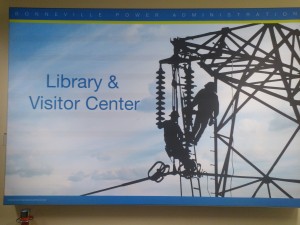
BPA Visitor Center and Library

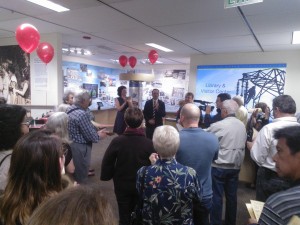
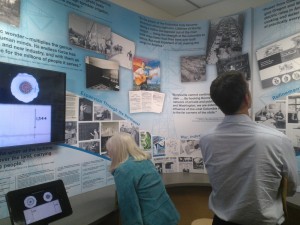
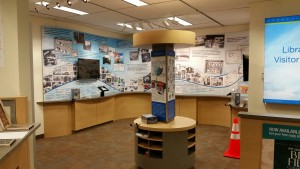
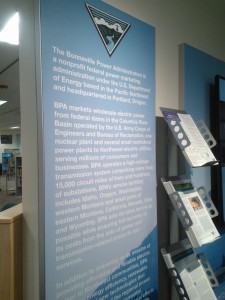
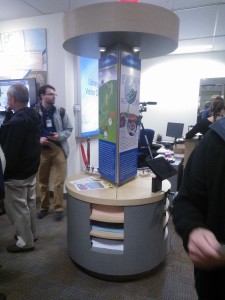
Earlier this year, Classic Exhibits was awarded the contract to build an Interpretive Visitor Center for the Bonneville Power Administration (BPA) in Portland. A local design firm brought us the project. This past Wednesday, we were delighted to attend the Grand Opening of the Interpretive Center.

When we were asked to assist on the RFP, we were honored. The BPA Visitor Center would be an important project for the BPA, the agency distributes most of the electricity in our backyard. We also knew, if we were to win the bid, that the project would be push us in a direction outside our comfort zone.

Our world is branding exhibits via structure and graphics, but an interpretive center combines structure, brand, and history. That’s no small task since the BPA’s history is deeply tied the economic and infrastructure growth of Oregon and Washington over the past 80 years.

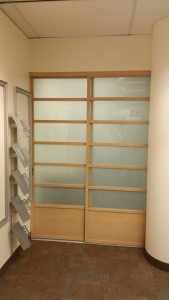
Before

Before

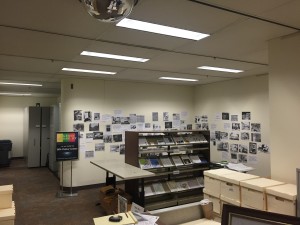
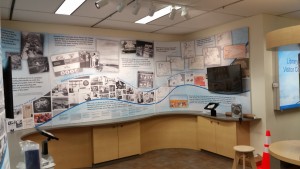
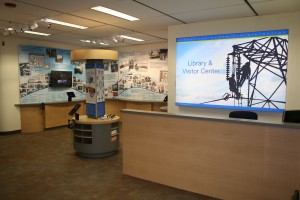
Greg Garrett (Greg Garrett Design) embraced the project from the first meeting and created exactly what the client was looking for conceptually. And that was no small challenge, especially after we made the first site visit. You see, this was not a big open space with lots of room and high ceilings. No. It was located in a the BPA’s Library. Total space was no larger than 450 sq ft. And when we first saw it, it was filled with filing cabinets.

But as I said, Greg did an amazing job transforming their vision into a rendering. Next up was bringing the design and the client’s historical content to life. And there was a ton of content! Hundreds upon hundreds of photos, videos, and more quotes than you can imagine.

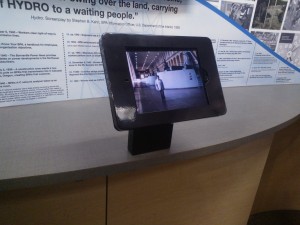
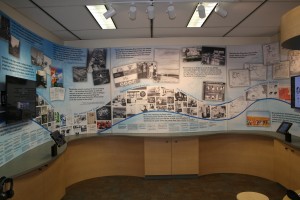
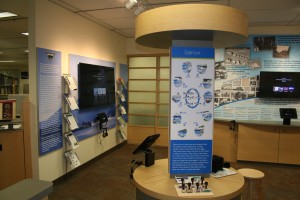
This is when our pros shined. Jim Ponomarenko, our Production Manager, and his team detailed and built the structures — the custom framing for the graphics, the counters, lightboxes, the kid’s kiosk, and the reception area. They did an amazing job as the photos show.

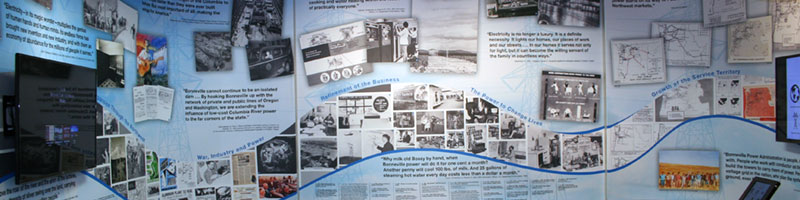
The next challenge and subsequent magic came from the creative minds of Glenna Martin and Tony Bennett, our Graphics Design Manager and Web Developer respectively. Glenna culled through the BPA database of images and quotes, working tirelessly with the project lead from BPA to create the large format graphics. And unlike traditional trade show graphics, these were text and image intensive, where placement, flow, quotes, and images had to create a dynamic, integrated story.

Tony then took the same images plus two historical DVDs with videos and created an interactive app for each section: the History Walls, the Geography Wall, and the Business Wall. And again did “an amazing job bringing all that context to life” in the words of one of the Contracting Officers from the BPA.

As you can probably glean from this post, my pride lies less in the project than it does in the folks who brought it to life — Greg Garrett, Glenna Martin, Tony Bennett, Jim Ponomarenko, and the entire Classic Exhibits manufacturing professionals.

Well Done Team!

–Kevin
http://twitter.com/kevin_carty
http://www.linkedin.com/pub/kevin-carty/3/800/32a

[subscribe2]

The More Perfect, Perfect 10 Hybrid Display

October 6th, 2015 COMMENTS

P10BlogHeader

Hold onto your dentures Grandma, we just made the Perfect 10 — More Perfect! The Perfect 10 and Perfect 20 feature the exclusive 100-Day Return Guarantee. If for any reason your client doesn’t like the Perfect 10 within the first 100 days, they can return it for a refund, minus graphics and shipping.

Wait… There’s MORE! ALL Perfect 10 Portable Hybrid Displays are ON SALE through November 27. Every. Single. One. There’s never been a portable display like the P10. No tools. Distinctive shape. Options galore. See the literature below or in the Perfect 10 Gallery in Exhibit Design Search.

P10_100_Day_Guarantee

–Mel White
mel@classicexhibits.com
http://www.linkedin.com/in/melmwhite
https://twitter.com/melmwhite

**********************************************

Based in Portland, Oregon, Classic Exhibits Inc. designs and manufacturers portable, modular, and custom-hybrid exhibit solutions. Classic Exhibits products are represented by an extensive distributor network in North America and in select International markets. For more information, contact us at 866-652-2100 or www.classicexhibits.com.

[subscribe2]



Three Clever Trade Show Infographics

September 29th, 2015 1 COMMENT

CrazyBanner

I’m a sucker for a clever, creative, well-designed Infographic. It reminds me of my childhood browsing through over-sized books about history, science, geography, or sports where the graphics engage and educate.

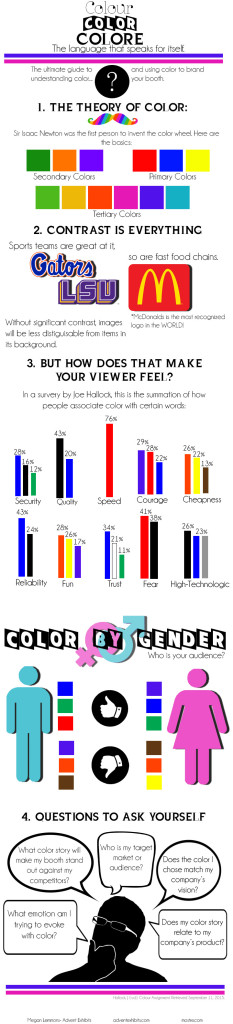
I don’t have the patience or the talent to create infographics so when I find one that hits a bulls-eye about trade show marketing, I feel compelled to share. This week, I hit the jackpot and discovered three, all created by Megan Lemmons at Mostre Design/Advent Exhibits. My thanks to Megan for sharing with the Classic Exhibits Network. Enjoy!

Colour Color Colore

Colour Color Colore


Why You Should Have a Coffee Bar at Your Next Trade Show

Why You Should Have a Coffee Bar at your Next Trade Show


Five Easy Ways to Be the Star of Your Next Trade Show

5 Ways To Be the Star of your Next Trade Show 3

–Mel White
mel@classicexhibits.com
http://www.linkedin.com/in/melmwhite
https://twitter.com/melmwhite

**********************************************

Based in Portland, Oregon, Classic Exhibits Inc. designs and manufacturers portable, modular, and custom-hybrid exhibit solutions. Classic Exhibits products are represented by an extensive distributor network in North America and in select International markets. For more information, contact us at 866-652-2100 or www.classicexhibits.com.

Controlled Chaos: Word on the Street — Sept. 21st thru Sept. 25th

September 24th, 2015 COMMENTS

Jumpprison

Chaos vs. Controlled Chaos

If you have kids like me, you know the difference between “chaos” and “controlled chaos.” Here is how I explain it as a parent:  You know those big trampoline havens? The indoor trampoline park has quickly replaced Chuckie Cheese as THE place to have a birthday party.

Well, these trampoline parks are located in massive warehouses. But within those spaces are sections or what I call Kiddie Play Prisons, divided into areas with guards. Instead of wielding a gun, they are armed with a smile and a walkie-talkie to communicate with the other guards.

KiddieprisonEach little “prison yard” is different. One is for dodgeball, one is for dunking a basketball off a trampoline, one is a huge foam pit. You get the picture. Regardless of what activity is happening in each area, the kids are pretty much allowed to loose their gourds while inside each space (or have fun as they would say).

But… outside each area, there is no running allowed, and there are tables for food, etc. Basically a place for parents to get away from the chaos.

To me, this represents the best in “Controlled Chaos.” It’s the illusion of “willy-nilly” behavior for the kids within a controlled environment. But imagine the same building without sectioned off areas, no guards manning their posts, and God forbid, no Parent Zones! Then you would have pure chaos in its truest form. No controls… and these places give your kids Mt. Dew (or Liquid Speed).

I joke… but in this crazy trade show and event business, we experience something similar during specific times of the year. This being one of them as we are in the thick of the BUSY season. And we all walk that fine line of managing the chaos.

Lead Times

Lead_timeFor Classic Exhibits and Classic Rental Solutions, managing lead times is a big part of our day. We post lead times in Exhibit Design Search in order to manage expectations for you, your clients, and us. And, as you know, we are fairly aggressive on our lead times, meaning they are often shorter than other manufacturers in our industry.

Most of the time, we beat our standard lead times by a day or two, which allows us to be flexible when you request shorter lead times. Typically, we don’t charge a rush fee. We believe that it doesn’t make sense if we don’t incur extra costs. We have always been very passionate about this because we know that karma will work in our favor. When we need you and your client to be flexible on a published lead time, you typically accommodated us.

Classic Exhibits_August_1As you may have heard from our Project Managers, we are currently running at standard lead times. We’re not behind, nor are we asking for additional days, but we are not able to produce your orders under our lead times. We understand that can be frustrating. Just today, a distributor said to me, “Why can’t you ship that 20 x 30 in 10 days? You were able to do it last May.” That’s true. We were. But in September and October (two of our busiest months), we handle nearly triple the volume we do in a month like May or June.

I am proud of our ability to manage chaos in the “controlled” variety. It’s been a hallmark of our operational success over the years.

We are in the heart of the “season” right now. We thank you for the business. Keep it coming. Please know that we will continue to be flexible, but during the busiest times, we have little choice but to hold to our standard production lead times.

Be well and have a great weekend with your families.

–Kevin
http://twitter.com/kevin_carty
http://www.linkedin.com/pub/kevin-carty/3/800/32a

[subscribe2]