

Attend any recent trade show and you’ll see many, many portable modular displays. They have gone from the exception to the rule in many show halls over the past two or three years. Visually, the reason is obvious. Portable modular displays are attractive, lightweight, and feature large format graphics.
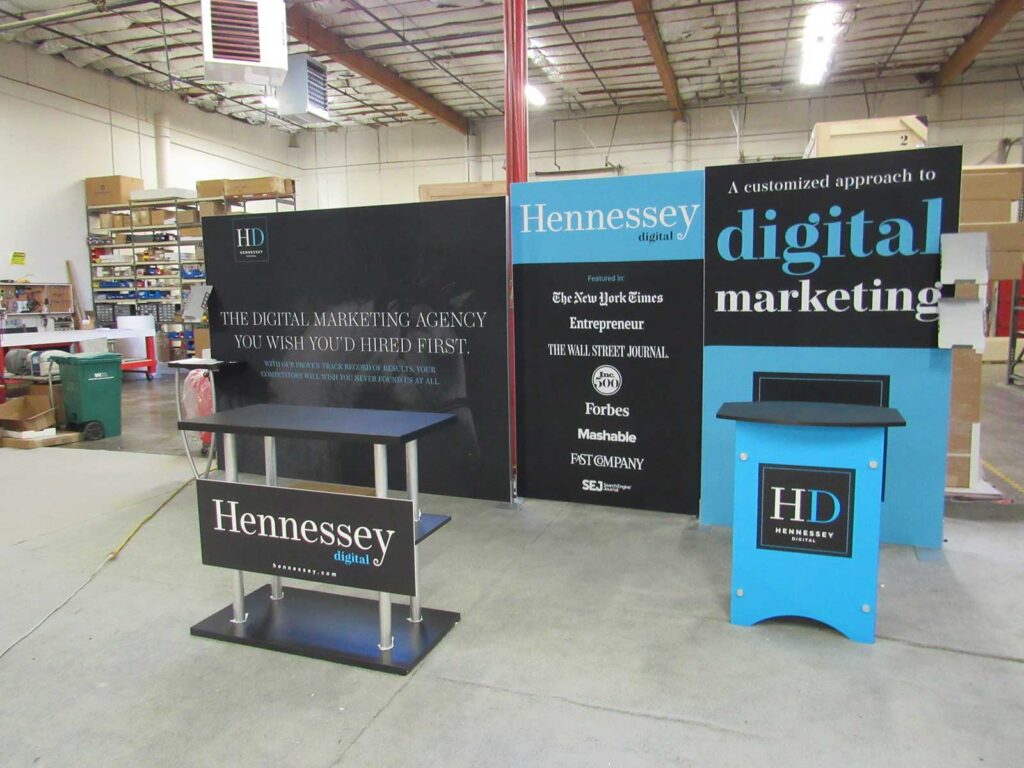
What to Consider Before Buying a Portable Modular Display
But just like any product, there are good, better, and best versions. For the sake of simplicity, let’s focus on one segment of designs: portable modular. There are also modular and custom modular.
1. Weight
Generally a portable modular should be lightweight, whether it’s a 10 x 10 or a 10 x 20 inline. After all, it’s primarily aluminum extrusion and tension fabric or direct print graphics. Expect a basic 10 ft. hybrid to weigh approximately 75 to 95 lbs with the case. Double that for a 20 ft inline. Adding freestanding counters or pedestals will increase the weight proportionately.
2. Assembly
Here’s where you need to do your homework. Portable Modulars generally require a little more assembly than say a pop up display. But, then again, they don’t look like a pop up and have far more features. Assembly time will vary depending on tools or lack of tools. Many systems require a tool for every connection, but there are modular systems that have engineered tool-less or mostly tool-less kits. Ask about loose pieces as well. A good porrtable modular may require tools but it shouldn’t have any random, easy- to-lose connector pieces.
Along the same lines, ask about graphics (direct print or tension fabric) and how the graphics attach. You’ll want graphics that are durable, vibrant, and easy to attach. There are many methods to attach graphics — some easy, such as Velcro, others difficult, such as pole pocket. Choose one that fits your comfort level.
3. Design
Yes, design is subjective, but it shouldn’t be limited. To use an apple metaphor, if your choices are between a Gala, a Gravenstein, or a Fuji, then what’s the point. Wouldn’t you rather choose between an apple, a pineapple, a banana, or even a starfruit.
Don’t limit yourself. Ask to compare as many examples as possible within your budget.
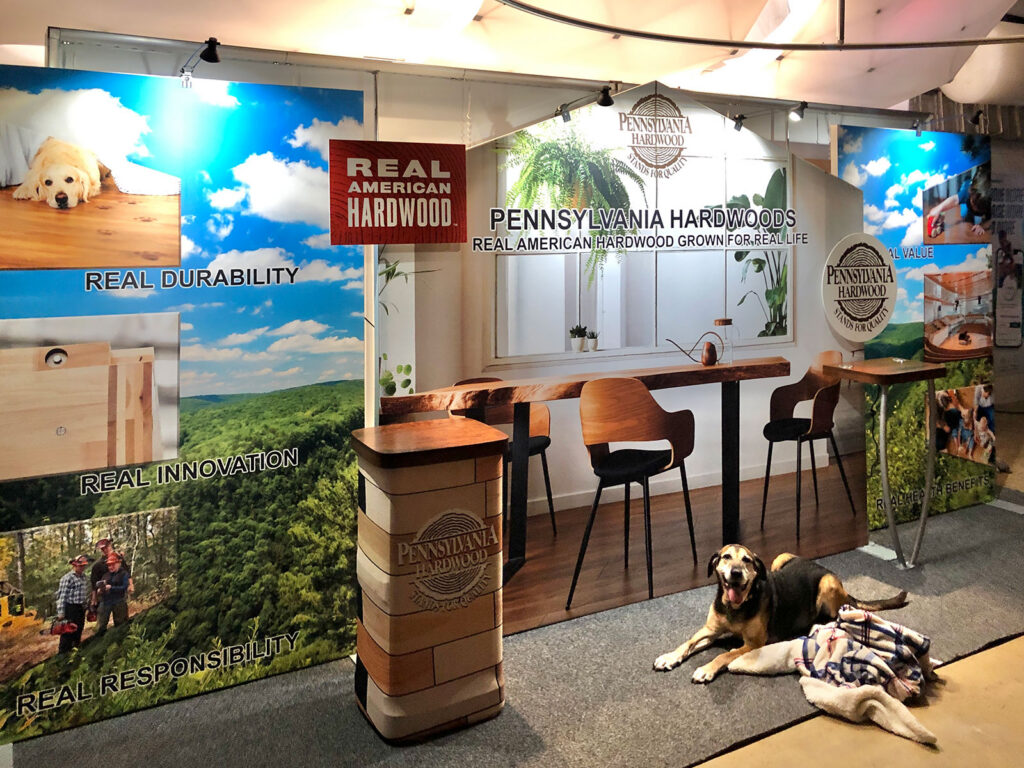
4. Accessories
Portable modulars should do more than just stand there and look pretty. They should be functional as well. At a minimum, you’ll want to see as much variety as possible when choosing counters, workstations, literature holders, kiosks, lights, and locking storage. One size does not fit all when it comes to portable modulars, bathing suits, and toupees.
5. Packaging and Instructions
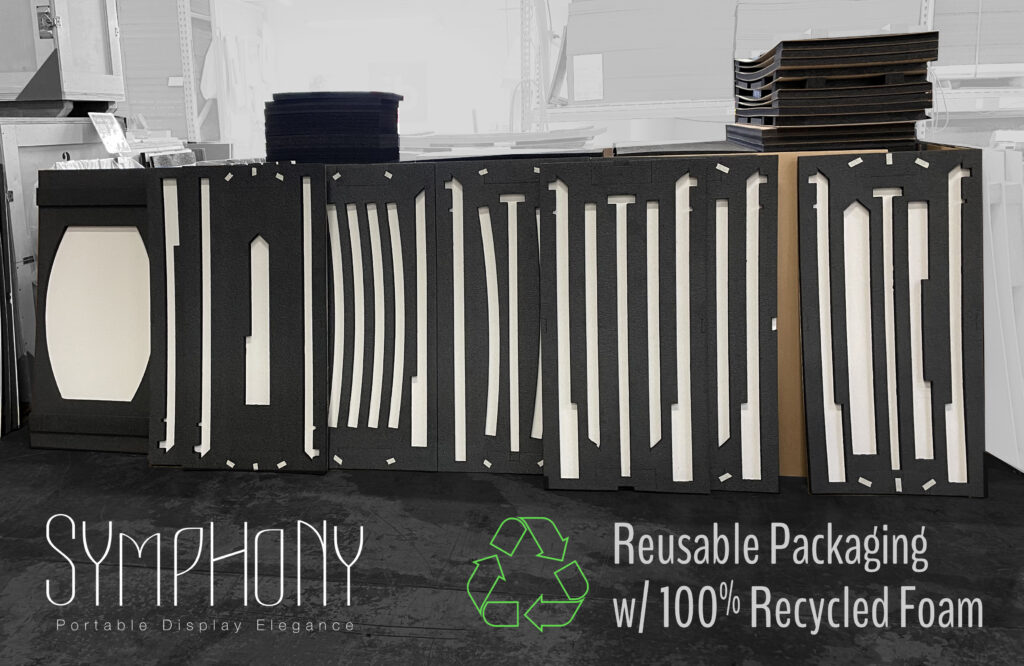
Too often, you discover that the manufacturer hired Capuchin helper monkeys to pack and label your display. It pays to do your homework. The packaging should be reusable with easily identifiable slots for all the parts, and the packaging should look as professional as the exhibit, otherwise it gets tossed after the first show.
The instructions should be in clear English with corresponding images or photos. Ideally, every part should be labeled (A, B, C or 1, 2, 3), and the labels should be attached discretely to the parts. You’ll want them to be invisible once the display is assembled but visible when you assemble it the 47th time.
6. Graphics
The smaller graphics are typically direct print on Sintra, Lexan, or acrylic. No problem there. It’s the large format graphic(s) that can get a little confusing. There are direct, fabric, and dye-sub tension fabric graphics. Most manufacturers typically have a preference.
What’s best? Honestly, why would you choose anything but dye-sub tension fabric graphics? They’re lightweight, durable, fold flat, are vibrant, and can be washed in mild detergent. When made with high quality materials, wrinkles disappear within a few minutes. There are even eco-friendly green options.
7. Warranty
While the 30/30 Rule may apply at the swap meet (i.e., 30 feet or 30 minutes), it should not apply when purchasing a portable modular display. Ask about the warranty, and ask about the unwritten warranty. What’s the “unwritten warranty”? Does the manufacturer back their product to the letter of the law or are they flexible based on the circumstances? Ask your distributor. They’ll know which manufacturers are customer friendly and which are “sales” friendly.

8. Distributor
This is still a consultative business. You’re not buying gas or bread or dinnerware. You’re purchasing a 3D marketing structure for about the price of a reliable used car. Chances are you’re not an expert in trade show marketing, although you may be a whiz in marketing in general. Trade show marketing is different — not rocket scientist different but different nevertheless. Trade shows can be expensive if you don’t know what you’re doing. Once you add up the show space, show services, hotel, travel expenses, giveaways, and the display costs, you’ll want to make sure you did everything possible to maximize your return on investment (ROI).
Your trade show distributor does this for a living (duh?!). They’ve seen more mistakes and more successes in trade show marketing than you’ll see in a lifetime. Rely on them. And if they are an idiot, then go somewhere else but don’t go it alone. Great trade show distributors are worth their weight in free pens, calculators, and stress balls.
9. Manufacturer
It matters. Enough said.
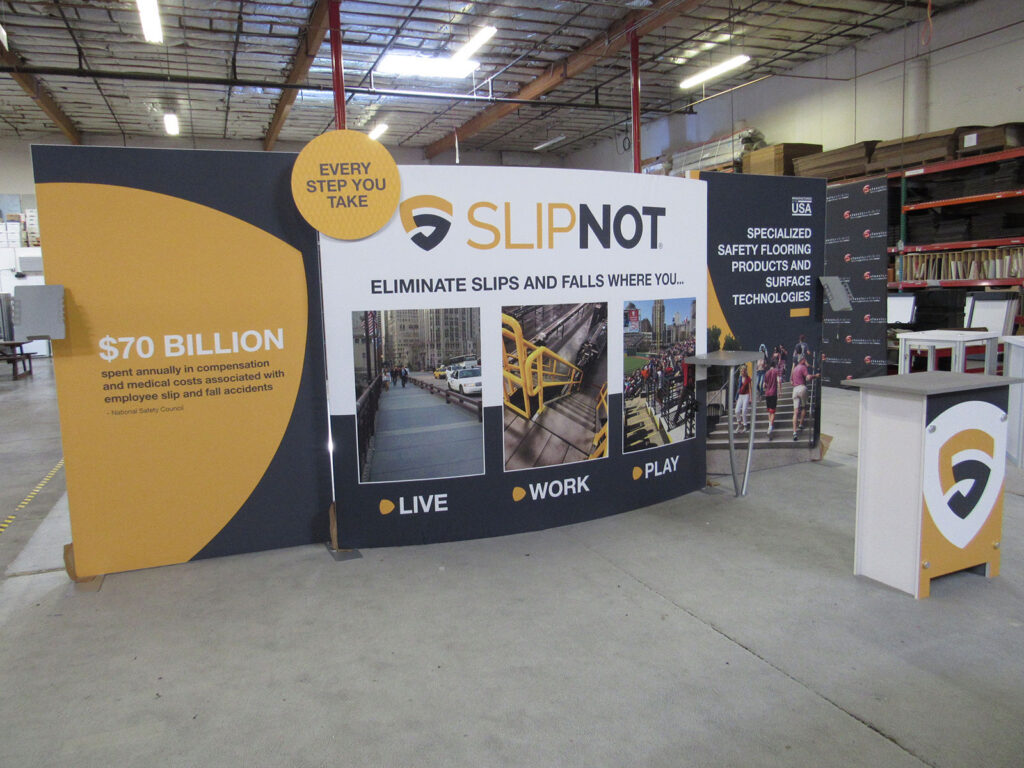
10. Price
In a perfect world, you’d buy whatever trade show display your heart desires complete with laser lights, celebrity dancers, and milk chocolate fountains. However, you have a budget, which may be flexible, but it’s probably not as elastic as those sweat pants you should have thrown away after high school.
Price equals something — design, quality, convenience, etc. We all have a sweet spot where price, value, and performance intersect. Before making a decision solely on price, consider everything you’ve learned in #1 through #9.
Let us know your thoughts. We’d enjoy hearing from you.
About Classic Exhibits
Classic’s North American Distributors are exhibition professionals who will listen to your trade show goals and work with you to create a successful strategy. Not only do they know the “ins and outs” of trade show marketing, but they’re also familiar with translating experiences in your booth to real engagement.
Classic Exhibits has been designing and building trade show exhibit solutions since 1993. We’ve been honored as an Exhibitor Magazine Find-It Top 40 Exhibit Producers and an Event Marketer Fab 50 Exhibit Builders multiple times. Along with numerous Portable Modular Awards. With over 250 Distributor Partners throughout North America, there’s a Classic representative near you.
https://www.linkedin.com/in/melmwhite
mel@classicexhibits.com
Classic Exhibits Network (LinkedIn)