

Your trade show is in six months. Now, this may be your first trade show or your 200th one. Either way, if you are like many marketing professionals, you’ll mark the date on your trade show marketing timeline and move on to a more immediate task. As the show approaches, you’ll check off a few items, like contacting an exhibit house or sending in a form or two because the general show contractor has hounded you repeatedly about a deadline.
Then, one day you’ll wake up at 2 am and realize “The trade show is in three months and I have about 187 tasks to complete.”
For many companies, trade show marketing represents as much as 35% of their annual non-payroll budget. That’s significant. Successful trade show marketing is won months before the event—not just on the show floor. Last-minute planning, including rushed exhibit production, poor marketing, and missed lead opportunities, can have serious financial consequences. In this article, we’ll share how developing a six month planning timeline along with a detailed task list will ensure your event is successful. Trade shows will always be stressful but they don’t have to induce panic attacks.
Key Takeaways
- Trade show planning and preparation should start at least six months in advance.
- Having a plan and sharing it with others on your team taps into the collective talent of your team.
- Organizing tasks by due dates creates a manageable schedule.
- Missed deadlines, like electrical orders or labor, can significantly increase your costs.
- Choosing the right exhibit house partner will help you manage the design, production, logistics, and installation while reducing project risk.
Why Every Exhibitor Needs a Trade Show Marketing Plan
No marketing exists in a vacuum. Every structured marketing plan aligns sales, marketing, exhibit design, customer service, engineering and event logistics. Trade show marketing plans are an ideal example of this. Too often, exhibitors assume trade shows are exclusively a sales event. Marketing creates the graphics and works with an exhibit house to design and build a display. Then sales shows-up at the event to chat with prospects. Smart trade show marketers start with a targeted strategy and specific goals, developed after consulting with the other departments and senior management. Strategic alignment matters, particularly when everything has to come together during a one, two, or three day event.

Developing a trade show marketing plan is your roadmap. It’s there to minimize surprises and maximize opportunities. It also keeps everyone accountable and establishes your guidelines for measuring your return on investment (ROI). Finally, because no one wants to start from scratch before every trade show or event, the marketing plan creates a repeatable process for future shows.
What Should Be Included in a Trade Show Marketing Plan?
While every activity can be reduced to a task in a trade show marketing plan, not every task is equal. The single most important task is identifying your objectives and goals and then developing a strategy to achieve them. Everything else rests on that marketing foundation. It will determine your budget, your messaging, the exhibit design, who you bring to staff the booth, and how and what to measure. Along with every other decision. Whenever you have a question about how to proceed, you should automatically refer back to your objectives and goals.
Now, to be clear, the trade show marketing plan doesn’t have to include every trade show planning task. There can be two or three or four lists depending on who has specific responsibilities for those tasks. The Sales Team may be responsible for setting appointments with existing and potential clients in the exhibit starting several months in advance. The Shipping Department may be handling the freight of the booth to and from the show.
In reality, the Marketing Dept. owns the trade show tasks at most companies, not just the marketing, and coordinates those activities with the assistance of others in the company. It’s a collective responsibility (and should be) but Marketing creates and manages the Master List.
| Marketing Component | Purpose | Expected Outcome |
|---|---|---|
| Event objectives | Define success metrics | Clear business goals |
| Budget planning | Control spending | Better ROI |
| Booth strategy | Improve attendee engagement | Increased booth traffic |
| Promotional campaign | Generate awareness | Higher attendance |
| Lead generation plan | Capture prospects | More qualified leads |
| Post-show follow-up | Convert opportunities | Increased sales |
Remember, your comprehensive trade show marketing plan should combine your goals with execution at the show site. Experienced trade show marketers create a strategy that includes pre-show attraction, on-site engagement, and post-show conversion.
6 Months Before the Trade Show: Build Your Strategy
By this point, you’ve already decided to exhibit at a trade show and have placed a deposit on the space. So, you’re committed. You know, generally, why you’re exhibiting but may not have dialed in your core objectives. It’s time to define those objectives, set goals, agree on a general budget, and create a strategy. In addition, you’ll want to begin discussions with your exhibit partner.
- Objectives: Define explicit measurable targets, like qualified leads captured, VIP meetings held, product launches announced, or pipeline value generated).
- Target Audience: Pinpoint the exact buyer roles attending the show (purchasing managers, C-suite executives, engineers). Those will define your messaging.
- Goals: Define KPIs and success metrics.
- Budget: Allocate funds across space rental, exhibit hardware/graphics, show services (drayage, electrical, labor), pre-show promotion, travel/lodging, and staff training.
- Exhibit Design: Begin discussions with your exhibit partner regarding booth design, customization, and production requirements.
5 Months Before: Design Your Exhibit and Marketing Campaign
With the objectives set, it’s time to create a detailed task list with deadlines. For experienced exhibitors, this should be easy (and mentally rewarding). For new exhibitors, it’s important to start the task list, even if you don’t have or know everything. A quick search on the Internet will help. Consider asking the show organizer for assistance. Most will be eager to lend a hand. For most marketers, the fun part is the exhibit design, messaging, and marketing campaign. Now’s the time to pull those together.
Finalize Exhibit Design
- Confirm booth layout, graphics, messaging, technology requirements, and branding.
- Ensure the exhibit aligns with campaign goals and target audience.
Launch Marketing Planning
- Develop messaging, promotional themes, landing pages, and content calendar.
- Coordinate email marketing, social media, and paid advertising initiatives.
3-4 Months Before: Start Pre-Show Promotion and Select the Booth Staff
The rubber meets the road at this point. You’ll start your pre-show marketing, schedule meetings with customers and prospects, and select the booth staff.
- Launch email campaigns announcing event participation.
- Promote booth location, product launches, demonstrations, and speaking sessions.
- Begin scheduling meetings with existing customers and qualified prospects.
- Train booth staff on messaging, lead qualification, and product demonstrations.
- Finalize promotional materials, giveaways, and presentation content.
- Review staffing schedules and attendee engagement strategies.
2 Months Before: Confirm Event Logistics
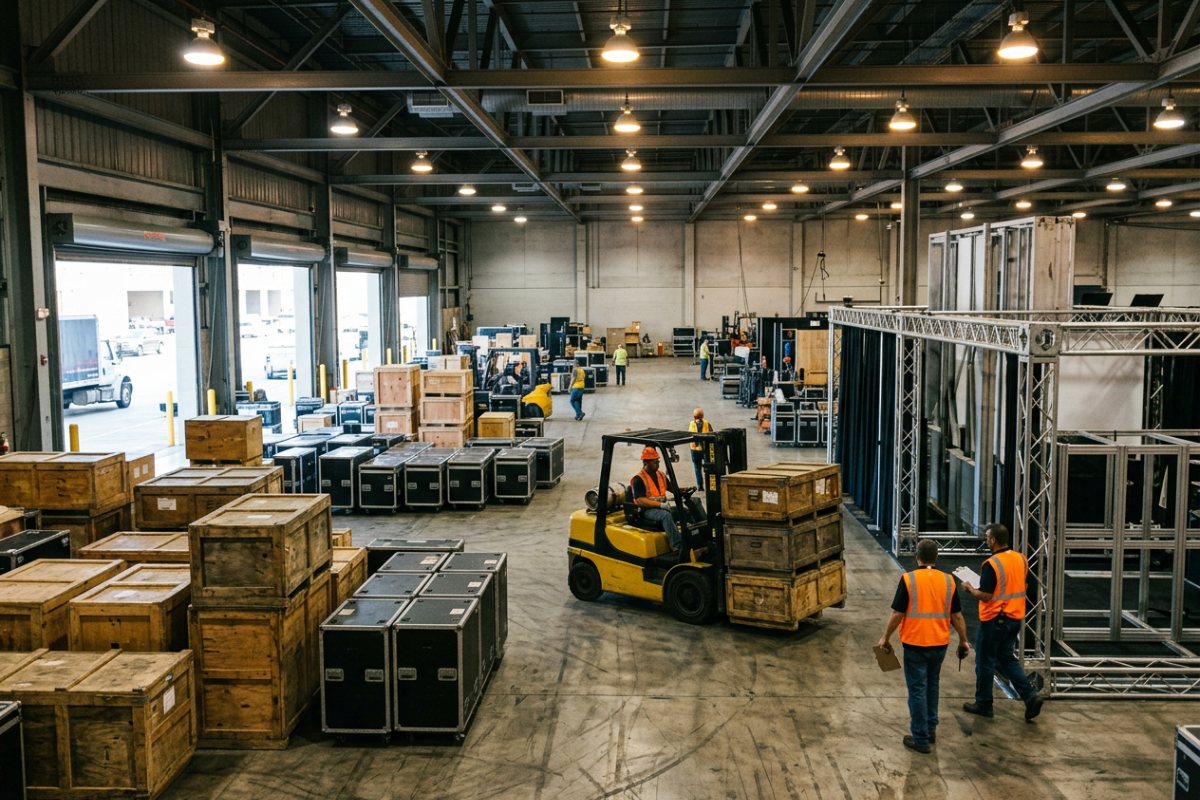
You either love this stage of the planning or dread it. It’s all about scheduling travel, lodging, and completing forms for labor, freight, electrical, and material handling. Completing this on time and accurately can be the difference between a positive ROI vs. a painful financial surprise. Fortunately, these are mostly under your control and completing them early almost always saves your considerable money. For example, General Contractors offer early bird pricing to encourage exhibitors to complete the forms well in advance. That way they know what equipment and people to have available at the trade show.
| Logistics Task | Why It Matters |
|---|---|
| Shipping arrangements | On-time exhibit arrival |
| Hotel reservations | Team coordination |
| Booth installation schedule | Smooth setup |
| Electrical & internet orders | Technology readiness |
| Marketing collateral | Visitor engagement |
| Product samples | Demonstration preparation |
The expression, “Location. Location. Location.” does matter at a trade show. But “Promotion and Preparation” matter more. Consider running an advertising campaign to “prime” your audience before the show.
1 Month Before: Increase Marketing Momentum
It’s almost time. Increase your social media activity, email frequency, and event-related content. Confirm appointments with prospects and customers. Conduct internal readiness reviews covering booth materials, staffing, and technology. Finally, touch base with the exhibit partner to finalize any last minute details and to confirm shipping.
Final Week Before the Show
- Perform a final checklist covering shipping, booth assets, technology testing, travel plans, and emergency contacts.
- Brief booth staff on goals, schedules, and lead capture processes.
- Prepare contingency plans for common event-day challenges.
During the Trade Show: Execute the Marketing Plan
No matter how much you prepare, there will be hiccups once the show starts. But that’s OK. You can adjust. Success during the event relies on staff energy, proactive engagement, and seamless lead management. Daily adjustments should be part of the plan as you meet with prospects and experience news and events on the show floor.
Every morning should begin with reviewing individual and team goals, addressing concerns, modifying the messaging if necessary, and preparing the booth space for visitors. At the end of the day, it’s time for the daily debrief. You’ll review leads, review messaging again, prep for the next day, and coordinate evening activities.
| Priority | Recommended Action |
|---|---|
| Booth engagement | Actively greet attendees |
| Lead capture | Qualify every conversation |
| Live social media | Share booth activity |
| Product demonstrations | Showcase solutions |
| Networking | Build industry relationships |
| Daily KPI review | Measure performance |
After the Trade Show: Turn Leads into Revenue
The work done immediately after a trade show determines whether the event generates measurable ROI or becomes an expensive missed opportunity. A post-show strategy focuses on rapid lead processing, follow-up, team debriefing, and financial analysis.
Immediate Follow-Up
- Contact high-priority leads within 24–72 hours.
- Personalize outreach based on booth conversations.
Evaluate Event Performance
- Measure results against predefined KPIs.
- Document lessons learned for future events.
- Analyze lead quality, conversion rates, and ROI.
Why the Right Exhibit Partner Makes the Timeline Easier
We can all benefit from the wisdom and experience of others. Which is especially true with trade show planning and marketing. Unlike other marketing activities, trade shows are rarely covered in marketing classes and the exhibition process, language, and success variables can be confusing and opaque to even the most savvy marketers. Seeking help from trade show professionals is always a smart decision.

Experienced exhibit partners will help you manage design, production, logistics, and installation while reducing project risk. In addition, partners with a wide range of solutions, from portable to modular and from custom to rentals, are able to tailor a solution to your specific budget and objectives. Classic Exhibits Distributors are vetted experts with decades of trade show expertise who support their clients throughout the trade show lifecycle—not just the exhibit construction.
Conclusion
Don’t roll the dice when it comes to your trade show marketing. A trade show marketing plan will transform a speculative opportunity into a predictable pipeline engine. Trade shows rank among the largest single expenditures in B2B marketing budgets—combining booth space rentals, custom architecture, drayage, travel, and staffing. Without deliberate planning across all phases of the event lifecycle, businesses risk spending tens of thousands of dollars only to collect low-quality badge scans.
Classic Exhibits has been designing and building custom trade show booths since 1993. We’ve been honored as an Exhibitor Magazine Find-It Top 40 Exhibit Producers and an Event Marketer Fab 50 Exhibit Builders multiple times, along with numerous Portable Modular Awards. With over 250 Distributor Partners throughout North America, there’s a Classic representative near you.
FAQs
How many trade shows should a company include in its annual marketing plan?
It varies. There are the trade shows where your competitors, vendor partners, customers, and prospects all attend and exhibit.. Then there are the shows where your product or service may already be established or where there are potential opportunities, which your competitors may have overlooked. In the end, your trade show participation will depend on your budget, marketing objectives, staffing, and senior management’s commitment to trade shows.
What percentage of a trade show budget should be allocated to pre-show marketing?
Again it varies. However a good rule of thumb is 10-15% should be devoted to pre-show marketing and promotion. By investing in pre-show marketing, you are actively driving targeted, high-value prospects to your booth rather than relying on random traffic at the show.
How can first-time exhibitors create an effective trade show marketing plan?
Do your research early. There are lots of articles on the web about effective trade show marketing, including this one. All written by exhibition professions. Also, ask for advice from your exhibit house, the show organizer, and even other exhibitors. No one knows all the answers, and they’ve all experienced success and failures. Your goal when creating an effective marketing plan is to be true to your company’s marketing objectives and to avoid the obvious trade show landmines, which only seem obvious after the fact.
How should exhibitors adjust their marketing timeline for international trade shows?
Trade show regulations vary by region and country. Understanding those differences is critical when developing a marketing plan and timeline. Exhibiting at an international trade show requires expanding the standard 6-month planning cycle into an 8- to 12-month timeline. The extended lead time accounts for overseas shipping delays, customs clearance, international wire transfers, visa processing, and language translation.