

Presentation and Q&A on Labor in the Trade Show Industry
About three years ago as we were all struggling with post-pandemic challenges in the trade show industry, Jim Wurm from the Exhibitor Appointed Contractors Association (EACA) join us to discuss how it was impacting his members. It’s time to revisit this topic.
Our thanks to Jim Wurm for his time and insights. For more information about the EACA, see https://eaca.com/.
This webinar was hosted by the EDPA Mountain / Northwest Chapter. For more information, see https://edpanorthwest.com/.
Frequently Asked Questions (FAQs) About Labor in the Trade Show Industry
Why does our industry need/require unions?
The trade show and event industry relies on a standby workforce to move events in and out of our convention venues. Labor unions provide a ready source to fulfill that need.
Who decides which unions work in which venues?
Labor jurisdictions are determined by the owner of the venue. The majority of convention venues are owned by the state or local city. While there are right-to-work states where a worker doesn’t have to be a union member to perform the work, many right-to-work states that have venues with established union jurisdictions (eg. McCormick Place). A complete list of union jurisdictions can be found on the EACA website at https://eaca.com/?p=459.
How do show rates get established?
The General Service Contractor (GCs) establishes show rates after approval by show management. EAC labor contractors can adopt the “show rate” for their pricing but most establish their labor rates city by city.
What’s the difference between GC and EAC labor?
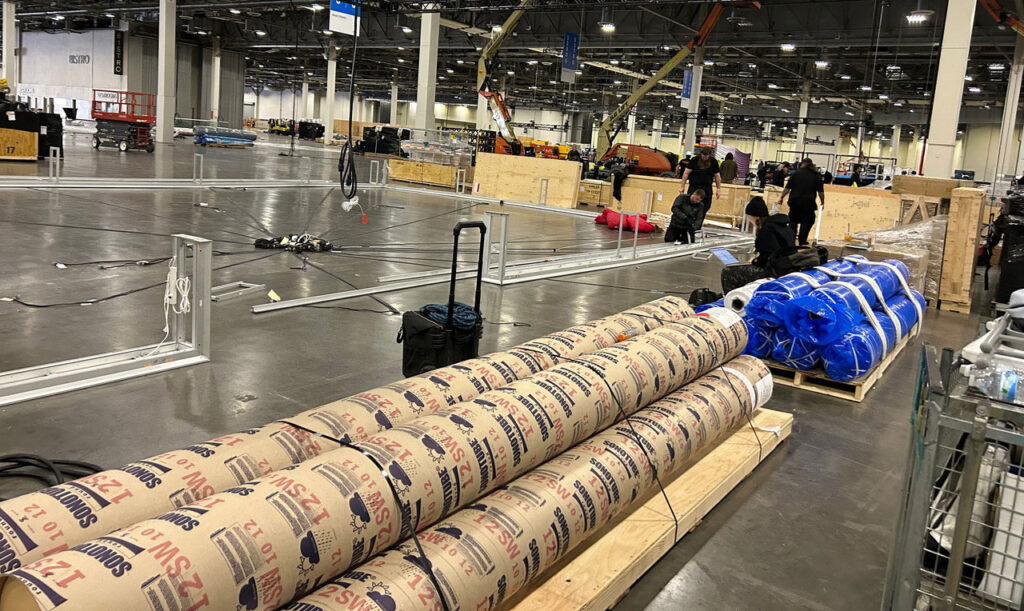
GCs have multiple revenue sources from the services they provide. The GC views show management as their primary client, so the most experienced and skilled labor is assigned to work on show management jobs. The labor provided by the GC for display I&D is primarily assigned based on a “next man up.” As a result, the labor an exhibitor receives to assemble their booth may have never seen the exhibitor’s display and may or may not have the necessary tools for the job. In addition, the disassembly crew may not be the same crew as the labor who assembled the exhibit.
EAC (exhibitor appointed contractor) labor is different. Unlike GCs, EACs only have one source of revenue — their labor — so they’re much more willing to tailor the service option to the client’s needs. For example, EAC’s often review the exhibit design prior to the show so that the EAC can provide a crew that is appropriate for the work required. The EAC will also generally provide a specific “lead” to supervise the job. This ensures the crew works efficiently and effectively. With larger or more complicated jobs, the EACs may not only review display design but also to issue a “not to exceed” estimate for set-up and tear down. As a matter of common practice, EAC labor contractors routinely schedule the same crew to install and dismantle the booth.
How does one join a union?
Any individual 18 or older with either a high school diploma or GED can join a union by completing an application along with an application fee. A pre-employment drug test may also be required.
What’s the difference between a journeyman and an apprentice?
An apprentice is a union worker in training, and a journeyman is an experienced union worker who has fulfilled all training requirements. Apprenticeship training requires 2000 hours of classroom and on the job work.
What is a grievance?
Contractors that employ union workers negotiate and sign collective bargaining agreements with local unions. If the contractor breaches that agreement, the local union can file a grievance.
What do I do if I’m unhappy with an individual on my crew?
An exhibitor or display supervisor who has a concern with crew member can request a change from their contractor. Change requests should be made privately with the appropriate supervisor.
What work can my shop supervisor do in a union venue?
Unless they are a member of the local union with jurisdiction, the supervisor can only provide direction, answer questions, and offer suggestions on the best and most efficient way to complete the work. The shop supervisor should identify who is the “lead” and communicate primarily with that individual to maximize efficiency.
Why does my shop supervisor have to register as an EAC?
Mhow management requires that all who enter the construction zone during move-in and move-out, known as the show floor, provide a current copy of their company’s Certificate of Insurance (COI). This manages the risk of being responsible for everything that happens in a venue during their tenancy,
Understanding that there is risk of personal injury or possible damage to the venue or the exhibitor’s displays or products, show management doesn’t want to be held responsible for the negligent acts of others. Show management obtains COIs from their GC and all their exhibitors as a matter of course as they contract with them.
But they don’t know which EAC service providers are being hired by their individual exhibitors. That is the purpose of the EAC notification form.
The EAC Notification form pertains to any product or service provider that needs or wants to enter the show floor.
Some shop supervisors presume they can utilize their client’s or their labor company’s COI as adequate coverage for themselves. But just like you aren’t covered in an auto accident with someone else’s insurance, you’re not covered by your client or your labor company if you should be injured on the show floor. And show management doesn’t want to be liable as well.
About Classic Exhibits
Classic Exhibits has been designing and building custom trade show booths since 1993. We’ve been honored as an Exhibitor Magazine Find-It Top 40 Exhibit Producers and an Event Marketer Fab 50 Exhibit Builders multiple times, along with numerous Portable Modular Awards. With over 250 Distributor Partners throughout North America, there’s a Classic representative near you.
Contact us today whether you need a durable 10 x 10 display built to last, a rental display guaranteed to attract trade show attendees, or a custom 30 x 40 exhibit with all the bells and whistles. Learn more about our capabilities. We’re not just different. We’re better.