

“Trade Show Backdrop” is Misleading
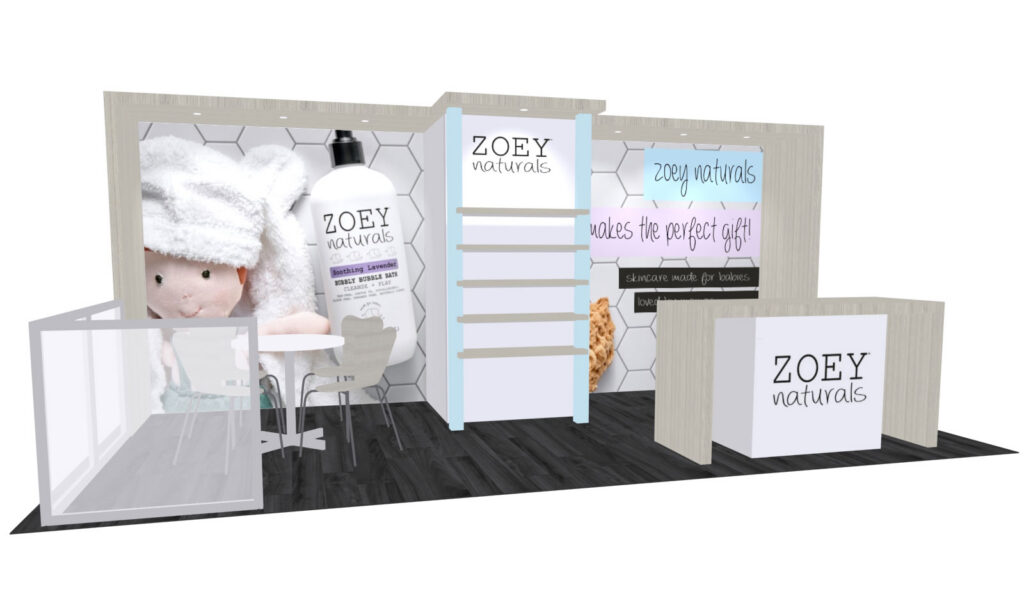
Many exhibitors assume a backdrop is a simple two-dimensional graphic along the backwall of an exhibit. But it can be so much more. A backdrop in a 10 x 10 or 10 x 20 booth space doesn’t have to be basic. Modern inline displays come in various shapes, heights, and configurations. Plus, the addition of accessories like shelves, monitor mounts, iPad clamshells, and even backlighting offer design flexibility.
In other words, you have choices from banner stands to rectangle pillowcase displays and from curved SEG portables to pop-up displays with backlit fabric graphics. In many cases, exhibitors will have multiple backdrops, each one serving a specific marketing purpose. They may need a 5-minute tube system for monthly Chamber of Commerce event and a more professional SEG curved display with a monitor for a regional 3-day trade show.
Key Takeaways
You have choices. Perhaps too many choices. If you have spent more than 10 minutes searching for a 10 or 20 ft. inline display on the Internet, you know choosing the right one can be confusing and overwhelming. They all look good… and some look too good for the price. In this post, we hope to elevate your knowledge of trade show backdrops. That way you can ask the right questions and make responsible buying choices. 5 Key Takeaways:
- This may not surprise you, but price and quality often go hand-in-hand. No one is selling premium backdrop displays at bargain basement prices..
- What are your goals for the display? How often will it be used? And who will be assembling it? Answering those questions will enable you to narrow down your choices.
- What’s your budget? Does that budget include a display for multiple events or shows?
- Does the vendor matter to you? Some companies would rather work with local suppliers. Others are comfortable ordering from an online vendor.
- Do you need more than one display? You may have multiple overlapping events or specific marketing goals for your trade show marketing program. At some events, for example, you may want a monitor to show your products and services. At others, a dynamic colorful graphic may be ideal.
Why a Trade Show Backdrop Is Important for Booth Design
In the chaotic environment of a trade show, you have roughly 3 to 5 seconds to capture an attendee’s attention. If your booth doesn’t spark curiosity or address an attendees need, they’ll walk right past your booth… and perhaps to a competitor with a more compelling design.
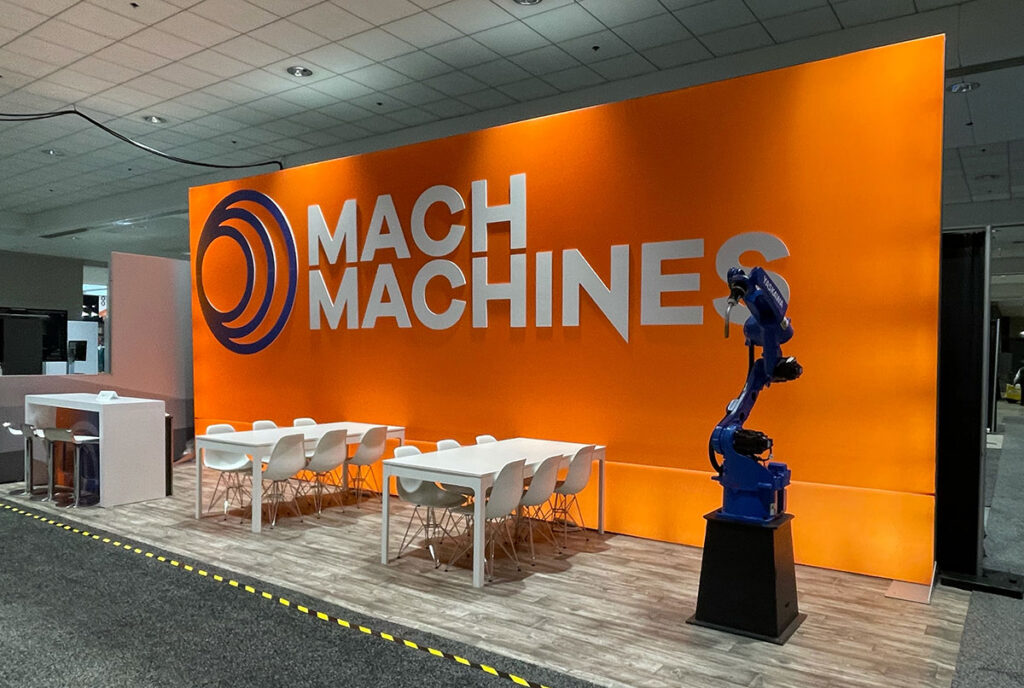
Your backdrop is essentially a massive canvas that defines your visual identity and message. It tells attendees exactly who you are and what you do before a single staff member opens their mouth.
- Message Transparency: A well-designed backdrop uses bold graphics, a clear value proposition, and crisp typography to cut through the visual noise of the convention center.
- Brand Consistency: It reinforces your brand’s color palette, imagery, and corporate identity on a large scale, establishing instant professional credibility.
While furniture, flooring, and technology play crucial roles supporting your marketing, the backdrop is the visual magnet of your booth design. It serves as your primary billboard and the visual foundation of your entire presentation.
Key Elements of Trade Show Backdrop Design
Effective branding on a trade show backdrop is about visual hierarchy, intentional color science, and spatial awareness. Here’s how to create the perfect backdrop design
Branding in Trade Show Backdrop Design
The most common mistake designers make is putting critical branding elements where they’re hidden or obscured.
- Your primary logo and company name should be in the top 30% of the backdrop. Anything lower than five feet from the ground will be completely hidden once an attendee is in the booth or obscured when crowds walk by in the aisle.
- The primary value proposition should be short enough to read in a single glance (ideally under 7 to 10 words). If an attendee can’t figure out what you do within three seconds, they will keep walking.
- Leave plenty of visual negative space. A backdrop that is 40% empty space looks premium, intentional, and authoritative. A backdrop crammed edge-to-edge with text looks chaotic and amateurish.
Clear Messaging for Trade Show Booth Ideas
Less is more. A backdrop isn’t a brochure, a website, or a white paper. It’s a billboard that has to attract attention in an environment where attendees are bombarded with sights and sounds.
- Does your backdrop answer these three questions? Who you are? What you do? What problem do you solve?
- Avoid industry buzzwords. Or use them to puncture expectations. Your goal should be to create curiosity so attendees move from the aisle to your booth carpet to learn more.
- Yeah. Yeah. Yeah. You have lots to say about your product or service. Instead, inline displays have limited visual space. A backdrop should communicate one single, powerful idea. Once you land the hook, then you can reel them in with details.
Visuals and Graphics in Custom Trade Show Displays
Convention center lighting is unpredictable — it can be harsh, muted, uneven or yellow-toned. Expo lighting can transform a vibrant graphic into a dull, lifeless image.
- Create a stark contrast between your background color and your branding text. Dark backgrounds with bright, crisp white or neon text pop beautifully under expo lights, as do clean white backgrounds with bold, vibrant brand colors.
- Don’t be a graphic lemming. If you are in the medical or tech space and everyone defaults to standard corporate blue, consider leaning into your secondary brand colors to separate your booth from the surrounding sea of sameness.
Materials Used to Make a Trade Show Backdrop
Fabric Backdrops for Trade Show Displays
Direct and dye-sublimated fabric graphics are the default choice for most backdrop displays. And the reasons are clear. They’re as colorful and vibrant as direct prints on a solid substrate, like Sintra, but lighter, more durable, and far more cost-effective to ship. Fabric graphics are generally available in three styles: Velcro-attached graphics, usually found on pop-up displays, pillowcase graphics, mostly used on tube systems, and SEG fabric graphics, primarily on portable modular backdrops.
Vinyl and Printed Panels for Backdrop Design
As fabric graphics have become more popular, vinyl banners and direct print panels are used more often for niche products. Vinyl graphics, for example, are ideal for outdoor applications since they’re heavier, weather resistant, and grommets can be inserted for attaching them to walls. Thinner vinyl graphics are often used on inexpensive banner stands. Direct print graphics are cost-effective but easily damaged during transit, which makes them perfect for permanent installations or one-time use at a trade show or event.
Modular Systems for Custom Trade Show Displays
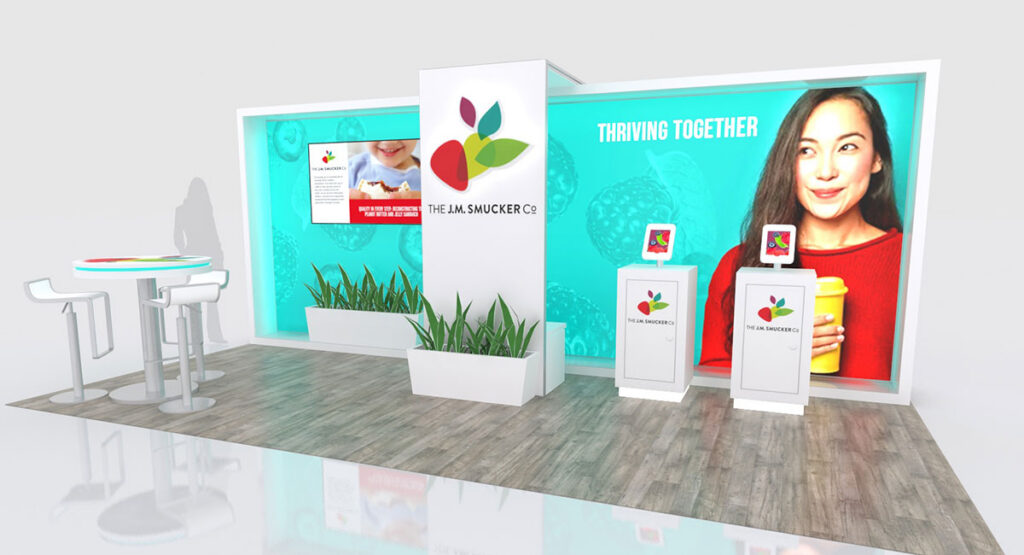
As trade show budgets have tightened, exhibitors look for ways to stretch their marketing dollars. Modular systems, whether portable modular or custom modular, are excellent options as backdrops. They’re easy to assemble and can be reconfigured from a 10 ft inline to a 20 ft. inline and even an island exhibit. In addition, many modular systems, like Gravitee, accept both SEG fabric and direct print Sintra graphics.
How Do You Make a Trade Show Backdrop? Step-by-Step Guide
Step 1: Plan Your Trade Show Backdrop Design
You would be surprised at how often exhibitors search for a trade show backdrop without a plan. They assume the display is the plan, when it’s actually just a tool to fulfill your marketing strategy. Even something as basic as a banner stand requires trade show planning.
It’s fun to shop for a beautiful backdrop but don’t buy without a strategy and a plan.
Step 2: Create Your Trade Show Backdrop Graphics
You probably already have branding guidelines and even a marketing campaign for your products and services. Excellent! The next step is to decide on the messaging for the backdrop. If your graphic designer hasn’t designed graphics for a trade show exhibit before, they may need some guidance on how backdrop graphics differ from website or print graphics. This blog post is an excellent tutorial to trade show graphics.
Also, Past Five Days, a photo gallery on Classic Exhibits website, contains over 15,000 searchable photos of trade show display projects.
Use simple fonts and strong colors
Step 4: Print and Assemble the Backdrop
Most printers can print a basic vinyl banner or a Sintra graphic. Beyond that, you will need a printer specializes in trade show or event graphics. Not only will they have the necessary equipment, like a dye-sublimation printer, industrial sewing machines, and large format cutters, but they’ll also be familiar with the display hardware.
Trade show printing requires expertise not found at your local quick print shop. And because backdrops are more often than not “one offs” not every printer’s business model supports those types of projects.
Once you receive the display with the graphics, take the time to assemble it before heading to your event. This will ensure nothing is missing (or broken), the graphic is correct and meets your quality expectation, and that you are comfortable with the setup. Installing a display at a show is stressful for most people. Removing that stress makes it easier to focus on your primary goals – meeting with prospects and increasing sales.
5 Budget Trade Show Backdrops
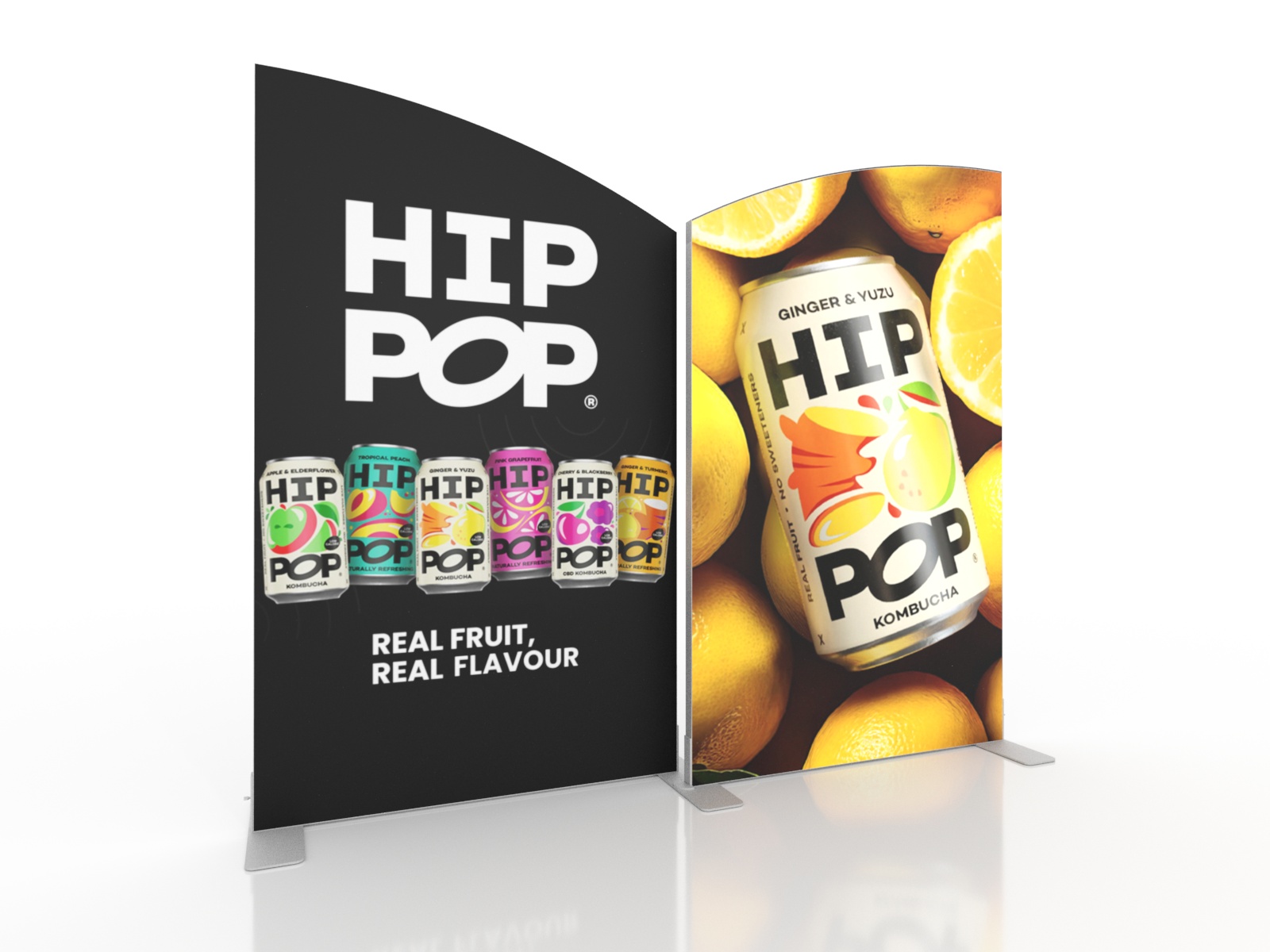
SYK-1039 | Two Arches w/ SEG Fabric Graphics
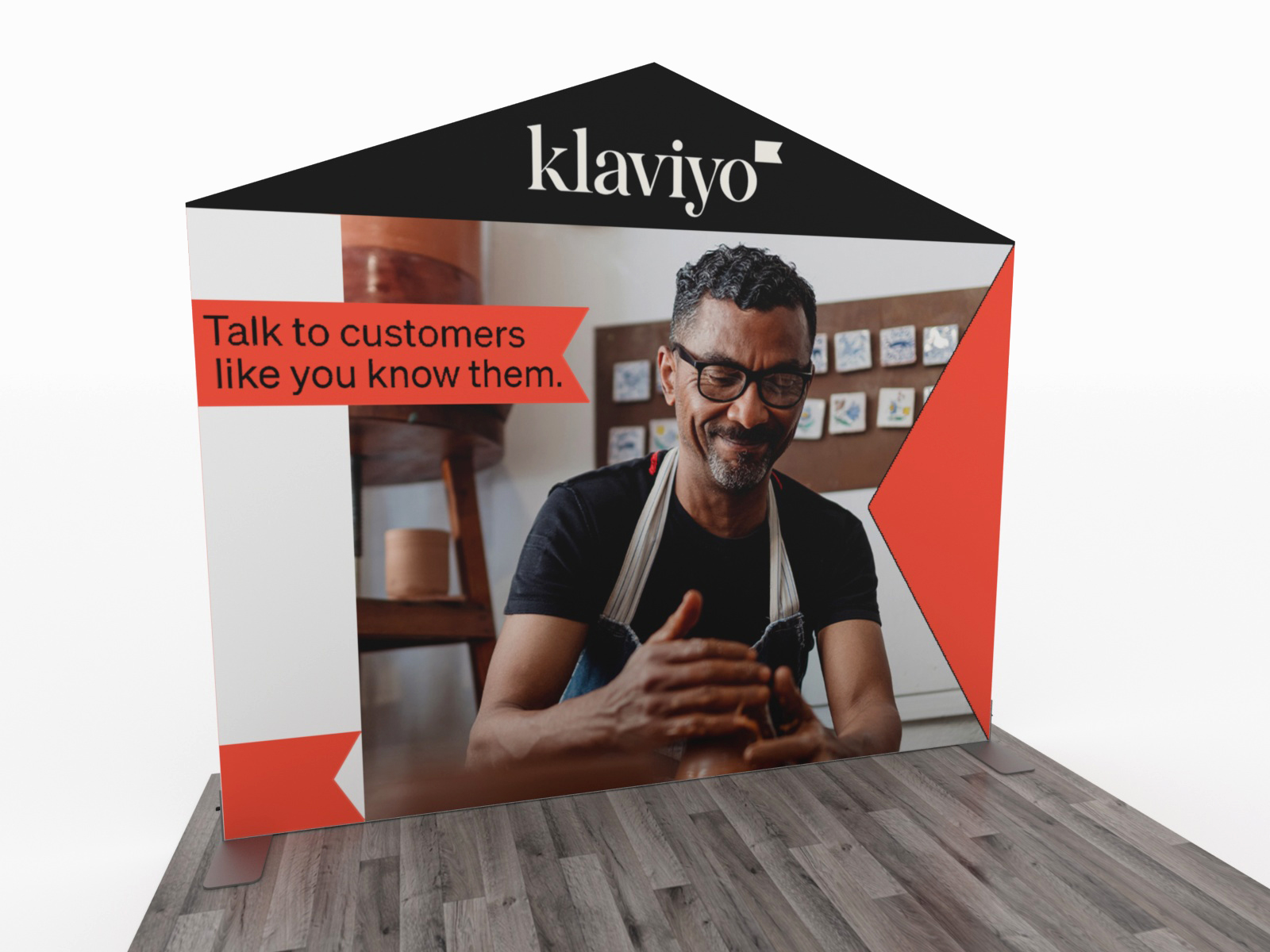
SYK-1043 | Peak Design w/ SEG Fabric Graphic
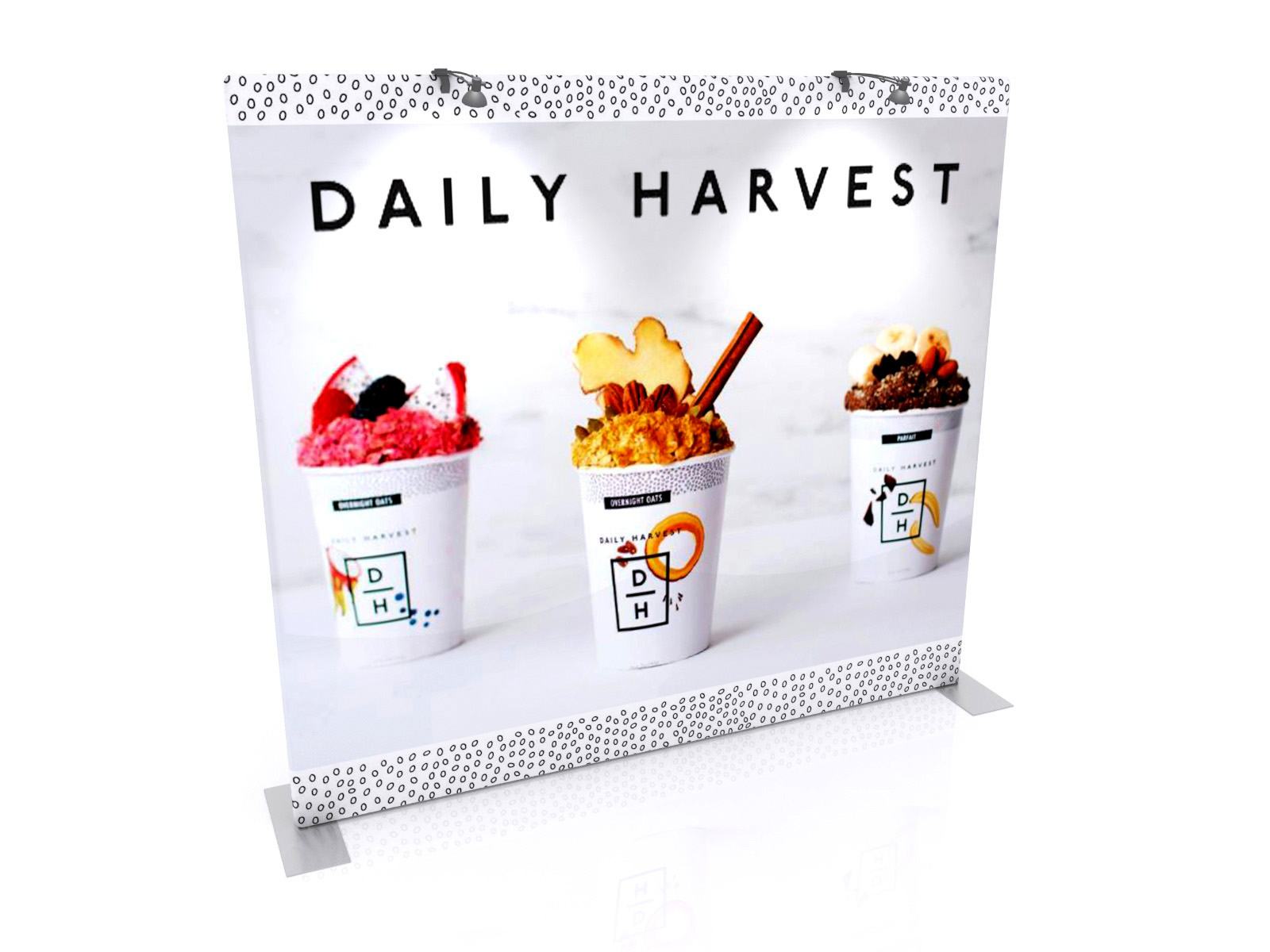
VK-8010 | Tube Frame w/ Fabric Pillowcase Graphic
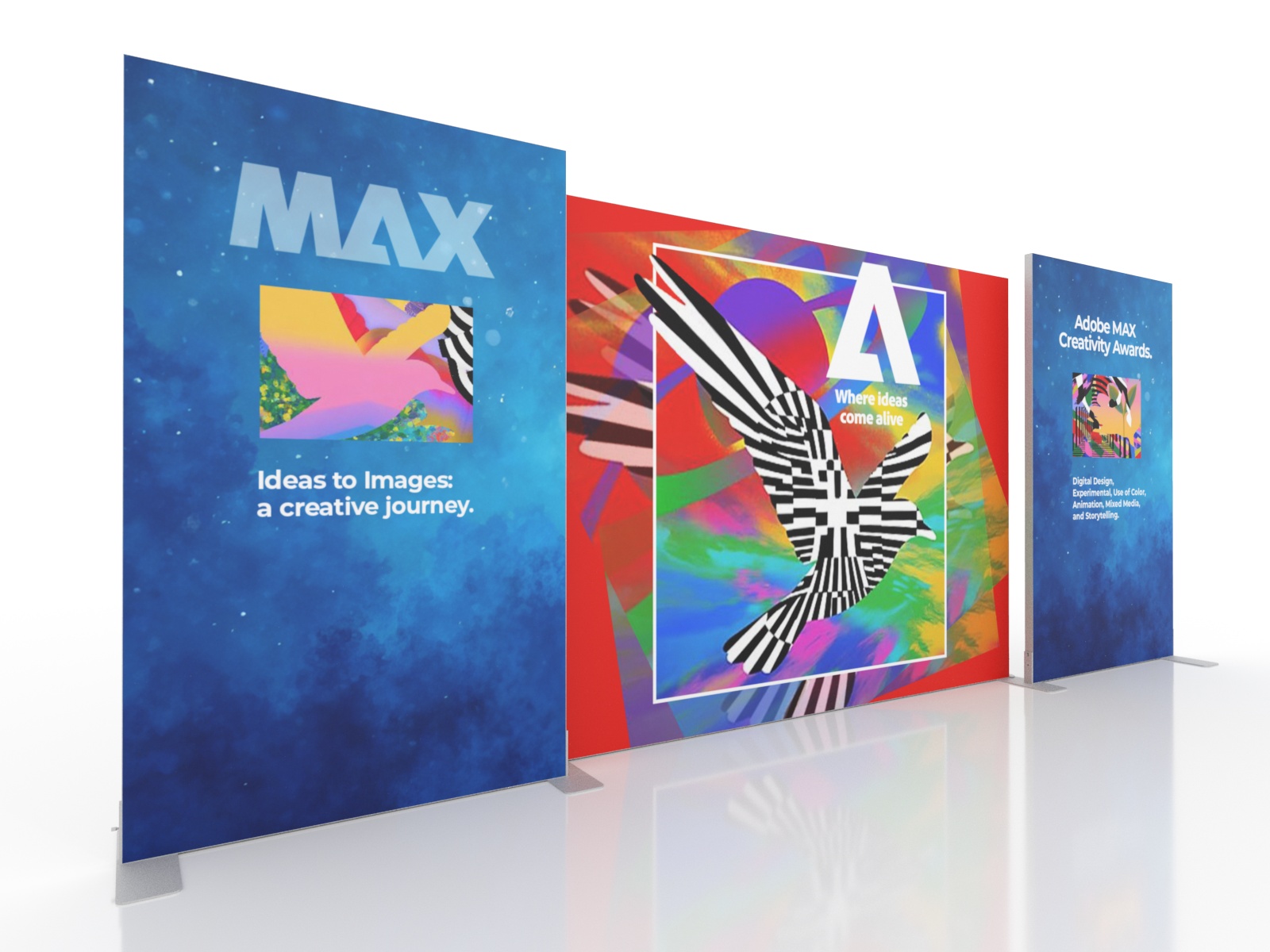
SYK-2030 | (3) Offset Rectangle Frames w/ SEG Fabric Graphics
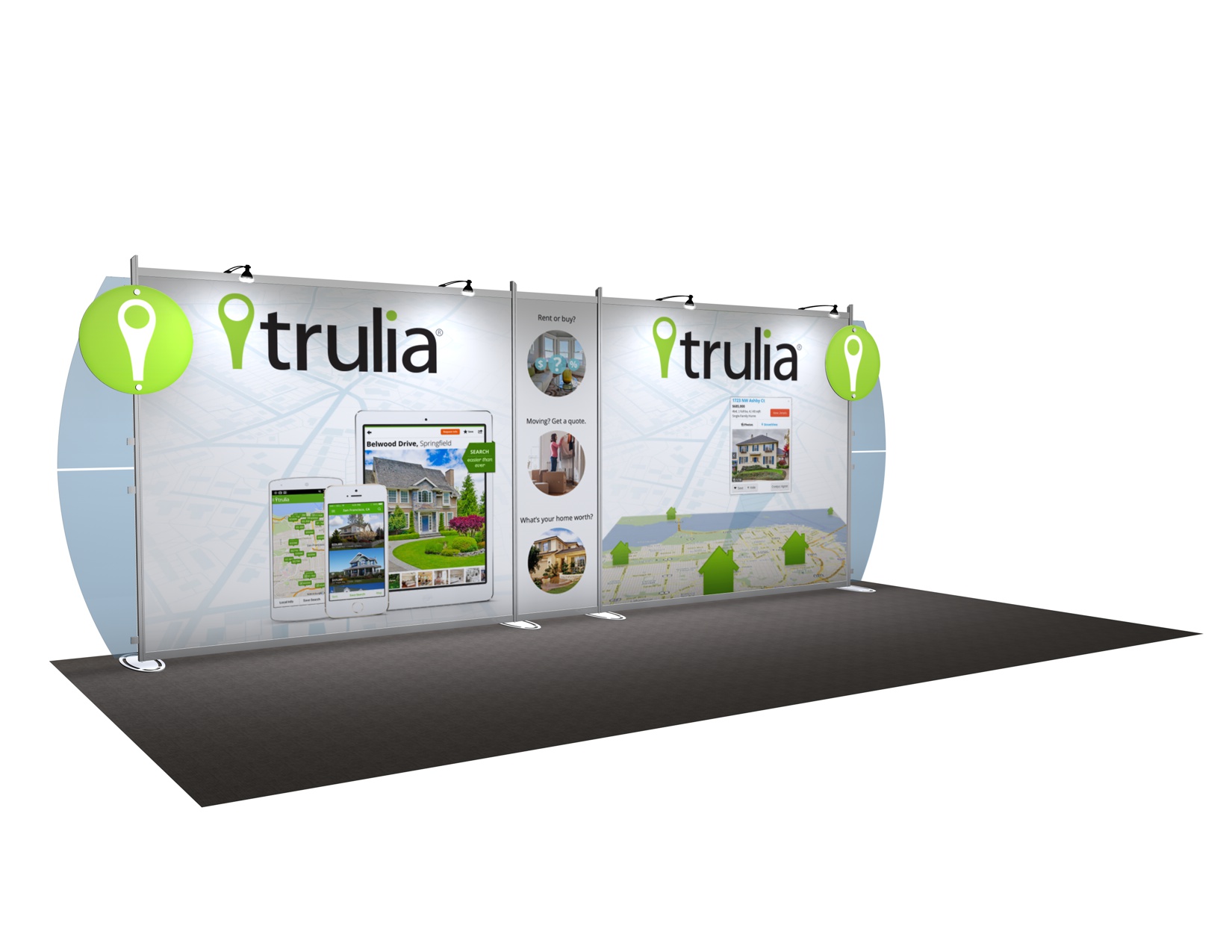
VK-2108 | Modular Frame w/ Velcro-attached Fabric Graphics
5 Mid-Price Trade Show Backdrops
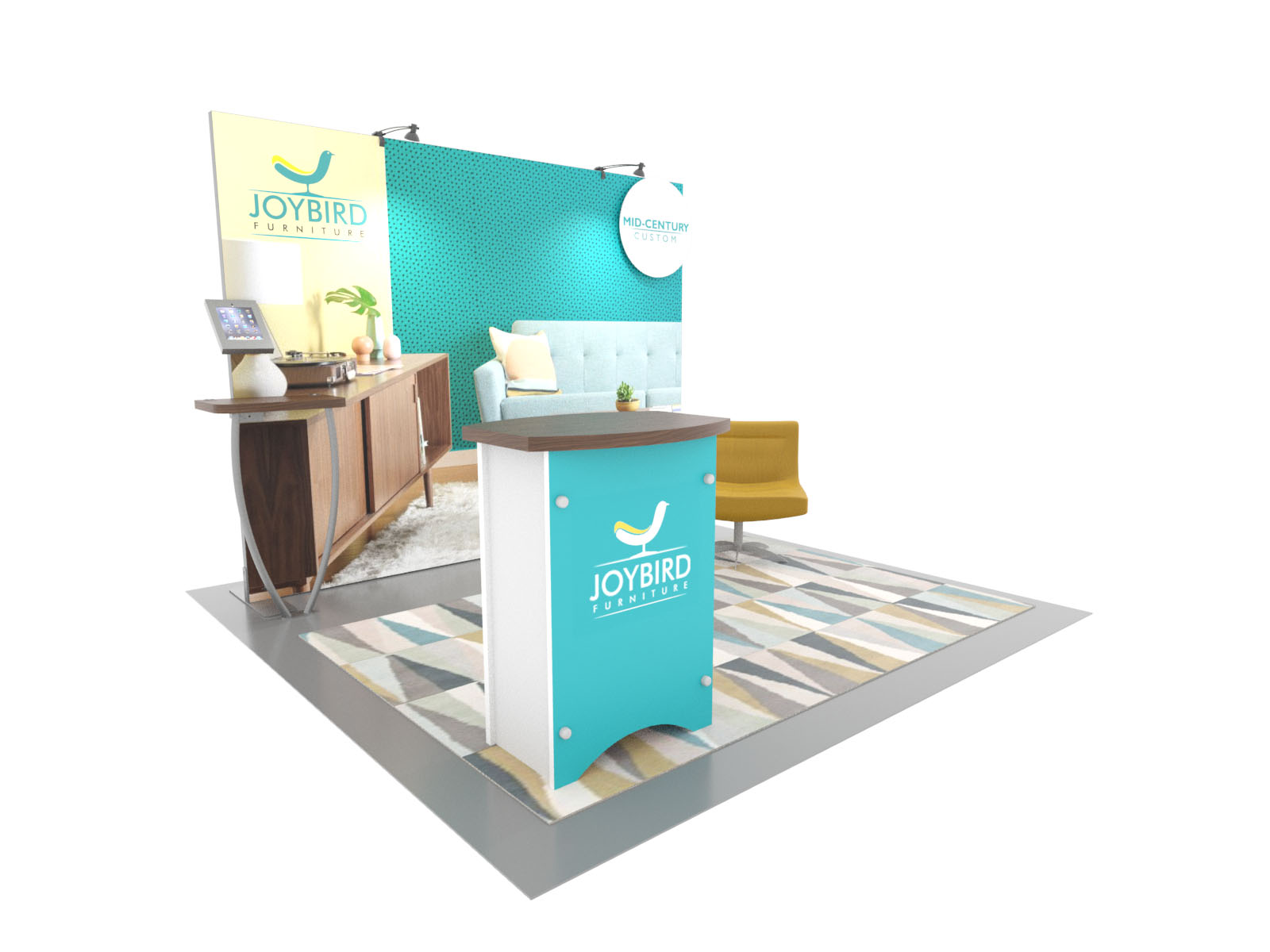
SYK-1002 | SEG Fabric Graphic, Aluminum Frame, & (2) Counters
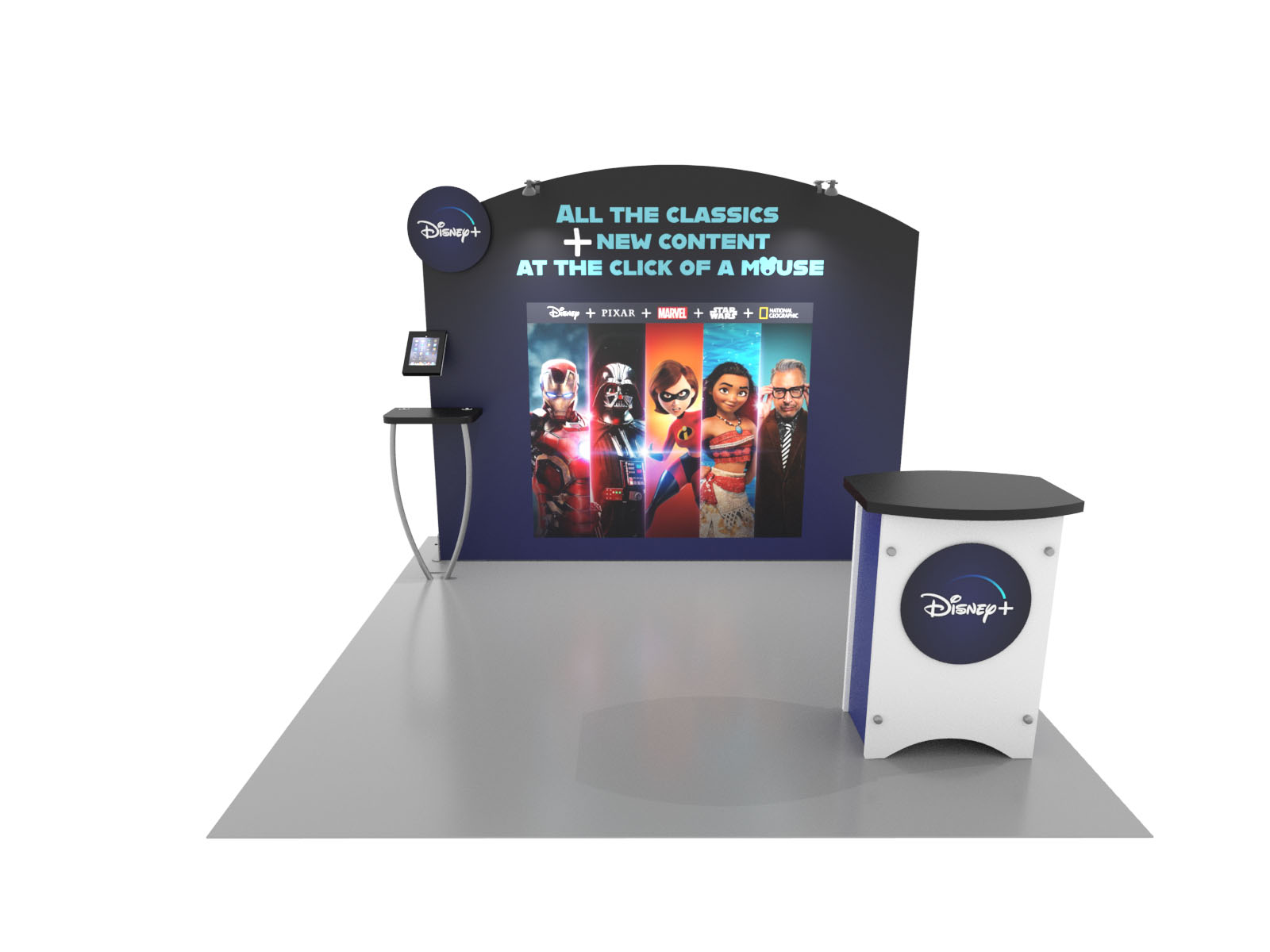
SYK-1026 | Arch Frame w/ SEG Fabric Graphic, & (2) Counters\
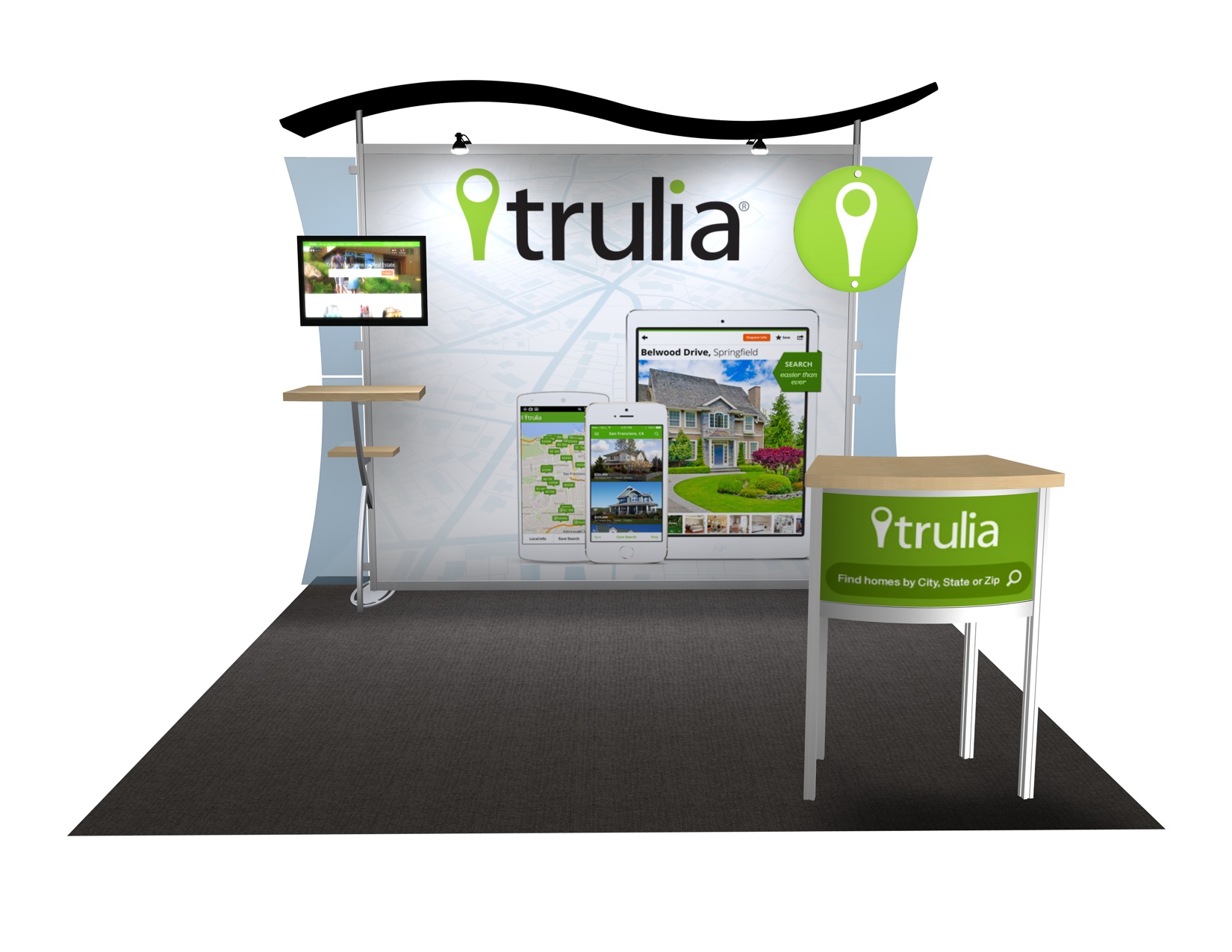
VK-1233 | Modular Frame w/ Counters & Velcro-attached Fabric Graphic
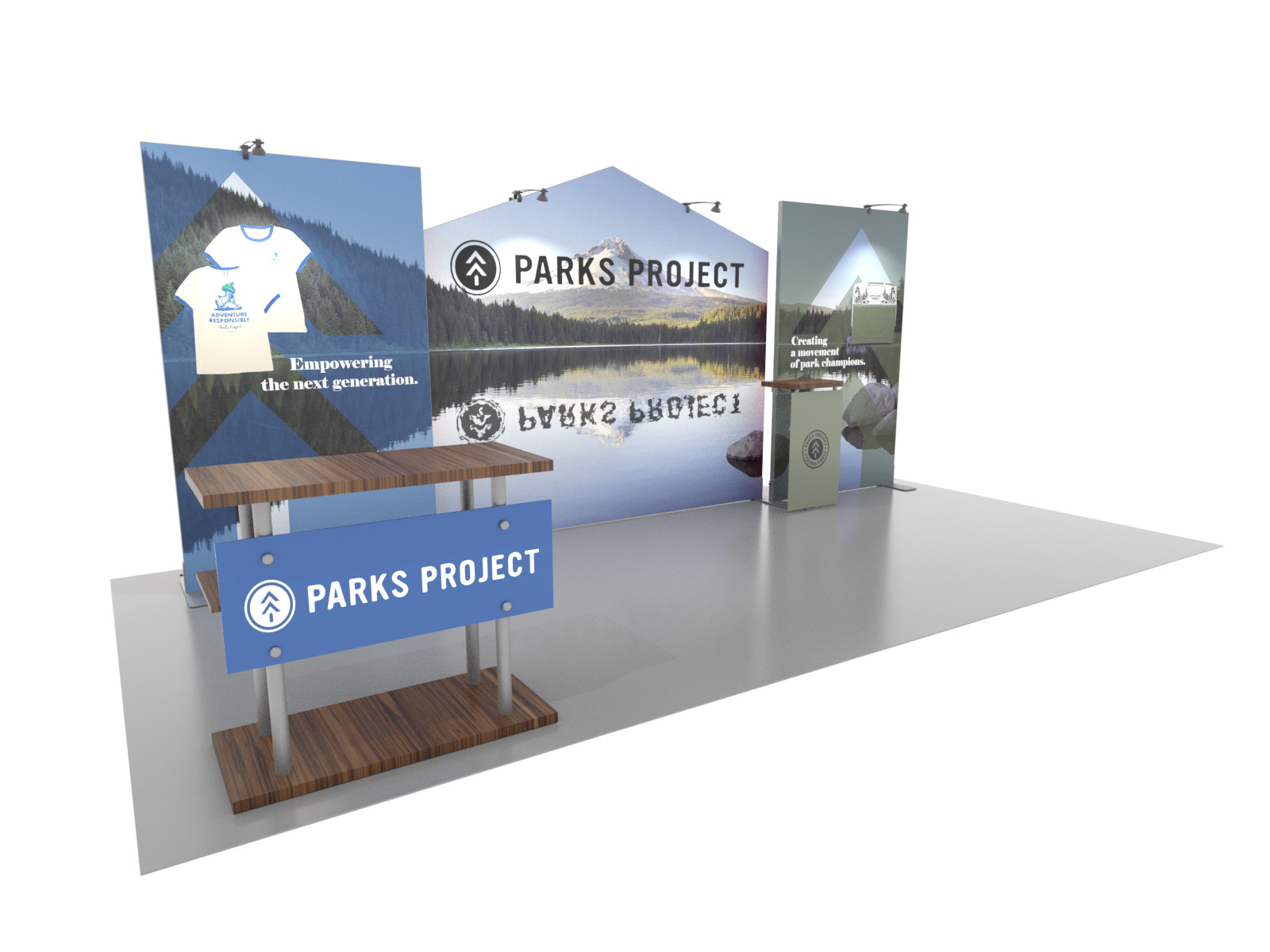
SYK-2024 | (3) Modular Peak & Rectangle Frames w/ Reception Counter
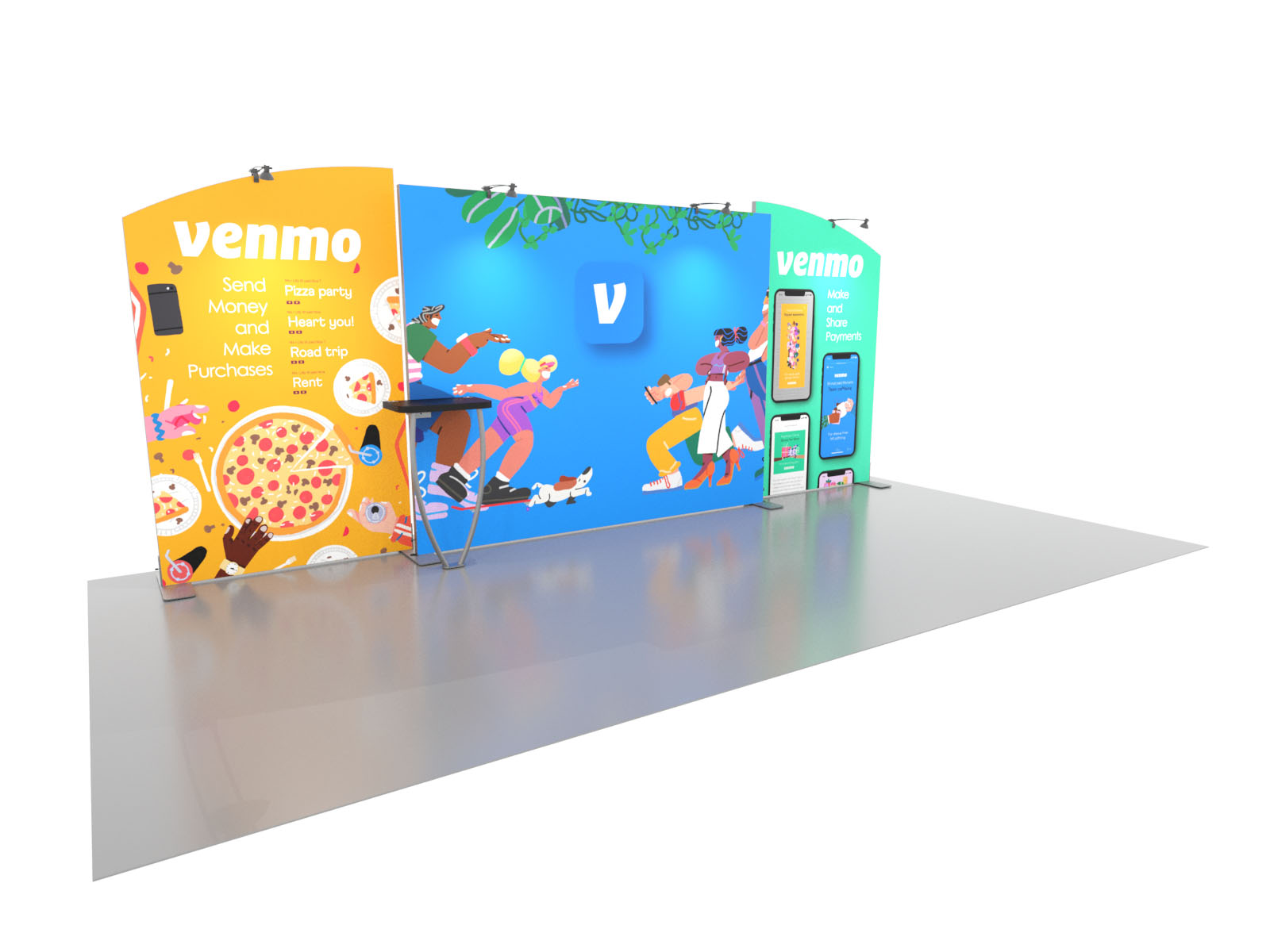
SYK-2013 | (3) Reconfigurable Aluminum Frames & SEG Fabric Graphics
Basic vs Professional Trade Show Backdrop Design
A DIY backdrop is excellent for a standard 10 ft. inline at local tabletop shows where you are testing the waters. However, if you are stepping up to a 20 x 20 inline at a major national convention, a professional modular system pays for itself by eliminating stress, ensuring venue compliance, and commanding the attention your brand deserves.
| Basic | Professional |
| Low Cost: Perfect for exhibitors testing the waters of trade shows or for small regional events | Upgrade: Greater design flexibility, higher quality materials, and often modular options. |
| External Lighting: Relies on LED arm lights or show hall lighting. | Internal & Accent Lighting: Backlit fabric graphics & accent lighting on counters & accessories. |
| Visual Impact: Acceptable appearance, depending on the graphics, with limited bells & whistles. | Upscale Appearance: Curves, offset frames, & accessories present a more professional display. |
| Packaging & Assembly: Highly dependent on the quality of the display & supplier. Sometimes excellent. Other times meant for one-time use. | Packaging & Assembly: An engineered display solution with logical packaging & assembly. |
Classic Exhibits: Expert Trade Show Backdrop Solutions
For over 30 years, Classic Exhibits has designed and built trade show backdrops for a broad range of exhibitors – from those new to trade show marketing and those with years of experience at events and expositions. Since budgets vary, as do marketing strategies, Classic offers a wide range of backdrops from basic backwalls to inlines with creative shapes, backlighting, and practical accessories. All made in the USA.
Every display includes five usual features not found in low-end imported backdrops. First, every part is labeled and referenced in the setup instructions. Second, the displays ship in reusable packaging meant to last for years. Third, the displays are engineered to be modular so a 10 ft. backdrop can expand to a larger inline. Fourth, replacement parts are readily available, typically within a week or less. And fifth, the backdrops are covered by a lifetime warranty on workmanship.
Conclusion
No two trade shows or two exhibiting companies are the same. And creating the perfect booth requires a strategy, careful planning, and a trusted exhibit partner. Whether you need a portable, modular, or custom exhibit, you need to know that an exhibit professional will ask the right questions and turn over “exhibition rocks” you may not have considered.
For over 30 years, Classic Exhibits has been a reliable source of expertise for new and seasoned trade show marketers. The Classic Exhibits Distributor Network includes over 200 exhibit houses and display professionals in North America. Find success on the trade show floor with an exhibit that reflects your marketing message. For more information, see www.classicexhibits.comm and explore Exhibit Design Search or request a meeting with a Classic Distributor Partner.
Frequently Asked Questions
What is the best material for a trade show backdrop?
Every trade show backdrop takes a beating during assembly and shipping. Good ones combine lightweight materials, like extruded aluminum and fabric graphics, with durable reusable packaging and cases. “Best” often comes down to your budget and your marketing needs. Choose what makes sense for you. Sometimes the best material for a trade show backdrop is to not expect that one backdrop will serve all your trade show or marketing needs.
How big should a trade show backdrop be?
In North America, most trade show booths are either 10 ft. or 20 ft. wide. With some exceptions. In reality, exhibitors rarely have the full 120” or 240” since the standard pipe and drape takes up several inches on both sides. Exhibit manufacturers know this and design backdrops anywhere from 8 ft. the 116” wide.
Can I reuse my trade show backdrop?
We hope so, but whether you reuse your trade show backdrop, and specifically your graphic, often depends on your next marketing campaign. Nearly all backdrop structures are engineered for multiple uses, even $99 banner stands. Sadly, many exhibitors treat inexpensive backdrops as disposable assets, since replacing them is cheap and obtaining replacement parts nearly impossible. Consider investing in backdrops meant to last years rather than months. Not only do they last longer, but they usually look better, are modular, and offer a range of practical accessories.