


Do you have an upcoming event or trade show? And you’re browsing for event booths? For many exhibitors, selecting an exhibit to buy (or rent) can be a daunting process. The industry terms are unfamiliar, along with the exhibition guidelines, and the display choices are overwhelming. But – and this is important – it doesn’t have to be stressful or scary.
The key to selecting trade show event booths is to ignore them in the beginning. Which may seem counterintuitive. Instead, focus on your trade show or event marketing goals. What do you want to accomplish? Be specific. For many exhibitors, the easy answer is increased sales or new customers. That’s a given. Instead, dive deeper into your marketing goals. For example:
- Are you planning to launch a new product or service?
- Is the event more for existing clients than new ones?
- Are you introducing new branding or marketing campaigns?
- Which departments will participate in the booth design, planning, and strategy?
- Is there a budget?
- Will you be participating in multiple trade shows, events, and conferences? Will the event booth be needed at those events?
By answering those questions, you’ll make the event booth selection process much easier. By then, you’ll know your booth size(s), your marketing goals, and your budget. which will narrow your choices considerably. Buying (or renting) an exhibit can seem like a Las Vegas buffet. What’s exhilarating for some is overwhelming for others. However, if you narrow your focus to the dessert bar, based on your strategy and budget, then choosing the perfect dessert (aka event booth) is much easier..
Mastering Event Booths
Let’s begin with the basic definition of an event booth. An event booth is a physical structure within a dedicated space at a trade show, exhibition, or event. It’s where a company or organization showcases its products, services, and brand to potential customers, partners, and industry peers. Think of it as a physical representation of a business’s offerings, designed to engage visitors and generate leads.
By participating in a trade show or event, you’ll:
- Increase Brand Awareness: Showcase your brand to a targeted audience and build brand recognition.
- Generate Leads: Generate high-quality leads and expand your customer base.
- Spark Networking Opportunities: Connect with industry peers, potential partners, and influencers.
- Gather Market Research: Gather insights into customer preferences, competitor activities, and industry trends.
- Introduce Product Launches and Demonstrations: Introduce new products or services to a receptive audience.
- Increase Sales Opportunities: Close deals on the spot and build long-term customer relationships.
The Five Types of Event Booths
In general, event booths can be categorized into five groups. The groups are based less on their cost than on their construction, assembly, and function
- Basic Portables; This includes banner stands, table tops, pop-up displays, and many simple tube display structures. They’re generally inexpensive and easy to set up but limited in accessory options. Some are well made. Some are borderline disposable.
- Professional Portables: Think of these as portable displays you would bring to a major trade show (rather than to the local Chamber of Commerce event). Professional Portables generally ship via UPS or FedEx, assemble quickly, and include accessory options like monitor mounts, locking counters, workstations, wireless charging pads, and protective packaging.
- Modular Displays: Modular is often a catchall term, meaning a display “can be” reconfigured. However, modular is most commonly used as a term for full-size aluminum frames that connect together and accept fabric or direct print graphics. These frames pack in wood crates. Like portables, they assemble quickly but have greater flexibility as components when reconfiguring an inline into an island and vice versa..
- Custom Exhibits: While custom traditionally means an exhibit built with wood, most custom exhibit construction includes aluminum, wood, fabric, and LED lighting. Custom, in its truest sense, simply means a display designed and built to your unique specifications.
- Custom vs. Customized: This isn’t really a category. More of a clarification. Nearly any display, except the most basic portables, can be customized to your specifications. That doesn’t necessarily mean it’s a custom-built booth.
Sustainable and rental options are often available in all the categories listed above with the exception of basic portables. Accessories, like counters, pedestals, and workstations, are also available in portable, modular, and custom designs.
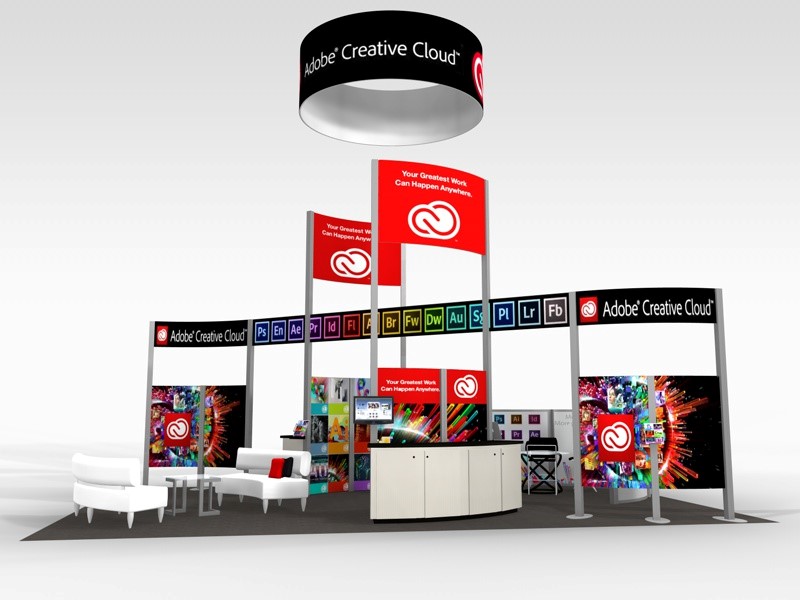
Essentials of Event Booth Design
This is a huge topic and can vary depending on the show, the exhibitor, and the current event booth design trends. There are several books available on exhibition booth design in Amazon including Exhibit Design That Works and a great blog post here. Here are some basic tips to get you started.
Your booth should be a reflection of your brand and a platform to connect with your target audience. By following these essentials, you can create a trade show experience that leaves a lasting impression.
Visual Appeal:
- Branding: Ensure your booth reflects your brand identity consistently.
- Color Palette: Choose colors that align with your brand and evoke the desired emotions.
- Graphics: Use high-quality, eye-catching visuals that clearly communicate your message.
- Lighting: Highlight key areas and create a welcoming atmosphere.
Functionality:
- Layout: Optimize the space for foot traffic, product displays, and attendee interactions.
- Storage: Provide ample storage for promotional materials, giveaways, and equipment.
- Comfort: Offer seating or standing areas for visitors to relax and engage.
Interactivity:
- Engaging Displays: Incorporate interactive elements like touchscreens, demos, or games.
- Product Demonstrations: Showcase your products in action to create interest.
- Lead Capture: Utilize technology or forms to gather attendee information.
Additional Considerations:
- Clear Messaging: Communicate your key message quickly and effectively.
- Call to Action: Encourage visitors to take the next step, whether it’s a purchase, sign-up, or demo.
- Staffing: Ensure your booth is staffed with knowledgeable and enthusiastic representatives.
- Technology: Utilize technology to enhance the attendee experience, such as digital signage or social media integration.
- Accessibility: Design your booth to be inclusive and accessible to all attendees.
Innovative Event Booth Ideas
Every three years, Katina Rigall Zipay, the Creative Director of Classic Exhibits, attends EuroShop in Germany. This show highlights international exhibit trends. Katina reviewed those trends in the video below:
Materials:
- Natural Fibers: Ropes, Baskets,
- Natural Raw Wood
- Greenery
- Mirrors: Reflective and Textured
- Tiles and Bricks
- Corrugated Structures and Accessories
- Wireframes Structures and Framing
Structures:
- Arches or Pill Shape
- Cubes
- Irregular, Organic Curves
- Abstract Trees
- Circles and Cylinders
- Accordion Shapes
- Slats
- Mobile Phone Shape (Arches)
Colors and Patterns:
- Printed Greenery
- Black, White, and Natural Woods
- Spot Bright Colors
- Color Blocking | Color Rainbows
- Segmented Shapes
- Art Deco
- Sketches: Cartoon, Ink Drawings, Doodles
Lighting:
- LED Bulbs
- Edge Lighting
- Rope Lights
- Programmable RGB
- LED Hanging Lights in Clusters
- Basket Lights
Interactives:
- Buttons, Cranks, Tunnels
- LED Video Walls Including Animation
- Transparent Video Screens
- Swings
Other:
- Mannequins
- Cathedral Shapes
- Sculptures
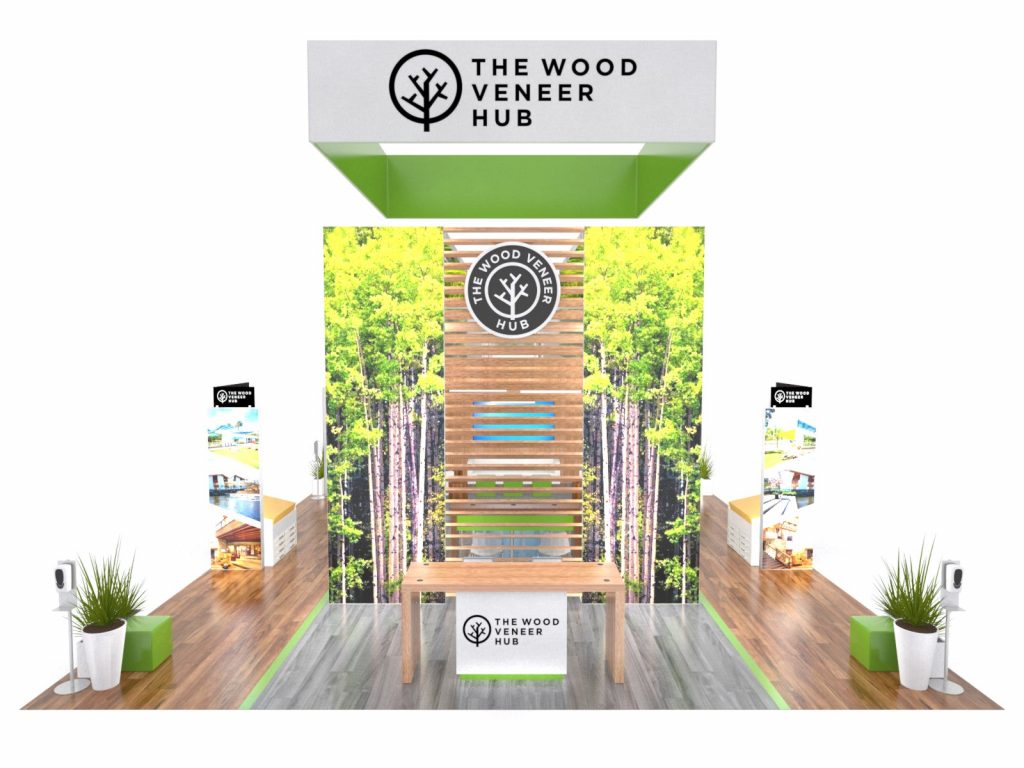
Tips for Setting Up a Booth at an Event
Your event booth has arrived at the show, either to the advanced warehouse or directly to the show site. Now it’s time to assemble it. The setup process can either be a “piece of cake” or a nightmare with multiple emotional meltdowns. You would probably prefer the former. Let’s review everything you can do before your booth arrives at the trade show to ensure there are minimal surprises.
Right From the Start
It’s not possible to know how every event booth assembles. Every display manufacturer and exhibit house has spent years, and often decades, perfecting how their products will assemble. However, you may have preferences and expectations. You may want it to assemble without tools or in 3 or fewer hours or be packed in crates or rolling cases. Share those preferences with your exhibit professional who can then guide you on what’s reasonable (and unreasonable) based on your requirements and budget.
During the Design Process
Nearly identical booth designs can often be achieved using different materials and building techniques. For example, a reception counter could break down into subassemblies to pack more efficiently in a crate or could be built fully assembled and ready to be placed in the booth space. Headers or hanging signs are another choice. Hanging signs are an excellent way to attract attention and visibility in the show hall. However, hanging signs require riggers to lift and attach it to the ceiling, which can be expensive and take time. A header, which attaches to the upper section of a booth structure, may offer the same benefits but at an overall lower cost.
Building and Documenting
All event booths, from the most basic portable to a custom 50 x 60 island exhibit, should include documentation on how to assemble it. Don’t assume the instructions are comprehensive or easy to follow. On a portable, ask to see them before ordering the display. They should be available. On a modular or custom exhibit, the exhibit house can share with you examples of previous builds using similar construction.
At some point, a modular or custom exhibit will be staged to ensure there are no issues, including fit and finish and graphics. If you have time, ask to be there during a portion of the staging to see how sections attach, in what order, and if there are any special techniques required. This will also give the opportunity to review the setup instructions to ensure they are detailed, logical, and complete.
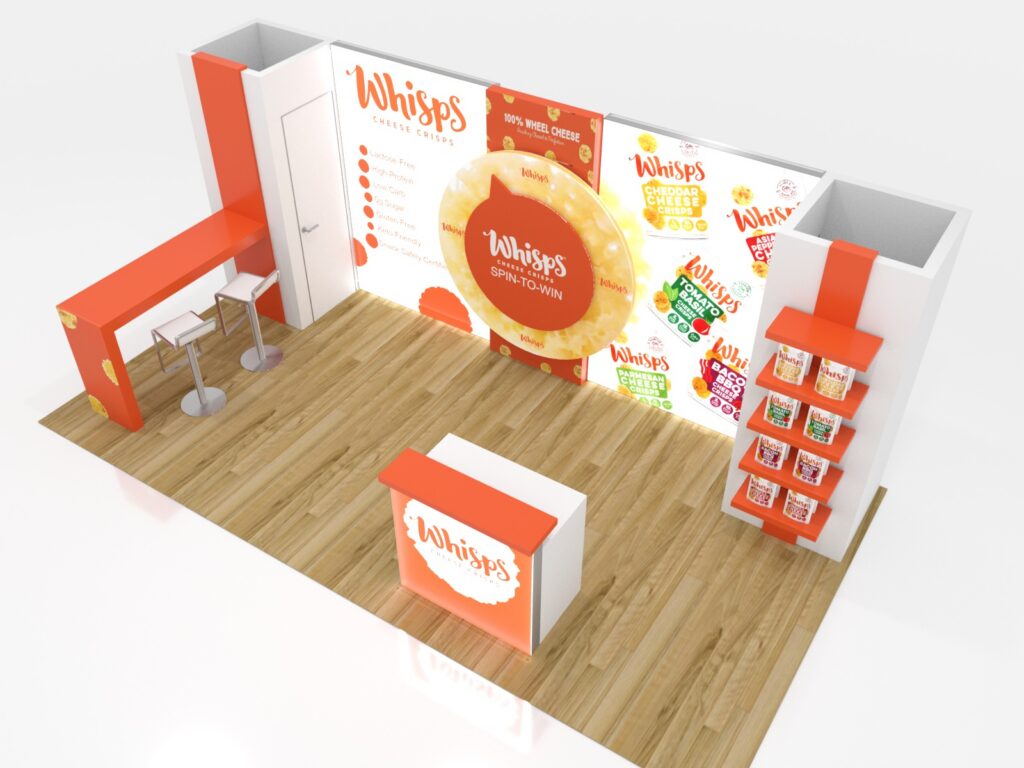
Choosing a Show Labor Provider
Many exhibits over a specific size require hiring labor to assist with the setup on the show floor. Regulations vary from facility to facility and occasionally, even show to show in the same facility. When hiring labor you have two options: 1. Hiring labor from the General Show Contractor, who will have a form in the show book, or 2. Working with an independent exhibitor-approved contractor. Your exhibit house can provide you with the pros and cons, along with recommendations on specific independent contractors.
Regardless of which opinion you choose, schedule time to review the assembly instructions with the labor provider before the show. This allows the labor provider to anticipate any issues and to schedule the right team for your install.
Completing the Show Forms
Time is money, and poor planning is the ultimate waste of money when it comes to trade shows. Most shows have early deadline dates for “everything.” Those rates can save exhibitors up to 40% simply by completing the electrical, material handling, labor, cleaning, etc. forms before the first deadline. Those forms also allow the General Service Contractor and other show service providers a peek into the resources they’ll need during installation and dismantling. Getting your forms in time gives you a much better chance of your exhibit landing in your booth space when you want it and getting your electrical and flooring down without having to wait. That way you can plan for labor to arrive at the right time, preferably during straight-time labor rates.
Strategies for Maximizing Event Booth Traffic
In trade show marketing, no expression is less true than “If you build it, they will come.” While attendees will be at the event or the trade show, there’s no guarantee they’ll stroll by or into your booth. The show organizer is responsible for attracting attendees to the show. You’re responsible for attracting attendees into your booth. A bustling booth is a dream for any exhibitor. Here are some rock-solid strategies to draw a crowd:
Pre-Show Promotion
- Targeted Invitations: Send personalized invitations to your ideal customer profile.
- Social Media Campaign: Build anticipation with engaging content, contests, and giveaways.
- Email Marketing: Nurture leads and provide valuable content leading up to the show.
- Press Releases: Generate media coverage to create buzz around your participation.
- Offer Exclusive Deals: Create a sense of urgency and incentivize purchases.
Booth Design and Experience
- Eye-Catching Booth: Create a visually appealing and interactive space.
- Clear Messaging: Communicate your value proposition quickly and effectively.
- Interactive Elements: Engage attendees with games, demos, or virtual reality experiences.
- Comfortable Lounge Area: Offer a respite for potential customers to relax and discuss business.
- Strategic Product Placement: Highlight your most popular or innovative products.
On-Site Tactics
- Giveaways and Contests: Attract attendees with enticing offers.
- Lead Generation: Use technology or forms to capture attendee information.
- Staff Training: Equip your team with product knowledge and excellent communication skills.
- Networking: Build relationships with other exhibitors and attendees.
- Follow-up: Collect business cards and follow up with potential customers promptly.
- Utilize Technology: Leverage digital tools for lead capture and engagement.
Post-Show Follow-Up
- Thank You Notes: Express gratitude to attendees and provide additional value.
- Social Media Engagement: Continue the conversation and share show highlights.
- Lead Nurturing: Develop a targeted follow-up campaign to convert leads into customers.
Combining these strategies can significantly increase foot traffic to event booths and generate valuable leads.
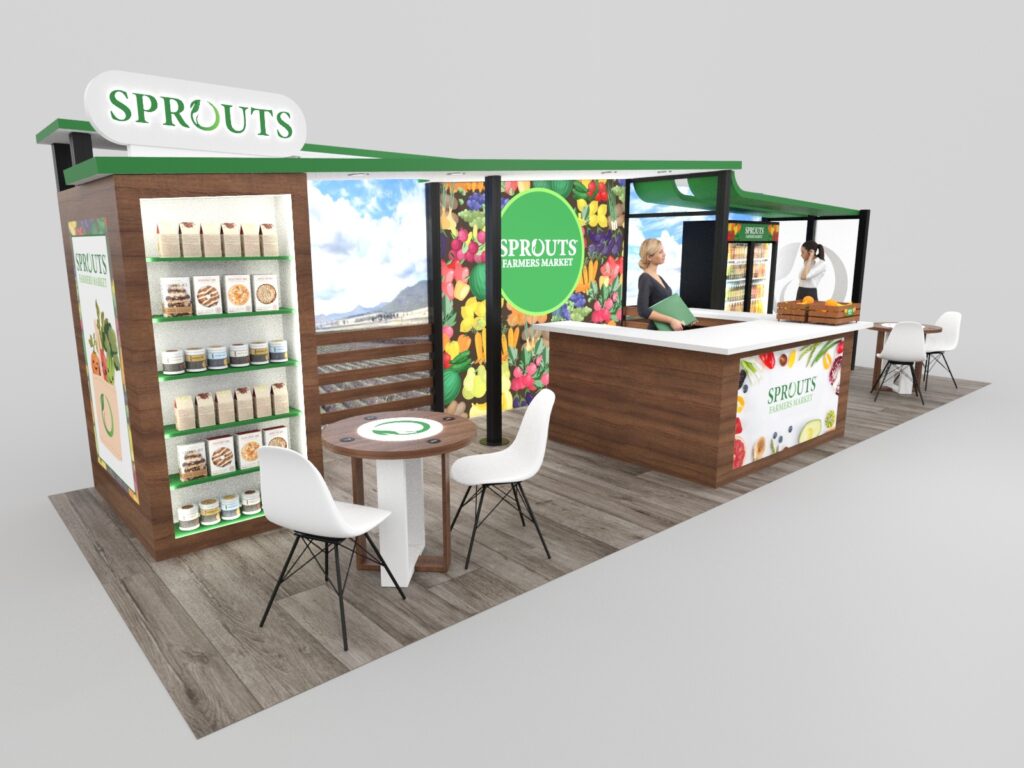
Event Booths: Conclusion
You have choices when selecting an event booth—lots of choices. Start the process by identifying your trade show marketing goals and your budget. Then begin formulating a strategy, including the trade shows you’ve identified as possibilities. Those will narrow your focus and make the selection process more manageable. Finally, don’t do this alone. Tap into the knowledge and resources of exhibit professionals. They can guide you through the intricacies of trade shows and event marketing. Summarize the key points discussed in the article, reinforcing the importance of well-designed and strategically planned event booths.
About Classic Exhibits
For 30 years, Classic Exhibits has been designing and building creative custom solutions for our Distributor Partners and their clients. As North America’s largest private-label exhibit manufacturer, we have the unmatched capability, capacity, and creativity to create 3D projects ranging from 10 x 10 inline displays to 60 x 80 double-deck islands. Find success on the trade show floor with an exhibit that reflects your marketing message. For more information, see www.classicexhibits.com and explore Exhibit Design Search or request a meeting with a Classic Distributor Partner.