

I was Clueless about Trade Show Marketing
Most marketing professionals will hint at it. Others will whine and grumble about trade shows. Then there are those who are honest. They don’t understand trade show marketing. That’s not surprising. It’s rarely taught in college on either the undergraduate or graduate level. At best, it’s mentioned in passing in a textbook. I know. After earning an MBA, I went to work for an exhibit builder. On Day 1, I was clueless. Many years later, I’m still learning.

I’d love to say that trade show marketing is marketing but that’s not entirely true. It’s different in the same way that event marketing is different. Face-to-face engagements are less structured, more unpredictable, and frankly, messier than other forms of marketing. And, depending on the company and their goals, it can be difficult to measure the results.
3D Structures vs. 2D Screens
Marketing has traditionally been 2D: print and television, brochures, websites, etc. It’s also been static and somewhat controllable. Trade show marketing or face-to-face marketing is as much about human interaction as the message or the branding. It’s about creating conversations before, during, and after the show.
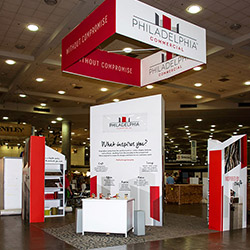
Then there’s the booth design. It’s outside most marketers’ comfort zone, especially the first two, three, or four times. The dollars involved make it even scarier. It’s easy to panic when the costs exceed six digits for even a modest island exhibit. Fortunately, great exhibit houses have amazing exhibit designers who have years of experience asking the right questions and guiding marketers to the best possible solution to meet their trade show objectives.
Variable Measurements

Unlike print, television, or web ads, there are no standards or no reliable sources for subscriptions, ratings, or clicks at trade shows. Counting leads works, but it’s a crude measurement. More experienced exhibitors track pre-show promotions, leads, and sales through the entire sales channel, but they are the exception.
That doesn’t mean there are no quantitative measurements. Lead tracking software has become very sophisticated as a tool during and after the show, which makes gathering data, exporting it, and tracking leads much easier. But like all measurements, it’s easy to set goals. The hard part is being disciplined about entering the data and then reviewing it during and after the show. For example, here’s a typical conversation one week after a trade show.
Sales Manager: “I see from the show leads that you chatted with Bill Burrows from XYZ company. That’s GREAT! We’ve been trying to get their business for years. What did you discuss?”
Salesperson: “Does the lead indicate the day and time I spoke to Bill? XYZ? Do they make sprockets? I think we talked about supply chain challenges for them and opportunities for vendors but I don’t recall the details.”
Competitors

Trade shows are truly a competitive sport when it comes to marketing. It’s the one time you and your competitors are all in the same room, all vying for the attention of the same audience. You see what they’re doing… and vice versa.
It pays to be alert throughout the show. What products or services are your competitors promoting? What’s the traffic like in their booth? Do you have any shared customers? If so, what can they tell you about your competitors. And it’s not just during show hours. You would be surprised how “relaxed” some competitors become during social events and mixers. The best information at a trade show often comes from conversations off the show floor.
Uncontrollable Variables
No one likes unpredictability when it comes to their marketing campaign and implementation. Yet, despite one’s best efforts, trade shows can be chaotic. Freight doesn’t arrive on time. Items are broken. Flights are cancelled. An exhibitor on the far side of the exhibit hall is giving away beer and sandwiches. The exhibitor nearest you has their music so loud you can’t talk to potential clients without shouting.
It should go without saying that you can minimize surprises with advanced planning. Staging the booth to check for damage or missing parts. Leaving a day early or staggering flights. Shipping the booth to the advanced warehouse. But most importantly, communicating with potential clients at the show WELL in ADVANCE.
Unfamiliarity/Knowledge
Most medium-sized companies participate in two to five trade shows per year. Some as few as one. That makes it challenging to become an expert quickly. Plus, each show may not only have a different audience, but also different rules, layout, and resources. Too often, when the internal “expert” understands how to maximize the company’s trade show efforts, that person is assigned to other responsibilities. Then someone new has to start fresh.
Sales and Marketing
Before, during, and after a trade show, sales and marketing must be dance partners. You’re a team. Face-to-face marketing requires sales skills and marketing expertise perfectly choreographed.
No matter how much sales and marketing claim to play nice, there’s always a wall at most companies. It’s that wall that dooms most exhibitors from fully benefiting from their trade show program. Successful exhibitors do two things well. They include everyone in the planning and they set clear, specific, and achievable goals. There should be no surprises and no excuses at every stage, especially once the show closes and everyone heads home.
Trade show marketing almost never leads to sales before the show. At the show, it creates opportunities. After the show is when the rubber meets the road and sales are closed.
How to Become a Trade Show Marketing Expert
- Go to trade shows as often as possible as an attendee. Ask questions and listen to what works and what doesn’t. Plus, be willing to take classes at industry events about trade show marketing, even if your goal isn’t to become a trade show certified manager.
- Rely on your local trade show professional. If they only know how to sell you a display, but not how to succeed at trade show marketing, then find someone else.
- Tap into industry consultants. These folks know how to avoid the potholes and the meandering paths so often taken by trade show exhibitors. You can find them in LinkedIn, Google, or by simply asking your local vendor.
- Plan to succeed. Create a comprehensive plan that targets pre-show, show, and post-show marketing and put specific goals in place for each one.
–Mel White
mel@classicexhibits.com
https://www.linkedin.com/in/melmwhite
https://twitter.com/melmwhite
About Classic Exhibits
Classic Exhibits has been designing and building trade show exhibit solutions since 1993. We’ve been honored as an Exhibitor Magazine Find-It Top 40 Exhibit Producers and an Event Marketer Fab 50 Exhibit Builders multiple times. Along with numerous Portable Modular Awards. With over 250 Distributor Partners throughout North America, there’s a Classic representative near you.
Contact us today whether you need a durable hand sanitizer stand built to last, a rental display guaranteed to attract trade show attendees, or a custom 30 x 40 exhibit with all the bells and whistles. We’re not just different. We’re better.