


Recently, I’ve been on the road, visiting Classic Distributors in the Midwest and South. We chat about industry trends, new products, and challenges in their market. Occasionally, they will ask me about competitors. That’s a topic that always makes me uncomfortable.
Now, why should talking about competitors be uncomfortable? Handled professionally, it can be instructive for both of us, and I am just as guilty of asking a distributor, “What are you hearing in the industry?”
Nevertheless, “Who is Your Biggest Competitor?” always makes me squirm. You would expect me to list a handful of systems manufacturers or internet resellers, but while they are competitors, they are not our biggest competitor. So, who is?
Our Biggest Competitor
You. You are our biggest competitor. Now don’t take that the wrong way. You are also our customers, colleagues, and friends. We like you. We respect you. Our business depends on you. We are honored to have you as part of the Classic Exhibits Family. And, yet, you are also our biggest competitor — day in and day out. That shouldn’t surprise you. If it does, it shouldn’t.
Every single day you listen to clients about their projects. Then you make a decision about who designs, manages, and builds that project. You? Another builder? Classic Exhibits? Let’s explore some examples together.
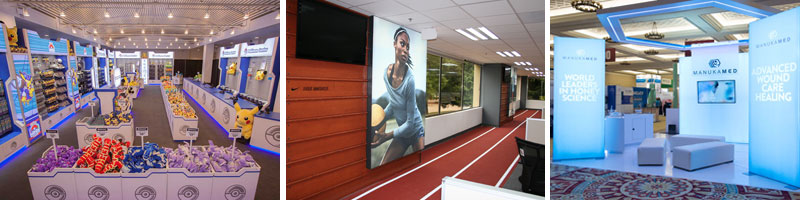
Custom Exhibits
Do you design and build it, assuming you have in-house custom capability? What’s the budget? What are the client’s expectations? Will it interfere with other projects or customers currently in the pipeline?
- Will it keep my shop busy and/or happy?
- Is the client’s budget realistic for our shop rate?
- Can I make margin?
- Is it within our skill-set or would it make more sense for someone else to build it?
- Should I send it to Classic Exhibits for a quote?
Assuming you don’t have in-house capability, do you find a contract builder?
- Do I have the in-house talent to project manage it?
- Should I find someone local?
- Do I trust that shop and do they have experience?
- What if the client expects me to store the exhibit and prep it for each show?
- Should I send it to Classic Exhibits for a quote?
Modular Exhibits
Aluminum extrusion systems seem, at first glance, an easier decision. What’s so challenging about designing and building a display from modular aluminum components. After all, it only requires:
- Designing a modular solution using standard and customized engineered aluminum components
- Ordering those components from an aluminum supplier at the correct size(s), angles, and finishes
- Supplementing them with accessories from other manufacturers such as counters, lighting, graphics, and casing
- Creating detailed setup instructions and numbered components
- Creating re-usable packaging that protects the components
- Completing all above within a 10-15 day time frame
- Ensuring margins are acceptable, including time and materials and lost opportunities
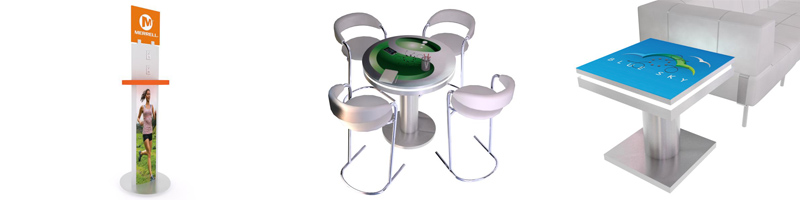
Specialized Displays
Specialized displays include lightboxes, charging stations, retail fixtures, corporate environments, or anything outside your normal trade show or event world.
- What is the client’s expectation of quality?
- Is the budget realistic?
- Is the time frame realistic?
- Should you design, project management, and build it?
- Do you have the capability to handle the project?
- If not, what company has the inventory, technology, and capability to produce it?
- Should it be handled locally or online?
- Can you make margin, complete the order on time, and continue to pursue other opportunities?
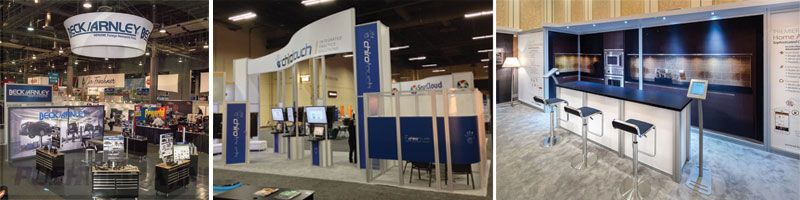
Rental Displays
The growth of rentals, especially customized rentals, has created a dilemma for many Classic Distributors. Building a rental inventory takes financial capital, warehouse space, and a steady order turn to be successful. And yet, rentals can be very profitable assuming there’s sufficient turn on your inventory and minimal damage.
- Do you pull from your inventory, add to your inventory, send it to Classic, or send it somewhere else?
- Do you have the physical space to warehouse a rental inventory?
- How deep should that inventory be?
- Are your designs limited by your in-house inventory?
- What if the client requires multiple quantities of counters, monitor stands, or kiosks?
- Do you have the time/talent to create detailed setup instructions for each project?
- Does geography or the show location determine whether to use your rental inventory or rely on a supplier like Classic?
- Are you accounting for the labor to design, build, pack, receive, and clean the rental? What about damage?
You get my point. If there was a way to measure lost opportunities for Classic, I suspect that we lose more business when you choose to build or rent something in-house than when the order is sent to another manufacturer. At Classic Exhibits, our job is to excel in design, customer service, production, packaging, instructions, and even marketing so you choose the easiest and most profitable path for your company. We have to win your approval, day after day. And that’s our goal since we don’t sell direct.
So, to you our competitor and our customer, while we don’t win them all, we win far more than we lose when we have the opportunity. All we ask is that we get the opportunity.
–Mel White
mel@classicexhibits.com
https://www.linkedin.com/in/melmwhite
https://twitter.com/melmwhite
https://www.facebook.com/Classic-Exhibits-Inc-113601405319757