

Logistics — The Operational Backbone of a Successful Exhibit
Ask any marketing professional to list their Top 100 favorite tasks. Trade show logistics would fall somewhere between 95-100. Assuming it’s even on their list. It’s not an exciting topic, unless you want to save money on freight and material handling, experience a trouble-free installation and dismantle, and minimize any “freight-related” surprises. Suddenly, trade show logistics jumped from 97 to 38 on the list.
Logistics as the operational backbone of a successful exhibit, covering everything from transportation and storage to delivery, installation, dismantling, and return shipping – and it’s less complicated than you may think, especially if you have the support of your exhibit house and your shipping department. Common logistic failures include missed deadlines, damaged exhibit components, unexpected material-handling charges, missing graphics, and rushed installation.
In this article, we’ll provide you with a practical end-to-end logistic checklist exhibitors can use before, during, and after an event. Follow the checklist, hit your deadlines, and ask questions and trade show logistics just may leap to 29 on your list of favorite tasks.
Key Takeaways
- What is trade show logistics and what does it include
- When should you start your trade show logistics planning
- Should you ship to the advance warehouse or direct to the show?
- Why am I being charged something called Drayage (or Material Handling)?
- The In’s and Out’s of Installation, Dismantle, and Return Shipping
- How to build a logistics budget and checklist
What Does Trade Show Logistics Include?
Let’s assume the Star Trek Transporter is real. You would tell Scotty to beam your exhibit to your booth space. Unfortunately, we don’t live in the 24th Century. In the 21st Century, trade show logistics is more than just “shipping an exhibit.” Not only does it require multiple steps, but also multiple partners like the exhibit builder, carrier, general contractor, venue, and installation team. In this article, we’ll review all the major stages, including planning → packing → shipping → receiving → material handling → installation → show → dismantling → return → storage.
| Logistics Stage | What Needs to Be Coordinated |
|---|---|
| Pre-show planning | Deadlines, contacts, documentation, budget |
| Exhibit transportation | Packaging, carrier, delivery method |
| Show-site receiving | Advance warehouse or direct-to-show delivery |
| Material handling | Drayage and movement to booth space |
| Installation | Labor, tools, schedule, booth readiness |
| Teardown | Dismantling, packing, labeling |
| Return logistics | Carrier pickup and destination |
| Storage | Warehouse conditions and inventory management |
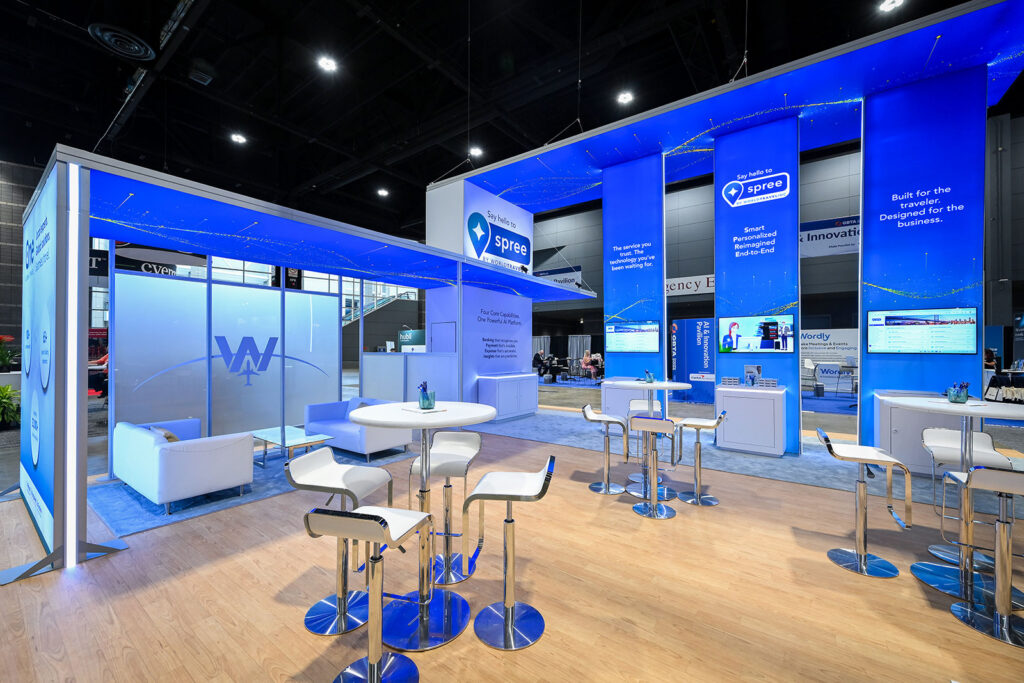
Start Planning Trade Show Logistics Early
While it’s a cliche to say, “it’s never too early to start planning,” it’s true. Your logistics should start once the event or trade show is planned rather than after the exhibit is designed and built. Start with a logistics calendar that works backward from the event’s move-in date, incorporating carrier, advance warehouse, show-site, and labor deadlines. Then assign responsibilities and due dates, even if those are placeholders for now. That way, the exhibit builder, internal marketing team, shipping provider, and installation contractor know exactly what tasks they own… and when.
Build a Trade Show Logistics Timeline
Unlike general event planning (which covers marketing and sales), trade show logistics focuses on ordering show utilities, meeting freight deadlines, coordinating marshaling yards and drayage (material handling), managing union install/dismantle (I&D) crews, and return shipping.
Most exhibitors focus on the exhibit design and build, and both are critical. But when creating your timeline, include these three critical (and often overlooked) variables:
- Drayage (Material Handling): The movement of freight from the venue’s unloading dock to your booth space. It is charged per hundredweight (cwt) and is independent of your freight carrier’s transit fees.
- Advance Warehouse vs. Direct-to-Site: Advance warehouse shipments arrive up to 30 days early and are delivered to your booth prior to exhibitor check-in. Direct-to-site must arrive during narrow, scheduled dock windows, risking trucker detention fees if lines back up.
- Show Kit Rules and Regulations: Every trade show has a comprehensive Exhibitor Service Manual (ESM) outlining exact cutoffs, union trade regulations (e.g., whether company staff can plug in their own monitors or if venue electricians are required), and move-in schedules.
Shipping to an Advance Warehouse vs. Direct to the Show
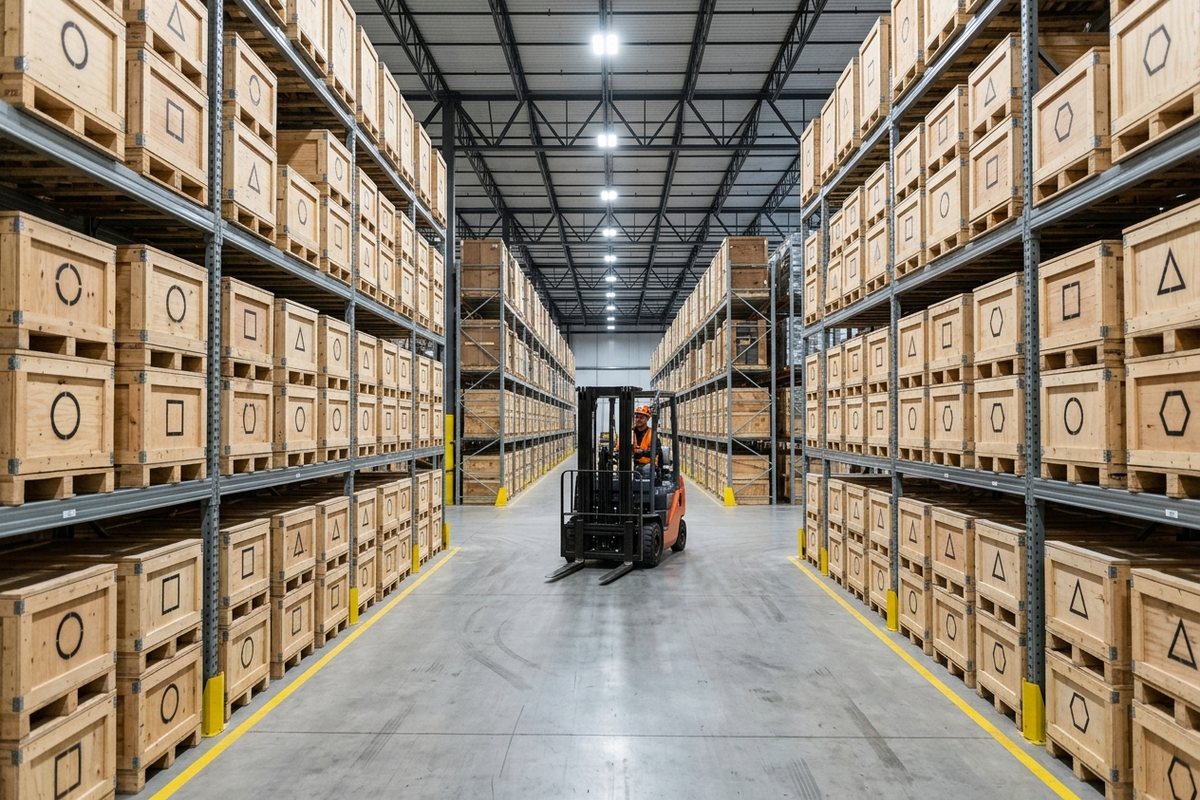
There’s no perfect answer about whether you should ship to the advanced warehouse or direct to the show site. Often, it’s dictated by two variables: time and money. Too many exhibitors simply run out of time, and shipping to the show site is their only option. Which is fine. Others decide to ship to the show site because the advance warehouse option can be more expensive. It’s rarely a lot more but given the cost of trade show marketing some exhibitors resort to pinching pennies, even if it’s not a wise decision.
In short, shipping to the advance warehouse has two advantages. Your exhibit arrives weeks before the show, so there’s significantly less stress about “will it or won’t it” arrive. Secondly, general show contractors prioritize these shipments. Meaning they move them from the warehouse to the dock to your booth space two, three, sometimes four days before the show. As a result, you can schedule flooring, electrical, and labor without relying on the Magic 8 ball.
Shipping to the show site is admittedly less expensive. However, at larger shows, there are often lines of trucks waiting to unload. This can result in additional and unexpected shipping charges. Sometimes wait times can be as long as 24 hours. In addition, you may not know when your freight will arrive at your booth space so scheduling I&D can be challenging. That’s not to say all shows have wait times on the dock or the arrival may be unpredictable. If you have some history with the show, then deciding between advance vs show site may be an easier decision… assuming nothing has changed like the venue or the General Show Contractor.
Trade Show Shipping Options
| Shipping Option | Best For | Key Consideration |
|---|---|---|
| Advance warehouse | Exhibitors prioritizing earlier receiving and flexibility | Requires shipment before the show-site deadline |
| Direct-to-show | Exhibitors with tight schedules or certain venue requirements | Timing must align closely with move-in |
| Dedicated freight | Large or high-value exhibit shipments | Greater control but potentially higher cost |
| Standard freight | Smaller or less time-sensitive shipments | May provide less scheduling flexibility |
Understanding Trade Show Drayage and Material Handling
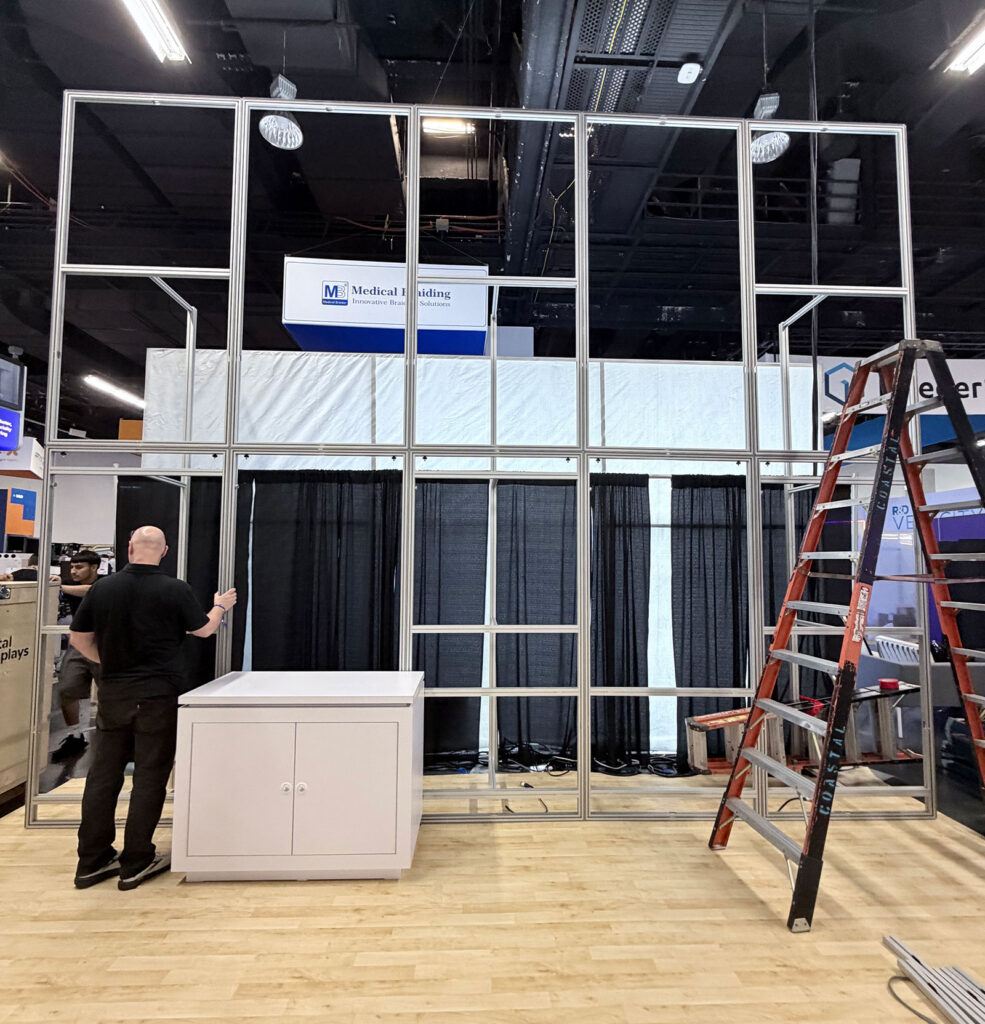
No terms create more angst among trade show exhibitors and suppliers alike than drayage or material handling. And although the cost is rarely a surprise, except to new or inexperienced exhibitors, the cost remains an annoying paper cut to most exhibitors. As an exhibitor in North American, drayable is unavoidable, but the cost can be predicted, managed and reduced.
While a freight carrier handles shipping to the venue, the General Show Contractor (GSC) is responsible for the movement and storage of freight throughout the show process. The show organizer hires the GSC to handle this and other activities and, in most cases, the GSC charges the exhibitor for those services. All that comes under the category of drayage or material handling.
How to Reduce Unexpected Drayage Costs
To lower trade show drayage expenses, focus on consolidating freight, smart scheduling, lightweight booth design, and utilizing allowed self-handling options. Follow these 8 steps. You still won’t love your material handling bill, but you’ll avoid any mystery charges.
8 Ways to Reduce Trade Show Drayage Costs
- Ship Early to Meet the Advance Deadline
- Consolidate Your Exhibit Shipment
- Use Proper Exhibit Packaging
- Review the Exhibitor Service Manual
- Avoid Unnecessary Special Handling
- Keep Accurate Freight Documentation
- Design Your Exhibit with Shipping in Mind
- Work with an Experienced Exhibit Partner
Create a Trade Show Exhibit Shipping Checklist
Either you or your exhibit house should have an exhibit shipping checklist. Your company has invested too much time and money into their trade show marketing to “wing it.” Nothing creates more anxiety and chaos on the trade show floor than “Does anyone know where [fill in the blank] is?” With planning and a checklist, it’s avoidable.
Start with these 5 Categories and then fill in the details:
- Pre-Shipping Strategy and Planning: Determine your shipping method, show deadlines, choice of carrier, and venue regulations (specifically labor).
- Inventory and Preparation: Create a master list of exhibit components and marketing materials, inspect your packaging, review shipping labels, and prepare an emergency show kit. Take photos… lots and lots of photos.
- Freight Carrier: Complete the BOL and share any site specific instructions with the carrier.
- On-Site Tracking and Move-In: Verify the arrival of your freight, confirm its location within the convention hall and your booth space, check for damage, and attach “empty stickers” to cases/crates.
- Show Close and Outbound Shipping: Confirm outbound shipping with the carrier, complete GSC outbound freight paperwork, pack and secure exhibit to avoid damage during return shipment.
| Before Shipment | Confirm |
|---|---|
| Exhibit components | All pieces accounted for |
| Graphics | Correct graphics packed and protected |
| Hardware | Fasteners, tools, and accessories included |
| Technology | Screens, cables, power equipment |
| Furniture | Correct pieces and quantities |
| Promotional materials | Literature, giveaways, signage |
| Documentation | Labels, bills of lading, shipping information |
| Packaging | Proper protection and reusable containers |
Prepare Your Exhibit for Safe Transportation
Every exhibitor when purchasing a new exhibit assumes their beautiful new display will be packed like it’s a Faberge Egg headed to an art auction. Sadly, that’s not true. Some exhibit houses take pride in their crates and packaging. Others do just enough. In both cases, the exhibit is likely to arrive undamaged to the first show. It’s what happens after the exhibit arrives that tells the tale. Does the packaging and the instructions facilitate a seamless install, after the show, is the repackaging logical and secure. The crate construction and packaging can have a long-term impact on exhibit repairs, installation and dismantle costs, and freight charges.
Consider the time and effort you devoted to the exhibit design. You wanted it perfect. Make the same effort to understand how the display will be packed, loaded, unloaded, and reassembled. Request to see examples of crate packaging and setup instructions. Ask them about their use of reusable packaging (vs. one-time foam, plastic wrap, and corrugated paper). The final packaging, just like the exhibit, should be a work of art both on the way to the show and when it returns. If not, then consider another exhibit house.
Plan Trade Show Exhibit Installation, Teardown, and Return Shipping
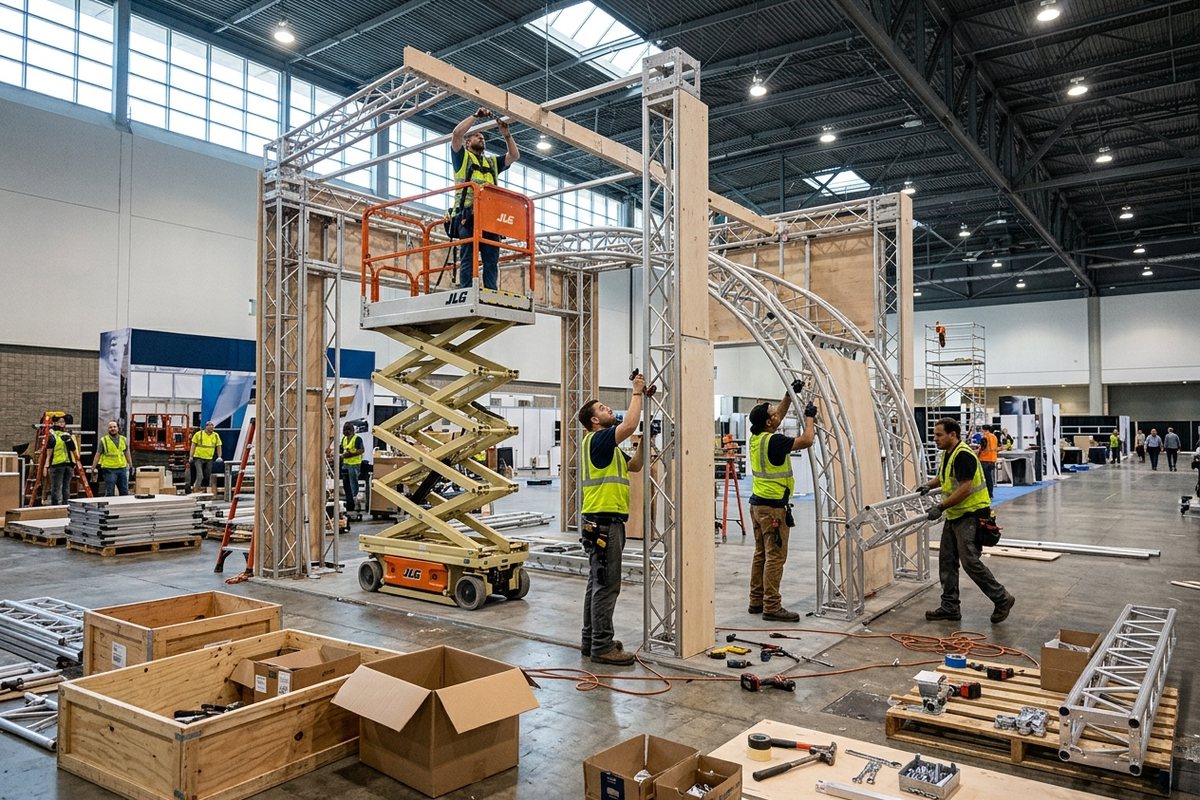
The exhibit installation, dismantle, and return shipping is the proverbial “how the sausage gets made” process of any trade show program. It’s not sexy, but it’s critical to the success of a company’s trade show program.
Your installation will depend on the size of your exhibit and location of the show. Smaller exhibits which don’t require tools and can be assembled in about an hour don’t need show labor. Unless you want it. Larger inlines and islands can be tricky. What’s OK in Atlanta or Phoenix may not be fine in NYC or Philadelphia. Start by reviewing the labor rules and regulations in the show manual. If you don’t understand what you can and can’t do, then contact your exhibit house or the General Show Contractor. Disagreeing with the regulations doesn’t give you a free pass to ignore them. There are consequences, which can be as simple as a slap on the wrist to getting banned from the show floor.
Someone on your team (who is attending the show) should be familiar with the assembly, even if their role is merely to supervise a labor crew. Their knowledge will assist and accelerate the installation, thereby ensuring the exhibit is assembled quickly and efficiently.
The Trade Show Floor is Chaotic During the Install
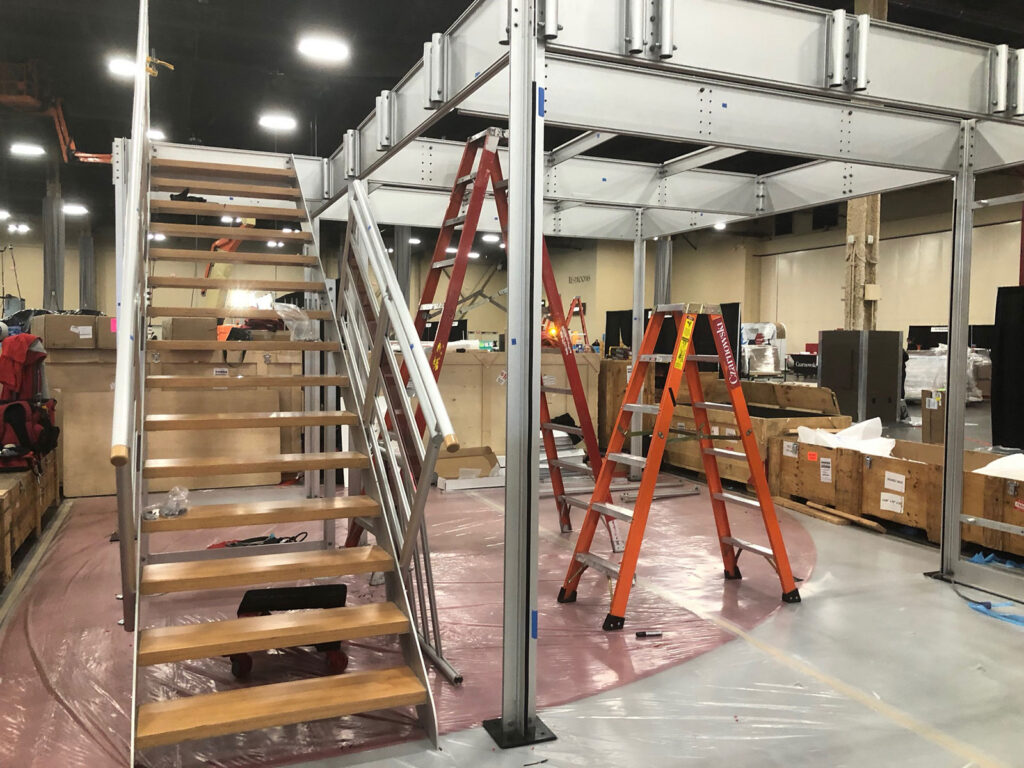
Your planning should begin months before freight arrives, including labor scheduling, booth access, electrical requirements, technology, and venue rules. Identify your resources: exhibit builder, installation and dismantling (I&D) labor, electricians, AV technicians, venue personnel, and the exhibitor’s team.
Regarding labor… you have two choices. You can hire labor from the General Show Contractor or you can hire an Exhibitor Appointed Contractor. Ask your exhibit house which option makes the most sense for your situation. Both have their pluses and minuses.
Finally, you would be surprised at how many exhibitors neglect to schedule return shipping. Then they panic at the end of the show. The GSC will gladly facilitate your return shipping at a cost that’s multiples higher than if you scheduled it yourself. Plan ahead. You do not want to be kicking yourself three years later for the one time you walked away from your booth and the GSC had to force your freight. That bill will make your drayage charges look like spare change.
Trade Show Exhibit Storage: What Happens After the Show?
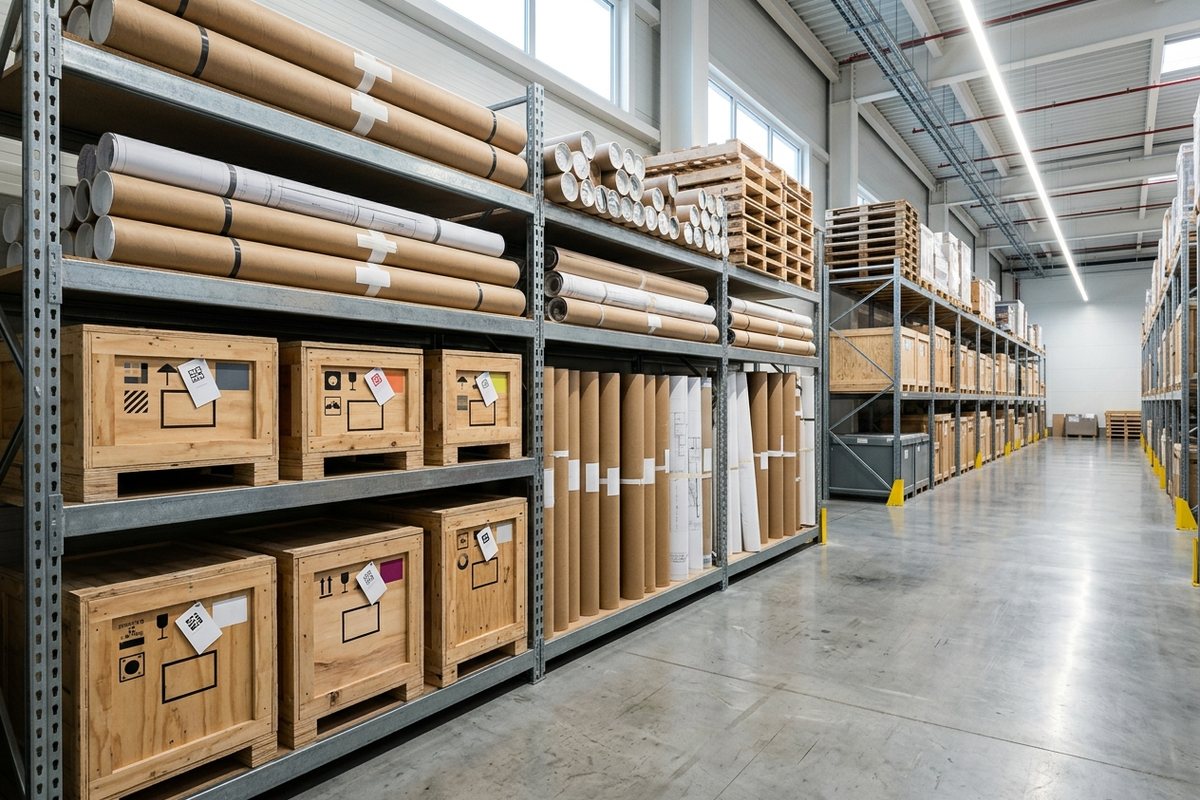
Most exhibitors with larger or multiple exhibit properties elect to store them with an exhibit house or a third party. Exhibit houses offer both pre- and post-show services including inspection and repair. Unlike a third-party warehouse, they’re warehouses are dedicated to the storage of exhibit properties in a clean, dry building, protected from physical damage, and clearly labeled. However, out of sight is often out of mind to exhibitors. You’re paying a fee each month for storage, which is based on sq. ft. All too often, companies forget what’s being stored. As a result, it slowly accumulates and quickly ages.
| Storage Approach | Advantages | Potential Drawbacks |
|---|---|---|
| Company-owned storage | Direct access and control | Requires space and inventory management |
| Third-party exhibit storage | Professional handling and less internal space | Ongoing storage fees |
| Exhibit builder storage | Convenient for recurring shows | May involve additional service costs |
| Temporary storage | Useful between closely scheduled events | Not ideal for long-term exhibit programs |
How to Build a Trade Show Logistics Budget
A trade show logistics budget covers the entire operational chain required to move, place, power, and return physical booth assets. While marketing teams often focus on space rental and collateral, logistics typically accounts for 35% to 45% of the total event spend. Over time, the percentage can be even higher as the cost of the exhibit is depreciated.
Typical Logistics Spending Breakdown
- Material Handling (Drayage) – 30% – 35%
- I&D Labor (Install/Dismantle) – 25% – 30%
- Inbound & Outbound Freight – 20% – 25%
- Venue Utilities & Rigging – 10% – 15%
- Contingency / Ancillary – 5% – 10%
| Cost Category | Questions to Ask |
|---|---|
| Freight | How large and heavy is the shipment? |
| Drayage | What are the show’s material-handling rates? |
| Storage | Is advance warehouse receiving required? |
| Installation | Who handles I&D? |
| Electrical | What power does the booth require? |
| Technology | Are AV or internet services needed? |
| Return freight | Where does the exhibit go after the show? |
4 Common Trade Show Logistics Budget Mistakes to Avoid
Discounted Deadlines: Order all electrical, rigging, plumbing, and carpet 21 to 30 days prior to move-in. GSCs apply a mandatory 20% to 40% “floor rate” penalty on orders placed on-site or past the cut-off.
Accurate Freight Weights: Drayage is billed on gross weight measured at certified scales. An inaccurate shipping estimate will distort your budget when the inbound weigh-ticket arrives.
Pack Smart: Avoid shrink-wrapped, loose cardboard boxes on open pallets if possible. If the dock crew considers your pallet unstable, they reclassify the entire shipment under Special Handling, increasing drayage rates by up to 30%.
Be Realistic about Labor: Halls rarely open for labor immediately at the closing bell. It takes 2 to 4 hours for the GSC to return empty crates from storage. Booking a labor crew for 5:00 PM when empties won’t arrive until 8:00 PM results in paying union crews to sit idle.
Always Carry 10%–15% in Contingency: Common variance items include carrier waiting time / detention fees at the marshaling yard, outbound off-target fees, and emergency hardware repairs.
| Common Mistake | Better Approach |
|---|---|
| Shipping at the last minute | Build contingency time into the schedule |
| Ignoring show deadlines | Review the exhibitor service manual early |
| Budgeting only for freight | Include drayage and I&D |
| Poorly labeled components | Use clear, durable labels |
| No inventory | Document every shipment |
| No return plan | Arrange post-show transportation beforehand |
| Reusing damaged packaging | Inspect and replace packaging as needed |
The Complete Trade Show Logistics Checklist
| Timeline | Logistics Checklist |
|---|---|
| 8–12 weeks before | Confirm venue requirements, deadlines, shipping strategy, and installation needs |
| 4–8 weeks before | Finalize exhibit components, graphics, technology, and freight estimates |
| 2–4 weeks before | Inspect, inventory, package, label, and schedule shipment |
| 1–2 weeks before | Confirm carrier, tracking, warehouse/show-site receiving, and labor |
| Move-in | Track freight, verify booth location, supervise installation |
| Before opening | Complete booth inspection and technology check |
| Show close | Secure materials and coordinate teardown |
| Post-show | Confirm freight pickup, inventory contents, and document damage |
| After return | Inspect, repair, clean, and store the exhibit |
How an Experienced Exhibit Partner Can Simplify Logistics
When it comes to trade show logistics, ego and ignorance are expensive. Yes, you’ll learn from your mistakes over time, but you’ll waste considerable time and money along the way. An experienced exhibit partner, like a Classic Exhibits Distributor, can assist with design, production, packaging, shipping, installation requirements, and post-show handling. And whether you’re a newbie or a veteran to exhibition marketing, your trade show program is never too small or too large to benefit from their wisdom and assistance.
Classic Exhibits has been designing and building custom trade show booths since 1993. We’ve been honored as an Exhibitor Magazine Find-It Top 40 Exhibit Producers and an Event Marketer Fab 50 Exhibit Builders multiple times, along with numerous Portable Modular Awards. With over 250 Distributor Partners throughout North America, there’s a Classic representative near you.
FAQs
Can I ship my trade show exhibit directly to the venue?
Yes. And many exhibitors assume that a direct shipment to the venue is their only option. However, consider the benefits of shipping to the advance warehouse, especially if your installation will require more than one day.
How far in advance should I ship a trade show exhibit?
Smaller shows will only accept shipments a day or two before the trade show opens. Larger shows want to avoid the chaos of hundreds of trucks arriving at the same time. They’ll encourage you to send your freight to the advance warehouse and will store it up to 6 weeks before the installation dates.
Who is responsible for trade show drayage costs?
General Show Contractors are responsible for charging drayage. The fees are based on a per lb. or CWT which is listed in the show book. Exhibitors are responsible for managing their drayage costs by packing their exhibit efficiently and using exhibit systems that lower the total weight.
How should I store a trade show exhibit between events?
Maybe. Not every exhibitor wants to own their trade show exhibit(s). Which is why rentals have increased over the past 6-8 years. With a rental, you don’t have to worry about storage. If you own a smaller exhibit and have space, then storage it in your own facility. But for larger exhibits and exhibitors who frequently reconfigure their booth depending on the trade show or their marketing objectives, it probably makes more sense to store it with your exhibit house. They have the space and can do the “heavy lifting” of managing your exhibit program.
What should I do if my trade show exhibit arrives damaged?
First, always take photos of the booth, crate, and packaging before it ever leaves for the show. Then, when you see the damage, document it. If possible, document it while the freight company and/or General Show Contractor is present. Additionally, check with your exhibit house, freight company, and business insurance provider about the extent of your coverage. Asking later rarely leads to the satisfactory resolution of a claim (in your favor).