

Your Exhibitor Trade Show Checklist
Congratulations! You Won the Trade Show Planning Lottery
While it may seem like a massive task, it’s neither overwhelming nor all-consuming. The key is to have a checklist. As the designated trade show planner, you don’t have to make every decision, but you do have to own the checklist, including additions, revisions, and due dates. In other words, someone has to check the boxes and keep everyone on task.
Trade shows are expensive, often as much as 30-40% of a company’s annual marketing budget, and trade show costs keep rising as freight, labor, travel, and show services increase, often at double-digit rates. And, unlike a magazine ad or a social media post, trade show marketing requires managing exhibit design, shipping, electrical orders, promotional giveaways, staff training, and a multitude of other tasks. All of which are deadline sensitive.
The person who manages the trade show checklist will be able to maximize your budget by ensuring the timely booking of travel, lodging, freight, and promotional materials and the completion of show forms during the less expensive early bird dates. Honestly, it may seem like a thankless job, but it’s as important as the creative, sales, and marketing tasks required for a successful trade show program.
Key Takeaways
- Create a trade show checklist template. This template can then be modified for each trade show.
- Your detailed trade show checklist should set expectations, responsibilities, and timelines.
- Trade show tasks can generally be organized into three big-picture groups: pre-show, show, and post-show tasks.
- Your checklist should include “early bird” deadlines for show services like labor, electrical, and lead management, plus the increased fees of missing those deadlines.
- Trade show planning should be a group responsibility. The most successful trade show marketing programs include “buy-in” and shared input from Sales, Marketing, Customer Service, Engineering, Production, and Senior Management.
Why Every Exhibitor Needs a Trade Show Checklist
The first step is easy. Start by searching for “trade show checklist” on the Internet. There’s no shortage of examples. Some are free. Others have a cost. None are identical, because no shows, companies, or individuals are identical. Ideally, create your own or ask your exhibit house if they have a template.
The checklist ensures nothing gets forgotten or overlooked, which can and will happen to new exhibitors. There are big “Oh No’s!” like not scheduling freight to and from the show, booking labor to install and disassemble your exhibit, and forgetting to purchase flooring. Those can be expensive to purchase at the last minute. Then there are the “Oh Darn!” tasks like not including cleaning supplies in the case/crate, sending literature at the last minute, or not ordering lead retrieval until you arrive at the show. They’re annoying but not catastrophic.
Finally, trade shows are stressful, and stress is the exact opposite of what you want before, during, and after a show. Admittedly, checklists are not stress-free since it’s all about completing tasks (which often require the assistance of others) and completing them on time and with accuracy. With each passing show, trade show checklist management becomes easier — and it’s not because the number of tasks gets shorter. The list often gets longer.
Your ongoing knowledge and experience about trade shows will make the job easier. Completing the electrical form, which gave you hives the first time, now takes minutes instead of hours. And, after a few hiccups, you understand when to schedule I&D labor vs. rigging vs. flooring. You’ve done the trade show choreography, and every move, every step, has a logic that seemed utterly random before.
Pre-Show Planning Essentials

Define Trade Show Goals and KPIs
Setting clear goals before a trade show is the difference between a high-return investment and an expensive team vacation. Without concrete objectives, it’s impossible to measure your return on investment (ROI) or know if the show was a success.
Most company goals fall into four buckets. You’ll want to define your trade show goals and align them with measurable Key Performance Indicators (KPIs).
- Lead Generation: Filling the sales pipeline with new prospects. Track total “qualified” leads against total booth cost.
- Brand Awareness & Positioning: Launching a new product, entering a new market, or establishing thought leadership. Measure booth foot traffic, social media reach, press coverage, and collateral distributed.
- Customer Retention: Deepen relationships with existing customers and showcase new products and services. Track the number of existing clients in your booth or at meetings and their sales volume over the next six months.
- Competitive Awareness & Strategic Partnerships: Trade shows are perfect for gathering information on competitors and finding new suppliers and customers.
Establish Your Budget Early
Locking in your trade show budget early isn’t just about financial discipline — it is a critical logistical strategy. Waiting costs money. The longer you delay your budget, the higher your execution costs will climb for the exact same footprint.
Without an early budget, companies often overspend on the booth space and physical structure, leaving themselves with no budget for pre-show marketing and staff training.
| Expense Category | Typical Budget % | Strategic Shift If Budgeted Early |
|---|---|---|
| Space Rental | ~30% | Lock in prime hall real estate with high foot traffic. |
| Booth Design & Fabrication | ~40% | Avoid rush fees and allow time for custom fabrication. |
| Show Services & Logistics | ~20% | Lock in advanced utility rates and standard freight shipping. |
| Promotion & Staffing | ~10% | Secure early-bird travel rates and invest in pre-show marketing campaigns to drive booth appointments. |
Select the Right Booth Space
Selecting the right booth space can be a chess match, where the rules depend on the venue, the show, your budget, and your history with a particular trade show. Show organizers reward existing and long-term exhibitors and permit them to choose their space first. That doesn’t mean you won’t get a good space, but it does mean your trade show strategy may be influenced by your location on the show floor.
Once you know the booth size, consider these seven tips when making your selection:
- Large, expensive display booths are generally located near the show hall entrance. They typically fan out and give way to smaller booth spaces toward the back and perimeter.
- Keep some distance between you and your closest competitors.
- Consider the architecture of the facility. Be aware of columns and variations in ceiling height.
- Look for opportunities to stand out. Often, there are great opportunities away from the entrance or in another hall that can give you an advantage. Consider exhibiting near the restaurant entrance or in a space flanked by primary traffic aisles.
- There are restrictions on height. Some shows strictly enforce these regulations. Don’t assume the regulations in the United States are the same in Europe, Asia, and Latin America. They’re not.
- Don’t discount perimeter booth spaces. Perimeter spaces often allow full-height exhibits (up to 16 ft.). This advantage, along with placement at the start or end of high-traffic aisles, can attract lots of attendees. Compact modern inline displays can shine in these spots.
- Consider splitting an island exhibit space with another company. Many shows allow two exhibitors to share a booth space and divide it to suit. An island can be converted into two peninsulas, for example.
Trade Show Booth Preparation Checklist
You will need both a budget template and a checklist. And while they serve two different purposes, managing costs vs. managing tasks, there’s considerable overlap.
Having a checklist also ensures nothing gets forgotten or overlooked, which can and will happen to new exhibitors. There are big “Oh No’s!” like not scheduling freight to and from the show, booking labor to install and disassemble your exhibit, and forgetting to purchase flooring. Then there are the “Oh Darn!” tasks like not including cleaning supplies in the case/crate, sending literature at the last minute, or not ordering lead retrieval until you arrive at the show.
Preliminary items on your checklist should include:
- Exhibition goals and strategy
- Budget
- Departmental responsibilities
- Show date(s) and due dates for ordering services
- Exhibit design meeting(s)
- Graphic design meeting(s)
- Identifying booth staffing and responsibilities
- Booking travel and lodging
- Creating pre-show, show, and post-show marketing/sales plans, including sponsorships, mailings, invitations, and in-booth events
- Designing and ordering promotional materials and giveaways
- Scheduling freight to and from the show
Marketing and Promotional Preparation
This may seem obvious… but you would be surprised how often exhibitors assume the exhibit is the marketing strategy. Hint: it’s not. Attracting, engaging, and following up with attendees requires a plan everyone understands and follows.
Pre-Event Marketing Strategy
Pre-event marketing is marketing pure and simple… along with a helping hand from the Sales Team. Your goal is to create interest and curiosity about your presence at a trade show, all while scheduling appointments in your booth and at the show. Your marketing campaign has succeeded if you already have traffic headed to your exhibit before the show even begins. The random traffic from the show is a bonus.
Think of a trade show like a corporate event. At an event, you would know who’s attending, the itinerary, and your goals before anyone walked through the door. When you depend on the show organizers to drive attendees to your booth, you’re no longer in control.
Printed and Digital Marketing Materials
Printed brochures are less common at many trade shows because attendees are less willing to carry around a bag of flyers and product catalogs. Much of that information is now digital — via websites, videos, slide presentations, or QR downloads. Eye-catching backlit LED lightbox displays can carry that visual messaging in the booth. What’s even better is that lead retrieval software makes the follow-up process simple, since product sheets can be selected and emailed while the visitor is still in the booth.
Promotional Giveaways and Swag
When used wisely, trade show giveaways or promotional products are an investment in your business. They serve as silent salespeople, promoting your company long after the trade show or sales event is over.
Promotional product experts are often asked, “What’s a hot giveaway right now?” However, a “hot” or “cool” giveaway may not translate into an effective marketing tool for your target market. Just like all your marketing, you want your swag to be memorable and to spark future sales. Tap into the knowledge of a promotional products professional. If they’re good, they’ll ask you all the right marketing questions about your company and steer you away from gimmicks. Plus, they’ll work with you to order it early to save you money and serve as your advocate if anything goes awry.

Staffing and Team Preparation
When it comes to your trade show staff, you get what you tolerate. When you expect more, your team will rise to the challenge. Set clear expectations, communicate your goals, plan your strategy, and manage the environment, the days, and your post-show communication. It’s not easy, but your team (and your boss) will sing your praises when it’s “Go Time!”
Staffing is only as complicated as you make it. Let your trade show objectives guide you when making decisions on who to bring and how to achieve those objectives.
Rule #1: Knowledge
Not every booth staffer needs to know everything. Collectively, however, the team needs to know everything and know who’s the expert about every subject. The expert should be able to answer questions about that topic, as well as explain the features and benefits of your products or services.
Rule #2: Goals
Set clear goals for your booth staff. What do you hope to achieve by participating in the trade show? Then provide your staff with training on your products or services. This should include a thorough overview of your offerings, as well as any recent updates or changes.
Rule #3: It’s Not Over Until It’s Over
Provide your staff with feedback throughout the training process. This will help them identify areas where they need improvement and make sure that they are on track to achieve their goals. Pre- and post-show staff meetings keep the team focused on the goals and address any concerns.
Rule #4: Explore
It’s not just about what’s happening in the booth. Give them time to explore the show floor, check out competitors, discover new suppliers, and meet with attendees at social events.
Rule #5: Have Fun!
Attending a trade show should be fun, and trade show booth staff training should be a positive experience for everyone involved. Make sure to create a relaxed atmosphere where your staff can learn and grow.
Shipping, Logistics, and Installation Instructions
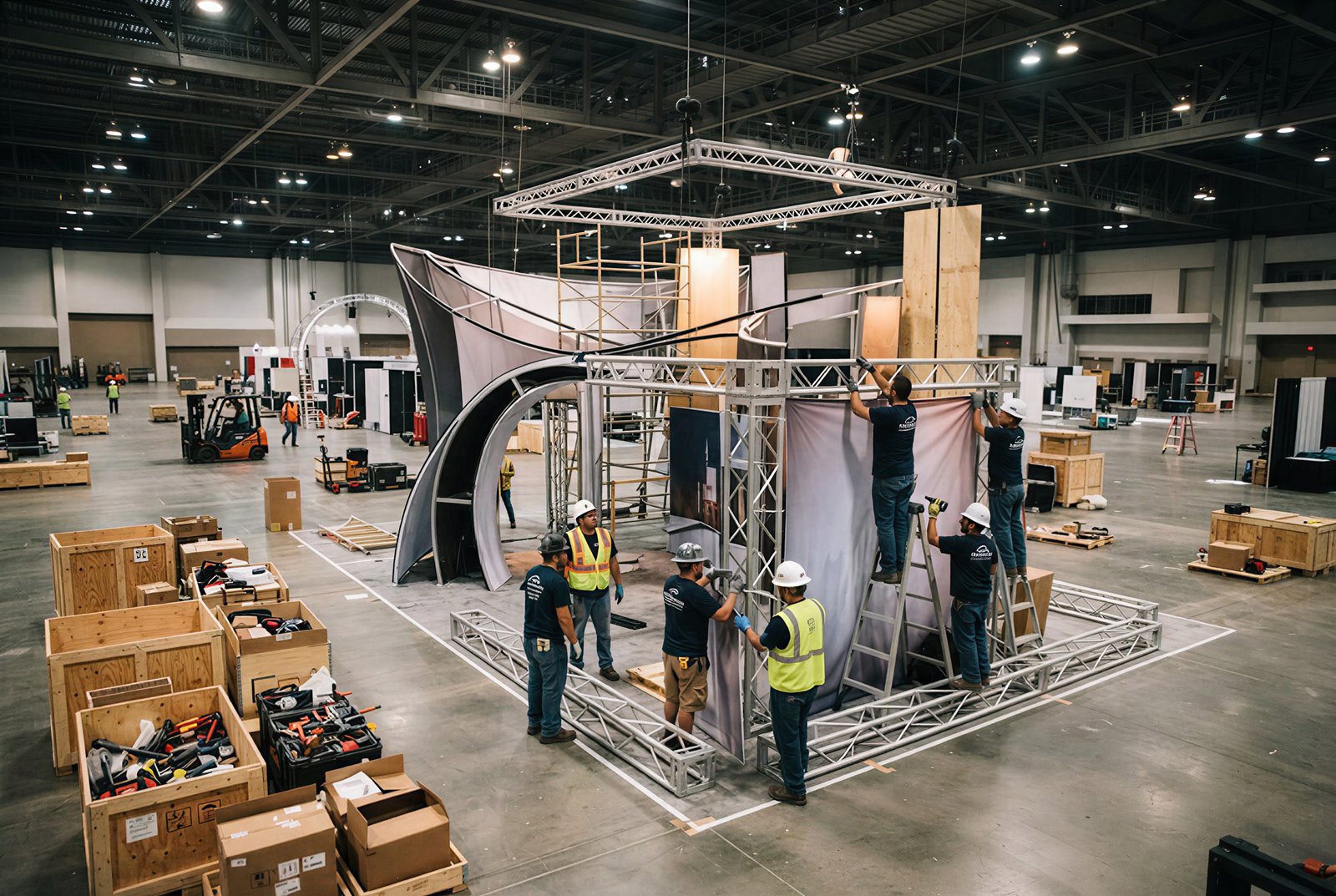
Managing trade show logistics is all about managing deadlines and mastering the details. If your exhibit assets don’t arrive on time, or if you break a convention hall union rule, your budget and potential sales can take a massive hit.
Let’s make this easy and divide it into three phases: getting it there, setting it up, and getting it home. Here is your essential operational checklist.
Getting It There
There’s a difference between standard commercial shipping and trade show shipping. Make sure your carrier handles trade show shipments.
- Advanced Warehouse vs. Direct to Show Site: Whenever possible, choose the Advanced Warehouse option. Your shipment will arrive 2-4 weeks before the show and will be among the first cases/crates delivered to the booth spaces. Direct to show means the carrier delivers directly to the show site a few days before the trade show starts. If the truck gets stuck in traffic or misses the delivery window, you may be charged wait-time penalties.
- Material Handling (Drayage): Drayage is the fee charged by the show’s official contractor to move your freight from the loading dock to your booth space, store your empty crates during the show, and bring them back at closing. It’s expensive, but the cost can be managed if you consolidate your shipment instead of shipping individual items.
Setting It Up
Installation and dismantle rules at individual show halls will determine what you can and cannot do during setup. At some venues, you may have free rein to assemble the display and plug in your electrical devices. At others, you can only supervise the work of the labor hired to do the installation.
- Know the Rules: In many halls, full-time employees of the exhibiting company are allowed to set up small booths using basic hand tools. However, if your booth requires ladders, power tools, overhead rigging, or complex electrical work, you must hire official show labor or certified Exhibit Appointed Contractors (EACs).
- Setup Instructions: Most exhibitors never ask to see sample assembly instructions before purchasing an exhibit. That’s a huge mistake. Good instructions will save you money, show after show. Bad instructions will age you prematurely.
Getting It Home
Always, always, always arrange return shipping before leaving for the trade show. All too often, exhibitors forget this task and then scramble at the show to make arrangements. Or they forget entirely and the General Show Contractor “forces” their freight with a bill that’s easily 4X normal shipping charges.
- Pick up your MHA (Material Handling Agreement) from the exhibitor service desk. This is the most critical document for your return freight. Your exhibit cannot leave the building without it.
- Organize and pack your display according to your packing instructions. Label every single piece. If your exhibit doesn’t have detailed and visual packing instructions, then speak with your exhibit house once the exhibit returns.
- When possible, confirm that your designated outbound freight carrier has checked into the marshaling yard.
Day-of-Event Trade Show Checklist
| Task Category | Key Actions |
|---|---|
| Booth Setup | Inspect graphics, lighting, displays, and demo equipment |
| Technology Check | Test internet, lead scanners, tablets, and AV systems |
| Marketing Materials | Organize brochures, giveaways, and signage |
| Staff Readiness | Conduct final team briefing and assign responsibilities |
| Visitor Engagement | Prepare lead capture tools and meeting schedules |
Lead Capture and Attendee Engagement Strategies

Too many exhibitors order lead retrieval software and consider the lead capture task done. They greet an attendee in the booth, scan their badge, and move on to the next attendee. Modern lead retrieval solutions from a company like Captello are so much more. One of the biggest benefits is the ability to use the same software at multiple shows so you can compare your results.
A premium lead capture solution gives exhibitors full control of their own event success and ensures a smooth lead capture experience at every event:
- Customizable lead capture forms that work offline
- Unlimited app users per exhibiting company
- Lead rating and scoring
- Automated lead follow-up
- Motivators such as team & individual goals
- Sending follow-up documentation digitally
- Communication with team members inside the app
- Real-time CRM & marketing automation integrations across 300+ event platforms and 6,000+ integrations
A premium lead retrieval platform starts with basic badge scans. Then it adds intelligence, enrichment, meetings, engagement, and automation — turning retrieval into true demand generation.
Post-Show Follow-Up Checklist
The trade show is over… but you’re not done. The period immediately following a trade show is a race against time. The momentum you built on the show floor fades fast, and your competitors are likely reaching out to the exact same leads.
A great post-show process is divided into three distinct phases: Immediate Actions (on the show floor or within 48 hours), The Follow-Up (Week 1), and The ROI Assessment (30–90 days out).
Phase 1: Immediate Actions (48 Hours Post-Show)
- Clean Up the Lead Data: Segment leads by Hot/Warm/Cold based on the priority tags your staff noted on the floor.
- Debrief the Team: Gather the booth staff immediately after the show closes. Ask them: What questions did attendees ask most? Which products or services drew the most traffic? Were there any messaging or logistical issues with the booth?
- Booth Condition: Inspect the display hardware, fabric graphics, and banner stands during dismantle. Note anything that was damaged, stained, or lost so it can be repaired or replaced before the next show.
Phase 2: Follow Up with Prospects, Your Exhibit House, and the General Show Contractor
- Assign Hot Leads: Send personalized, direct emails or make phone calls referencing their exact conversation, preferably within 48-72 hours of show close.
- Connect with Your Exhibit House: Communicate issues with the installation and dismantle, share ideas for the booth layout and graphics for the next show, and request feedback on your show preparation and communication.
- Reconcile Final Invoices: Collect all outstanding bills from the event (material handling/drayage, electrical, rigging, lead tech, hotel room blocks) and log them against your original budget.
Phase 3: ROI Assessment
- Track Leads to Sales: Monitor how many trade show leads have converted into actual sales opportunities, discovery calls, or closed-won revenue in your CRM.
- Calculate Cost-Per-Lead (CPL): Divide the total final cost of the show (booth space + hardware/graphics + shipping + travel/T&E) by the total number of qualified leads captured.
- Repeat, Tweak, or Drop: Based on lead quality, final costs, and overall foot traffic, make an analytical decision. Are we booking space for this show again next year, skipping it, or changing our footprint and strategy entirely?
How Experienced Exhibit Partners Improve Trade Show Success
If you are new to trade shows — whether your role is planning or marketing — it can feel like searching for the light switch in a dark room. No one should have to fumble in the dark while planning their trade show program. Having an experienced partner who knows the lingo, the rules, and the not-so-obvious missteps will not only make your life easier, it will also save you money and improve your trade show ROI.
At Classic Exhibits, we’ve been designing and building exhibit solutions for over 30 years. Over that time, exhibition trends have changed — and they will continue to evolve as trade shows embrace new industries and the needs of attendees change. Our Custom trade show exhibits support exhibitors with custom, modular, and portable options, from sustainable island exhibits to compact inline displays, and are available for purchase, rental, or a mix of both.
Every exhibit is built in the USA and comes with a lifetime warranty on workmanship.
About Classic Exhibits
Classic Exhibits has been designing and building trade show exhibit solutions since 1993. We’ve been honored as an Exhibitor Magazine Find-It Top 40 Exhibit Producers and an Event Marketer Fab 50 Exhibit Builders multiple times, along with numerous Portable Modular Awards. With over 250 Distributor Partners throughout North America, there’s a Classic representative close by.
Contact us today — whether you need a durable hand sanitizer stand built to last, a rental display guaranteed to attract trade show attendees, or a custom 30 x 40 exhibit with all the bells and whistles. We’re not just different. We’re better.
FAQs
How far in advance should exhibitors start preparing for a trade show?
No less than 6 months. Obviously, the timeline depends on whether you’re designing a new exhibit or using an existing display and graphics. Some of that planning will be driven by the trade show deadlines for floor space and services. Remember, you’re not the only exhibitor trying to engage attendees. Engaging them early and often will give you an advantage on the show floor.
What are the most important items to pack for a trade show booth emergency kit?
There are the physical supplies and the “other” supplies. Let’s start with the other: (1) contact information for your exhibit house, labor provider, freight provider, and any other vendor critical to your trade show success; (2) either a physical or digital copy of the exhibit assembly instructions; (3) copies and confirmations of your orders for electrical, flooring, A/V, lead retrieval, etc.
Physical supplies: (1) cleaning supplies; (2) packaging supplies, like tape, foam, or stretch wrap; (3) basic tools including allen wrenches, screwdrivers, tape measure, utility knife, and velcro; (4) replacement parts like keys, locks, and essential bolts or screws; (5) electrical cords and power strips.
How can exhibitors measure trade show ROI accurately after the event?
Determining what you want to collect is the key. Plus, you can’t measure what you don’t collect. Everyone wants data on their trade show success, but collecting the data often falls by the wayside during the hectic environment at a trade show. If you know what you want to measure, whether that’s ROI or ROO (return on opportunities), and have the discipline to gather it, then there are as many ways to measure it as there are companies and trade shows.
Should small businesses invest in large trade show booths?
There’s no one single answer to that question. It will depend on your budget, your goals, and your ability to implement a successful strategy. There’s nothing wrong with “swinging for the fence,” but if you haven’t been practicing, then you’re much more likely to “strike out.”
What technology tools help improve lead capture at trade shows?
Most lead capture platforms work on multiple devices like tablets, monitors, and smartphones. Use all of them or one of them. Improving lead capture is less about the technology than the discipline to consistently collect the right data.