


It’s showtime baby! Trade show time that is. Whether you’re planning to purchase a new exhibit or simply upgrade your current booth, you’ll probably work with a trade show booth designer at some point. Trust me on this. You’ll want to work with an exhibit designer. Not only will they save you time and money, but they’ll also assist in refining your messaging and creating an attractive and efficient structure to showcase your brand.
Find a trade show booth designer to help you navigate the complexities of creating an effective exhibit. Trade show booth designers are creative professionals who specialize in designing the booths that companies use at trade shows. They are essentially the architects of a company’s temporary storefront on the trade show floor. In short, they help companies create a memorable and impactful presence at trade shows, with the goal of generating leads, sales, and brand awareness.
Understanding the Role of a Trade Show Booth Designer
Let’s start with the obvious. Trade show booth designers are not mind-readers. Nor are they experts about your company, your industry, or your competitors. You’re their source for that information. In other words, they know custom exhibit design and exhibition trends, which they’ll gladly transform into a spectacular display based on what you share with them. The more you share, the better the ultimate design. It’s that simple.
They will ask you a series of questions (see below). Those questions will be the first steps in both narrowing the scope of the project and expanding the design opportunities. For example, the size of the booth, your past trade show experience, your marketing objectives, and your budget. BTW… while increasing sales is a worthwhile objective, it’s not a particularly helpful one to a designer.
Think of a trade show exhibit as a set of tools. Each tool has a specific purpose. In an exhibit booth, those tools may include meeting rooms, demonstration stations, video monitors or LED tiles, storage, large backlit graphics, furniture, and hanging signs. An exhibit designer then places, transforms, and in some cases, invents new tools to optimize the exhibitor’s success on the trade show floor.
Their knowledge and talent combined with your information and goals is more often than not remarkably spectacular. It’s mind blowing actually. But it all comes down to sharing, specifics, and intent.
Benefits of Hiring a Trade Show Designer
Building a trade show exhibit is unlike building any other structure, primarily because it has to be assembled to be deconstructed, packed in crates, and shipped securely. In addition, a trade show exhibit has to attract visitors in a highly competitive environment, communicate a clear and compelling message in seconds, and serve as a practical sales tool for the booth staff and attendees.
Trade show booth designers have spent years specializing in booth design. And in most cases, they’ve worked with other companies that have exhibited at the same or similar trade shows. They know what’s worked. And what hasn’t worked for that audience? For example, a food show, like Natural Products Expo West, requires a very different booth than a display at a construction show, like Conexpo.
The benefits of working with a professional trade show designer go well beyond their creative skills. Here are more advantages:
Expertise and Creativity: A professional designer has the knowledge and experience to create a booth that is visually appealing, on-brand, and functional. They can translate your company’s message into a compelling design that will grab attention and stand out from the competition.
Save Time and Resources: Designing and building a trade show exhibit can be a time-consuming process. By hiring a designer, you can free up your internal team to focus on other aspects of the trade show, such as sales training and lead generation.
Cost-Effectiveness: While there’s an initial investment in design, it can save you money in the long run. A designer can help you avoid costly mistakes, like choosing the wrong materials or exceeding space limitations. They can also source materials and fabrication services efficiently.
Compliance with Regulations: Trade show venues have specific rules and regulations regarding booth size, materials, and construction. A designer with experience will ensure your booth adheres to all guidelines, preventing last-minute scrambling or even disqualification.
Technology Integration: Many designers are familiar with incorporating interactive elements and digital signage into trade show booths. This can enhance the visitor experience and make your company appear more innovative.
Project Management: Often, a designer will handle the entire project, from the initial concept to the final installation and breakdown. This takes a significant burden off your shoulders and ensures a smooth and stress-free experience.
Overall, hiring a trade show exhibit designer can significantly increase your chances of success at a trade show. Their expertise can help you create a booth that effectively attracts leads, builds brand awareness, and ultimately delivers a positive return on your investment.
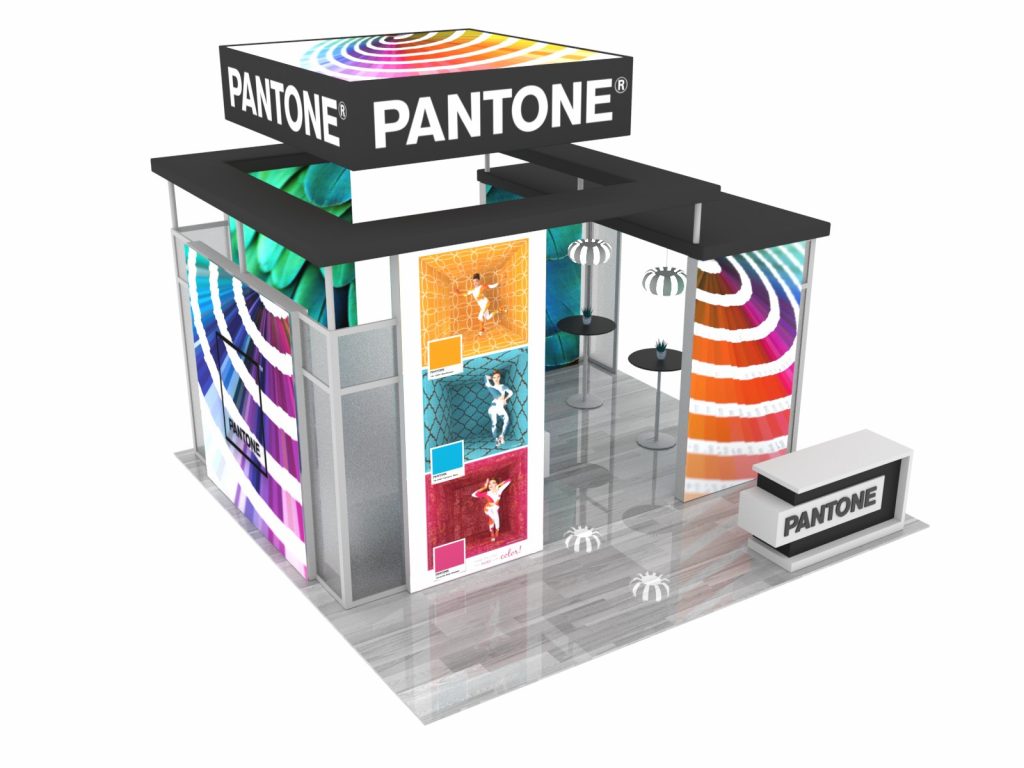
The Process of Working With a Trade Show Exhibit Designer
You’ve contacted a trade show booth designer and you’re ready to get started. But before diving into the deep end of the design pool, the designer needs you to spend time in the shallow end. Below are 15 questions a designer would ask before designing your project. The basics matter. And those basics will not only provide a foundation for the design, but they will also create a path toward meeting (and exceeding) your expectations.
15 Essential Exhibit Design Questions
1. Does your company have branding guidelines/logo or graphic files/website address? Can you share these files?
2. What size is the exhibit? Do you plan to reconfigure the exhibit for other shows? If so, what sizes? Knowing this will guide both the design and the choice of materials.
3. What is the budget? This is essential. Still undecided about an exact budget? The next best option is a workable budget range. No exhibitor wants to be surprised with a beautiful booth outside their budget or underwhelmed by a booth designed for a lower budget.
4. Do you want to purchase or rent? Or a combination of both? This assists the designer in choosing materials and designing to a specific budget.
5. What physical properties does the exhibit need to have? For example, workstations, counters, Slatwall, semi-private or private conference areas, monitors, storage, etc. This information allows the designer to create a functional trade show design.
6. What type of display have you used in the past? Are you looking for something similar or different? What did you like or not like about the previous booth?
7. Are there any materials or construction methods you prefer? Are you looking for something similar or different? Many experienced exhibitors have a strong attraction or aversion to specific materials.
8. Are there any unusual dimensional restrictions? Can you provide show regulations? Some shows have unusual restrictions for the height of the booth or setbacks from the aisle.
9. Do you show product(s)? What are the dimensions and specifications? How do you prefer to show the products? Display cases, countertops, shelves, hooks, etc.?
10. Does the display need to be portable or modular? Does it need to ship via FedEx or UPS or are you OK with packing in custom crates? This will guide our use of materials.
11. Who will assemble the display: show labor or your team? We have great solutions for both scenarios.
12. Do you have any images of design elements you like? Even if these “inspiration images” are not trade show related, they are very helpful. For example, architectural elements, finishes, colors, natural elements, retail environments, etc.
13. Design Due Date? Typically, designs are completed within a few business days. However, every project and every client has their own timeline. We do our best to accommodate the requested timelines.
14. Show Opening Date? So very important! Creating the design and building it depends on the time frame. Designers can make material selections which will go a long way toward meeting a three-week vs. a three-month window.
15. Are there any descriptive words you use to describe your company? What do you want visitors to your booth to “feel” about your company? From “opulent” to “bad-ass,” we have heard some interesting descriptors, and this gives the designer the insight to craft a personalized, experiential space.
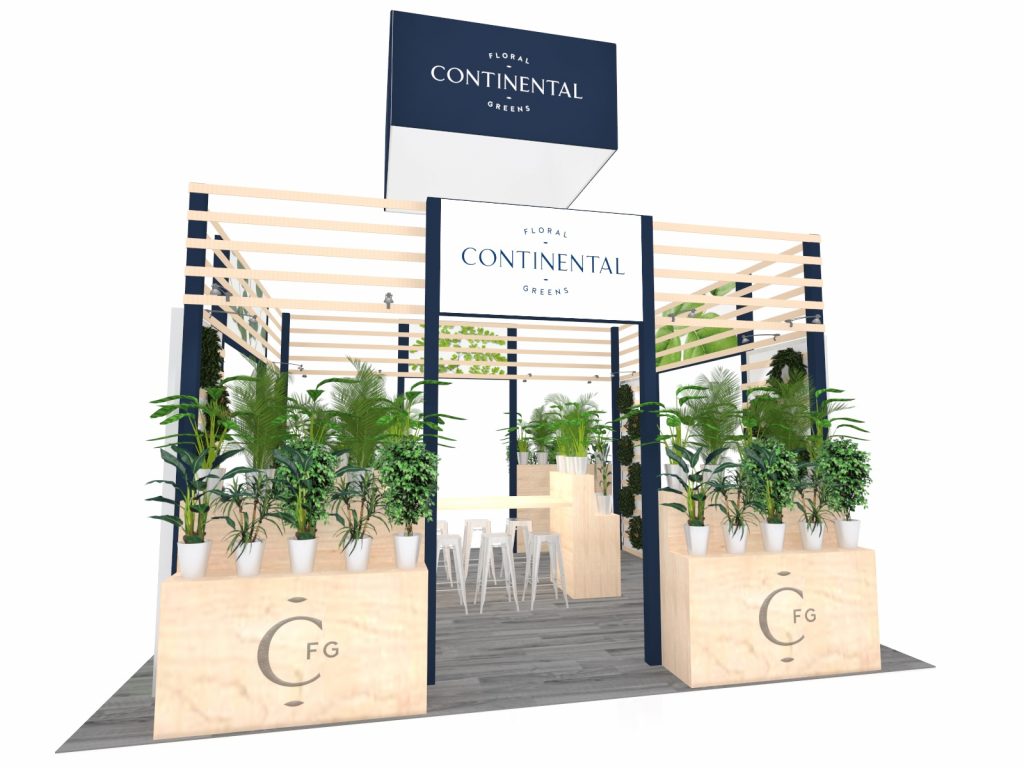
Best Practices to Get the Most Out of Your Partnership
How do you create a design you love without multiple meetings and revisions?
Get the designer and the decision-maker to talk to one another. It works! It’s why the designers want to be on phone calls with the client. All too often, clients don’t know what they want. The reasons vary:
- They’re new to trade shows and have an unclear understanding of how to maximize the potential of trade show marketing
- They don’t have a well-defined marketing strategy, either in general or for trade shows.
- Sales want one thing. Marketing wants something else. Engineering has some ideas, but no one is listening. And Customer Support wasn’t asked for their opinion.
- The C-Suite isn’t engaged, which means surprises are guaranteed late in the design process
- Budget? What budget? Having a budget either narrows or expands the design scope.
The best outcomes are (not surprisingly) based on clear and timely communication with a well-defined strategy and outcomes. Building an exhibit takes time, especially larger structures. Ideally, you should start working with an exhibit designer at least 6 months before the show. That gives everyone time to ask questions, get answers, ask more questions, and make any changes.
If your goal is to maximize your trade show budget and your sales, then starting early, rather than rushing to design and build a booth at the last minute, will save you money. Not just in design fees, but also with booth, shipping, and early bird show service charges.
Here are 5 (ish) Requests Guaranteed to Make a Designer Furious:
- BTW – I need the design by tomorrow for a meeting
- Hmmm…. I’m not good with details, but I’ll know if I like it when I see it.
- Can you show me 5 different designs? Again, by tomorrow.
- If I like the design, I’ll find the money in the budget to buy it
- You’re the creative person so design whatever you think is best.

Hire a Graphic Designer and a Trade Show Booth Designer
Here’s a secret. DESIGNING FOR TRADE SHOW DISPLAYS IS COMPLETELY DIFFERENT THAN ANYTHING ELSE! Hiring a graphic designer with trade show design experience is one of the most important decisions. Why? They’ve already made the mistakes that a novice at trade show design would make.
Here’s another secret. Exhibit design and graphic design are two different skills. Some designers are experts at both… but most are not. The graphics are as important as your physical display, if not more important, and they can make or break your trade show’s success.
If you need help with trade show graphic design, start with your trade show exhibit company. A good partner will either have internal resources or partners with extensive experience in large format, trade show exhibit design.
Tips for Hiring a Graphic Designer or Design Firm
If you are hiring a designer or design firm to create your trade show graphics, consider the following suggestions:
- Ask for references from your agency of choice for large format, trade show exhibit design clients.
- Check their website. A bullet item that says they do trade show booths or graphics, doesn’t mean they excel at trade show graphics. Ask them for examples of previous trade show work.
- Is most of their work digital marketing, web design, and social media marketing? Find another designer. Your bank account will thank you. Your patience will thank you.
- Create a library of your marketing assets, logo source files, high-resolution images, etc.
- If you don’t speak graphic design, then find someone who does. It’s a highly technical field and knowing the lingo will make everyone’s life easier, more efficient, and save you money.
Ready to Hire a Trade Show Booth Designer?
Every exhibit project starts with one or more intake meetings where the client shares details about the show, their budget, and most importantly, their marketing vision and objectives. From there, the trade show booth designer will create renderings based on the discovery meetings. Classic Exhibits Distributor Partners are experts at exhibit design, whether you’re looking for a 40 x 60 custom island exhibit or a 10 ft. portable display. They’ll take the time to ensure your exhibit attracts visitors and maximizes your sales potential.
For 30 years, Classic Exhibits has been designing and building creative custom solutions for our Distributor Partners and their clients. As North America’s largest private-label exhibit manufacturer, we have the unmatched capability, capacity, and creativity to create 3D projects ranging from 10 x 10 inline displays to 60 x 80 double-deck islands. Find success on the trade show floor with an exhibit that reflects your marketing message. For more information, see www.classicexhibits.com and explore Exhibit Design Search or request a meeting with a Classic Distributor Partner.