
Your Compete Pricing Guide
Congratulations! You’ve been tasked with researching your trade show booth options. If this is your first time buying an exhibit, expect to be surprised — both by the choices and the prices. Trade show exhibits vary dramatically based on booth size, customization, and packaging. If that wasn’t enough to consider, there’s the rental vs. purchase question, which can double your choices.
Sticker shock is a very real experience for most exhibitors, even for buyers who have years of experience with trade shows. Prices can range from $500 to $1,500 for a simple 10 ft. backwall with a fabric graphic, to $250K to $500K for a large custom-built island with large-format graphics, hanging signs, conference rooms, and LED video walls. Fortunately, most exhibits fall somewhere in between those two extremes.
In this article, we’ll address the most common questions about buying an exhibit, both for newbies and trade show veterans. Start by taking a deep breath (or three or four). Everyone who has ever been asked to research their exhibit choices has had a very similar experience. Knowing what to expect, how to narrow your choices, and who can assist you in this process will make buying your exhibit more manageable — and maybe even fun!
Key Takeaways
Start with a trade show strategy and goals. They’re more important than a budget. The strategy and goals serve as a roadmap, and that roadmap will guide you to your exhibit destination.
- There is no perfect exhibit. Only exhibits that match your goals, strategy, and budget.
- Start the process well in advance of the trade show. Poor choices are more likely to happen when rushing to complete a purchase before a show.
- What you need for Trade Show ABC may be different from what you need for Show XYZ.
- Consider all your purchase options, including buying an exhibit, renting an exhibit, and a combination of buying and renting.
- Don’t be shy about asking for advice. Colleagues, industry experts, show management, and your exhibit house have all made mistakes when buying an exhibit and are eager to share their “don’t do this” wisdom.
- Finally, your exhibit will probably be used multiple times, often for several years. Remember that when calculating the cost of the exhibit. While the upfront cost may seem expensive, the per-show cost will be much more affordable.
What Is the Average Cost of a Trade Show Booth?
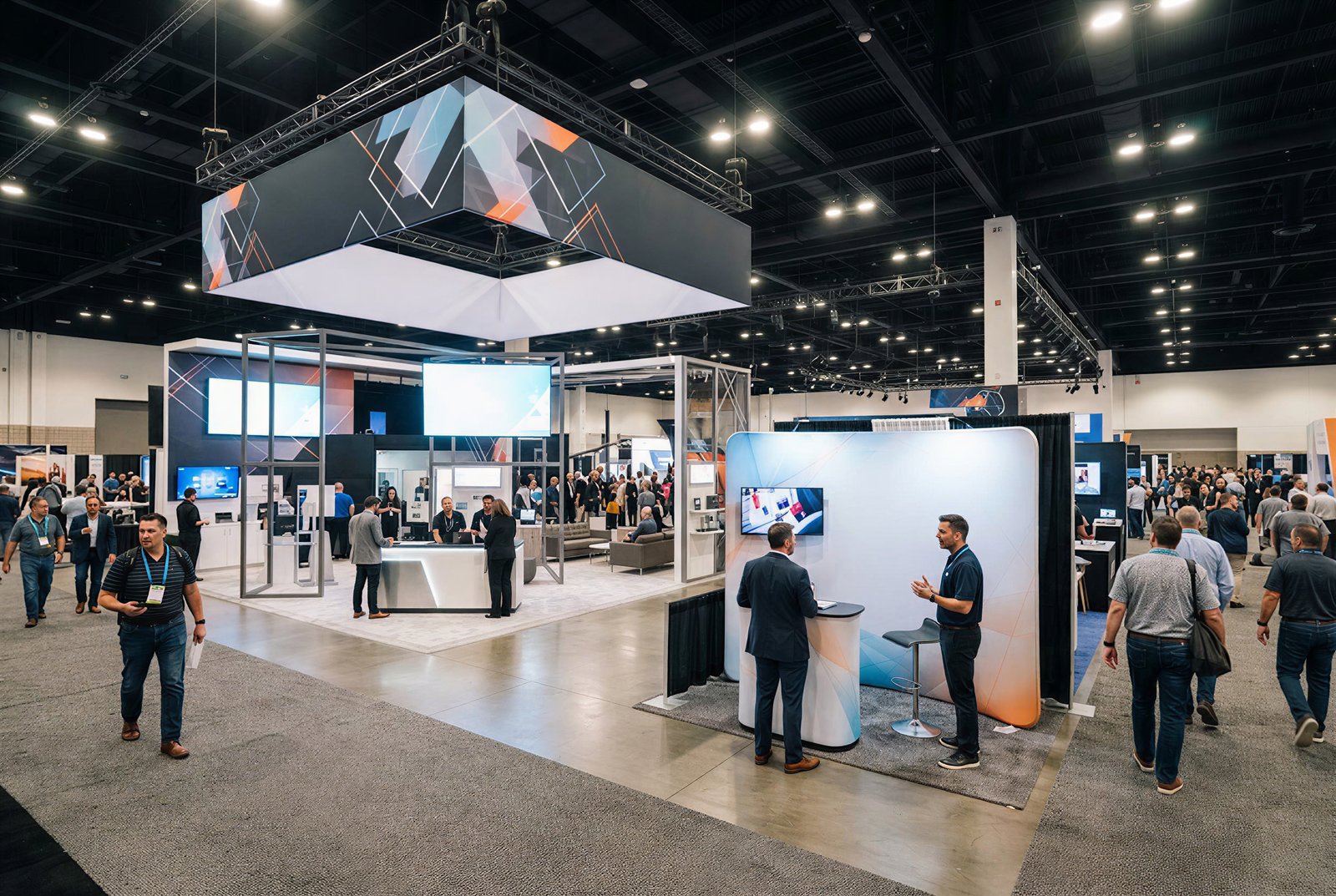
Unlike a lawn mower, a toaster, or even a bag of your favorite potato chips, trade show exhibits don’t roll off an assembly line with each one identical to the one before or after it. There are exceptions, of course, like banner stands, pop-up displays, and tube systems. However, even those have graphics printed specifically for your company and messaging.
Nearly all exhibits for professional trade shows are either customized or custom-built for each exhibitor. These may use standard modular components, which reduce the cost and make assembly predictable, or they’ll be custom designed using wood and metal components. Think of it as buying a car, but you can use the fender from one model, the doors from another, and the grille from a third. Or you can design individual components to match your personal preferences. As the exhibit is customized and the size increases, so does the price.
When buying an exhibit, we all focus on the structure. That’s only natural. However, the final cost typically includes other items as well. For example, some exhibit houses don’t charge separately for design; instead, they bury it in the cost of the exhibit. Then there’s the case or crate(s), the packaging, the setup instructions, and even staging the exhibit before it’s disassembled and shipped. Those are usually part of the price of the exhibit.
| Booth Size | Booth Type | Average Cost Range | Ideal For |
|---|---|---|---|
| 10×10 | Portable/Modular | $5,000–$15,000 | Startups & small businesses |
| 10×20 | Semi-Custom | $15,000–$40,000 | Growing exhibitors |
| 20×20 | Custom Island Booth | $50,000–$150,000+ | Enterprise brands |
| Larger Custom Booths | Double Deck/Experiential | $200,000+ | Large-scale exhibitors |
Key Factors That Influence Trade Show Booth Costs
In trade show lingo, “exhibit” and “booth” are not synonyms, but most of us use them interchangeably. Technically, the exhibit is the physical structure. The booth is the structure, the space, and sometimes the services. Those services may include freight, material handling, labor, electrical, and even cleaning. Exhibitors parse those expenses in various ways. For the sake of simplicity, we’ll discuss each one individually so you can decide how to calculate your “booth cost.”
Booth Size and Floor Space
Generally, the larger the exhibit, the more the display costs. A 20×20 island booth typically costs roughly four times what a 10×10 inline booth does when all associated material handling and operational factors are tallied. The floor space works the same way in most cases.
In addition, islands are more expensive because they’re not limited to the 8 ft. height restriction of an inline. The inclusion of a hanging sign (which is only available on an island or a peninsula) increases the price even more — not just for the cost of the sign but for the labor to install it.
Custom vs Modular Booth Design
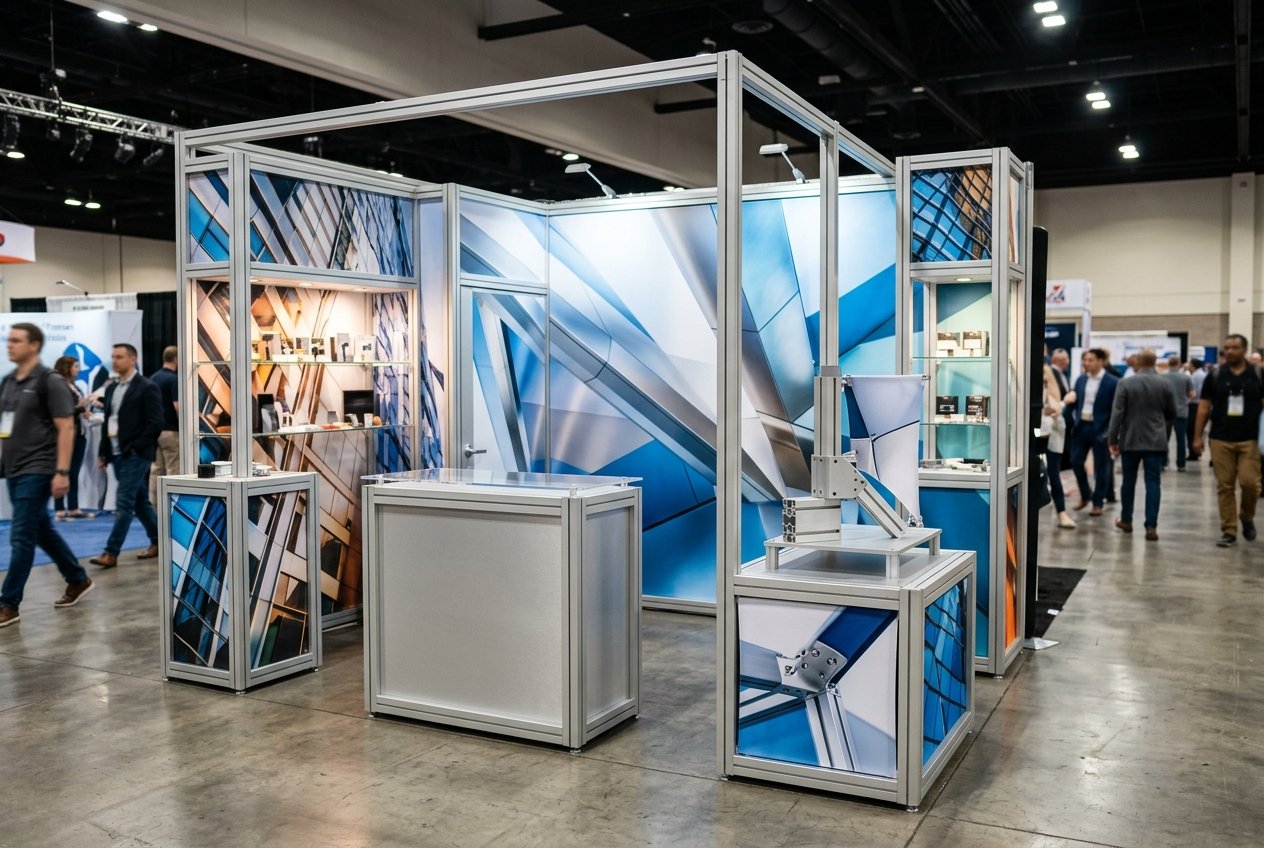
Just like gas, eggs, and cars, trade shows have gotten more expensive post-pandemic. As a result, some exhibitors have decreased the size of their exhibit and/or switched from a fully custom trade show booth built from wood to modular aluminum structures. Modular structures, like the Gravitee One-Step System, are lighter than traditional wood panels and offer greater modularity. While the initial price isn’t significantly different between wood and aluminum, the long-term cost favors the aluminum panels. The chart below illustrates the differences.
| Feature | Custom Booth | Modular Booth |
|---|---|---|
| Initial Cost | Moderate | Moderate |
| Reusability | Moderate | High |
| Design Flexibility | Maximum | High |
| Build Time | Longer | Faster |
| Best For | Brand immersion | Cost efficiency |
Graphics, Branding, and Digital Displays
The shift to fabric graphics and LED lighting has transformed how exhibitions are designed. Fabric graphics are not only lighter and more durable than direct-print graphics, but they’re just as vibrant and offer dramatic backlighting. Similarly, LED lights offer creative accent, edge, and backlighting options that were unimaginable just a few short years ago — including striking LED lightbox displays.
For exhibitors with healthier budgets, LED tiles, large monitors, and digital stands amplify booth visibility and engagement opportunities. Premium visual messaging attracts potential clients to the booth, and both inline and island exhibitors are increasingly incorporating digital technologies into their experiential marketing. However, flashy digital graphics without engaging content won’t translate into a higher ROI. Video creation isn’t cheap, and exhibitors must consider the time and expense of a successful digital integration.
Materials and Construction Quality
Most exhibit manufacturers build high-quality displays. But that doesn’t mean all displays are of equal quality. Inexpensive portable displays are generally good for moderate use and local shows. They may have limited warranties, and obtaining replacement parts can be challenging (if not impossible).
More expensive exhibits are engineered specifically for heavy trade show usage and have a wide range of accessories, so the design can evolve as marketing priorities change.
Durability is important. Exhibits that arrive at a show damaged — either because the structure failed or the packaging was insufficient — can result in lost sales and a damaged reputation. Packing a $100K exhibit in a poorly designed crate lessens the longevity of the exhibit, sometimes by as much as 50%.
Many builders have embraced sustainable materials like aluminum, recycled foam and fabrics, and FSC wood. If those are important to you, then request details from your exhibit house.
Hidden Trade Show Booth Costs Most Exhibitors Forget
Shipping and Drayage Fees
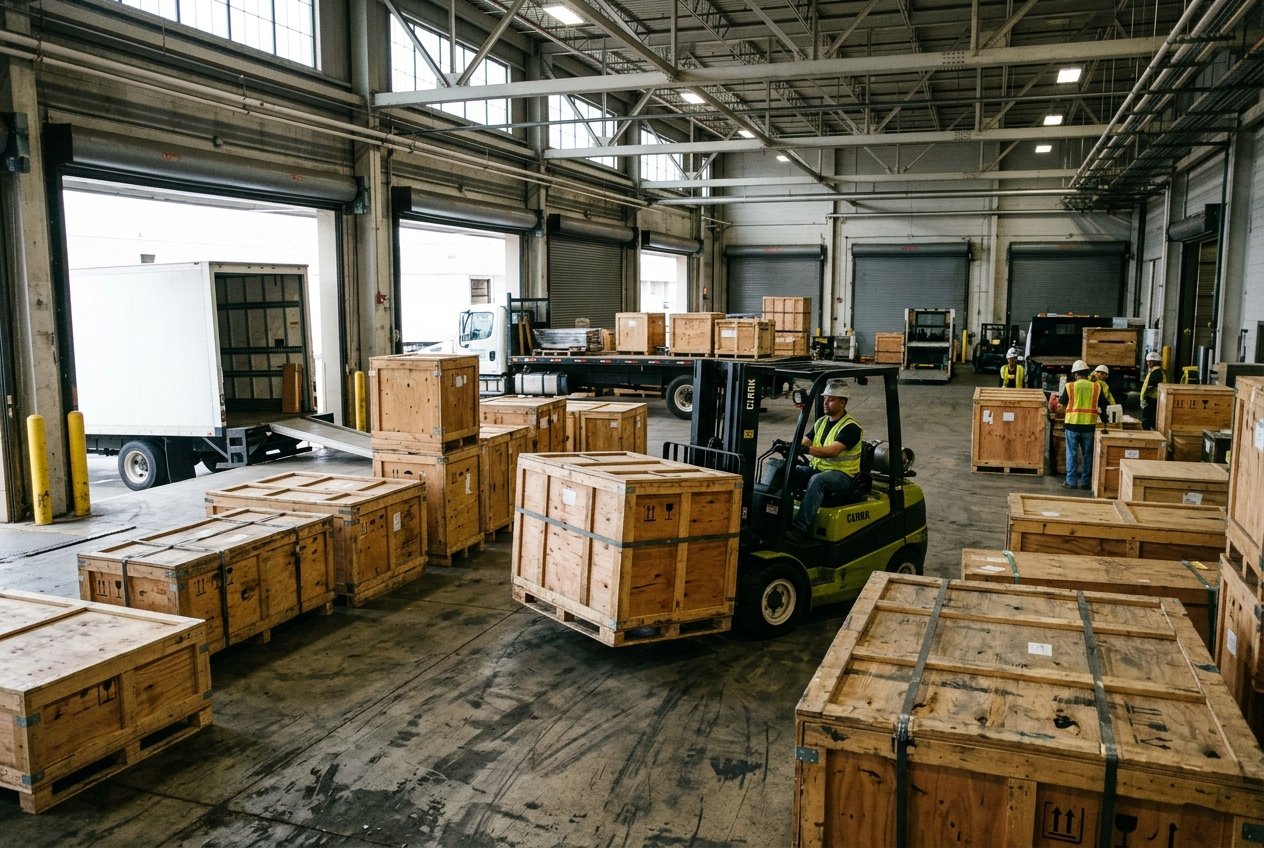
Drayage (officially referred to on show order forms as Material Handling) is the fee charged by a trade show’s General Service Contractor (GSC) to manage your booth materials once they reach the venue.
Many exhibitors confuse drayage with standard shipping, but they are separate. Shipping gets your freight to the venue’s back door. Drayage covers everything that happens from that loading dock until the material is sitting safely in your designated booth space.
Drayage charges are based on a rate negotiated by the GSC with the show organizer, typically calculated per pound. Almost all shows enforce a minimum rate, meaning a FedEx box weighing 45 lbs. would be charged the minimum (200 lbs., for example).
To minimize your drayage fees:
- Consolidate smaller shipments. Multiple smaller packages will each be billed the minimum charge, as opposed to one larger shipment that is billed the actual weight.
- Consider lighter exhibit materials. Aluminum frames and fabric graphics will reduce your structural weight, often by as much as 50%.
- Ship to the advanced warehouse. Depending on the show, advanced warehouse rates can be less expensive than direct-to-show rates. An advanced warehouse shipment also ensures your materials are first in line for delivery at the convention center.
- Avoid overtime windows. If your carrier arrives at the loading dock after 4:30 PM, on a weekend, or during a holiday, the contractor will tack on an “Overtime Drayage” surcharge.
Installation and Dismantle (I&D) Labor
There are rules… and then there are rules. Trade labor rules vary depending on the city and the facility. Knowing them will not only make your life easier but will also prevent misunderstandings and surprise charges. For an introduction to I&D labor, see this article: 10 Answers about Trade Show Labor.
To minimize your labor bill, consider the following:
- Ship to the advanced warehouse. By shipping to the advanced warehouse, you have a better chance of scheduling labor during non-overtime hours.
- Stage the exhibit. Surprises during installation are never good… and rarely inexpensive. Take the time to set up the exhibit before shipping it. Then pack it well and make sure the setup instructions are thorough and clear.
- Work with an EAC. Many exhibitors default to the General Contractor for their labor. Instead, consider using an Exhibit Appointed Contractor. These are independent labor companies that are generally more focused on customer service, since their business model relies on repeat business. For EAC companies, refer to the EACA website.
Electrical, Internet, and Utilities
Some booth-related charges are unavoidable, like electrical, Internet, and utilities. But even those can be managed. As with the other charges mentioned, the fees vary considerably by show and show site. At some facilities, installing a monitor or plugging in a lightbox can be done without show labor. At other facilities, show labor has negotiated the right to work on these tasks.
To minimize charges, ensure your booth has been optimized for “plug and play” so the electricians or riggers are in and out of your booth space quickly. And like most show services, take the time to complete the “early bird” forms. These forms can often save you as much as 30-40% off the standard rates.
Finally, consider what you really, really need. Does your booth need high-speed internet access? Do you need electricity in every corner of your booth? How important is it for the hanging sign to be backlit? All these extras, while adding to the presentation value of the booth, will increase your overall trade show expenses.
Storage, Maintenance, and Repairs
Unless you are renting your exhibit — which every exhibitor should seriously consider — your display, crate, graphics, and other show material will need to be stored somewhere. If it’s a small portable, then it could be in a closet or on the company’s loading dock. However, for most companies, that’s not a reasonable solution. Instead, they store their booth at an exhibit house.
Keep in mind that storage is a monthly expense, which varies depending on the number of items stored and their footprint in the case or crate. In addition, exhibit houses have a range of services, including “pull and prep” each time the exhibit is shipped to a show and then returns. Those fees are easy to forget about since they happen in the background. But managing them is just as important as buying a new exhibit and completing “early bird” show services forms.
| Expense Category | Typical Cost Range |
|---|---|
| Drayage | $1,000–$10,000+ |
| Installation & Dismantle | $2,000–$20,000 |
| Electrical & Internet | $500–$5,000 |
| Storage | $200–$2,000/month |
| Show Services | Variable |
Should You Rent or Buy a Trade Show Booth?
| Factor | Renting | Buying |
|---|---|---|
| Upfront Cost | Lower | Higher |
| Long-Term ROI | Lower | Higher |
| Customization | Moderate | Extensive |
| Storage Responsibility | Minimal | Required |
| Best For | Any exhibitor | Any exhibitor |
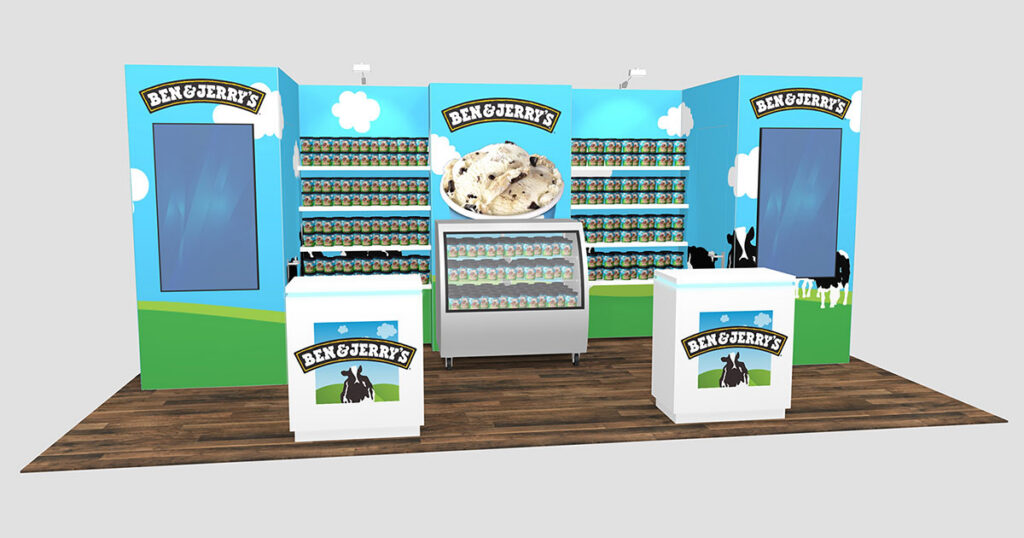
The choice between buying or renting a trade show exhibit comes down to your financial situation, long-term brand goals, and logistical capacity. There’s no hard and fast rule. Some “experts” say if you plan to deploy the exact same booth configuration three or more times over a 12-to-24-month period, the compounding cost of rental fees will quickly surpass the fabrication cost of a custom asset. However, most exhibitors change their exhibit from show to show by updating the graphics, reconfiguring the footprint, or changing the accessories.
Two Reasons to Purchase Your Exhibit:
- Specialized needs: If your brand requires structural elements that standard rental inventories cannot support — such as heavy product load-bearing walls, structural two-story double decks, or fully enclosed private medical/biotech meeting rooms.
- Long-term consistency: When your branding strategy requires absolute visual continuity across several years without major structural alterations.
Two Reasons to Rent Your Exhibit:
- Scaling your footprint: If you need a massive 20×40 island presence at your industry’s main annual convention, but only require a compact 10×10 linear space at small regional test markets, rentals allow you to scale your physical presence dynamically.
- Avoiding storage and maintenance: When you buy a booth, the show doesn’t end when the hall closes. You must pay monthly fees for climate-controlled pull-and-review storage, crate repairs, and graphic upkeep. Rentals are purely turnkey: you arrive, exhibit, and walk away.
Consider the “Hybrid” Strategy: Many modern exhibitors utilize a hybrid approach. They purchase a core modular aluminum frame system with versatile fabric Silicone Edge Graphics (SEG) for their standard regional shows, but rent heavy structural accents (like large overhead hanging signs, high-end meeting room partitions, or premium AV walls) on a show-by-show basis to dress up their layout.
How Industry and Event Type Affect Booth Pricing
It’s all about perspective. What may seem reasonable at a food trade show may be outrageous at a medical show. Booth pricing varies by industry, by location, and even by the time of year. Surprisingly, the least variable price is the actual cost of the exhibit, assuming the design and construction are apples to apples. Here are some variables that will impact your booth pricing:
- Large national shows often require bigger budgets due to higher competition, premium booth expectations, and expensive venues in cities like Las Vegas, Orlando, and Chicago. For example, three of the most expensive trade shows in the USA are CES, SEMA, and CONEXPO-CON/AGG. These mega-events demand massive custom booths, high-cost drayage, and significant travel.
- Drayage, labor, electrical, and even cleaning can be double or triple at some venues and shows compared to others — think Boston, NYC, and Philadelphia vs. Orlando, Dallas, or Atlanta.
- Are you a services company or a product company? Generally, services companies are all about large graphics and messaging with meeting space. Product companies may require a larger booth footprint, shelving, storage, and demo stations.
- Integrating experiential marketing elements shifts a booth from a passive, static billboard to an active, high-engagement event space. While experiential activations can skyrocket your lead quality and attendee dwell time, they fundamentally alter your budget.
6 Fast Ways to Reduce Trade Show Booth Costs Without Sacrificing Quality
- Consider modular structures. Reusable modular structures, interchangeable graphics, and scalable exhibit systems help reduce long-term trade show expenses.
- Rent vs. purchase. Most modern rental structures are nearly indistinguishable from purchased exhibits. Your upfront cost is typically 30-40% lower, and reusing graphics will lower the rental cost another 20-30% at your next show.
- Sustainable options. Green or eco-friendly exhibits are typically no more expensive than non-green exhibits. Combined with lightweight fabrication, a sustainable exhibit is both cost-effective and environmentally impactful.
- Early bird deadlines. Procrastination is painfully expensive, whether you’re buying an exhibit or ordering show services. This “free money” is a direct benefit to your trade show ROI.
- EAC labor. While labor rates are the same whether you use the General Show Contractor or an independent labor company, you’re more likely to have a better experience with an EAC — especially if you use the EAC for multiple shows and they learn more about your company and exhibit setup.
- Tap into exhibit professionals. Whether you are a trade show newbie or a veteran, tap into the expertise of trade show professionals. Every exhibit house handles thousands of trade show builds and services for their clients. They are a wealth of knowledge, just waiting to share what works and what doesn’t with trade show marketing.
Why Working with an Experienced Exhibit Partner Matters
No one becomes a trade show expert without making multiple mistakes. That’s a given. Your goal should be to minimize them and avoid the costly ones. Trade show marketing is a specialized, niche skill best learned from others who know the difference between success at the Orange County Convention Center vs. the Las Vegas Convention Center. Something as basic as completing an electrical layout can be baffling for most of us at first.
At Classic Exhibits, we’re experts at designing and building custom, modular, portable, and rental exhibits for the North American market. Our detailed setup instructions will save you time on installation, and our reusable packaging ensures your booth arrives safe and organized. In addition, our expertise in large-format printing ensures you always receive vibrant graphics that are staged on the exhibit before they’re shipped.
Over the years, we’ve learned that purchasing the ideal display takes more than “one click.” You have questions; we have questions. Together, we’ll ensure that the display you choose reflects your marketing goals and budget.
About Classic Exhibits
Classic Exhibits has been designing and building trade show exhibit solutions since 1993. We’ve been honored as an Exhibitor Magazine Find-It Top 40 Exhibit Producers and an Event Marketer Fab 50 Exhibit Builders multiple times, along with numerous Portable Modular Awards. With over 250 Distributor Partners throughout North America, there’s a Classic representative close by.
Contact us today — whether you need a durable 10 x 20 display built to last, a rental display guaranteed to attract trade show attendees, or a custom 30 x 40 exhibit with all the bells and whistles. We’re not just different. We’re better.
FAQs
How early should I start planning a trade show booth budget?
Don’t put the cart before the horse. Any budget, trade show or otherwise, requires goals and a strategy. These will determine the baseline for your budget. Yes, it may change once you do a deep dive into all the costs, but that’s OK. It may mean revisiting your goals and strategy.
Can modular booths look as premium as custom-built exhibits?
In the past, custom exhibits meant wood construction. That’s not automatically true anymore. Custom simply means a custom design — one that’s unique to your marketing objectives and budget. Modular isn’t a price. It’s a mindset, meaning there are portable modular displays and custom modular displays, all built with a variety of materials.
Do international trade shows cost significantly more than domestic events?
North American trade shows and international trade shows are two different animals. Generally, North American trade shows are more expensive because drayage and union labor are the standard. At international trade shows, the exhibit space tends to be more expensive, but other services are more flexible, cost-wise. In the end, the cost will depend on your objectives at the show.
What is the biggest budgeting mistake first-time exhibitors make?
They assume that trade show marketing is the same as marketing in print, on the web, or via their normal sales channels. It’s not. Not only does it require extensive pre-show, show, and post-show planning and execution, but it also requires an understanding of how face-to-face marketing works in the condensed timeframe of a trade show.
How long does a custom trade show booth typically last before needing replacement?
A well-built trade show exhibit can last years with proper maintenance. In reality, trade show exhibits are replaced because trends change and the marketing objectives of a company have evolved. The key for anyone heading down the path of designing an exhibit is to decide if it’s for one show or for multiple years, and design it to match those objectives.