

Sustainability isn’t Rocket Science. It’s a Choice.

Trade Show Blog

Many companies are increasingly focused on sustainability. When it comes to exhibitions, they wonder how they can I reduce the environmental impact of their booth and their overall trade show marketing.

Exhibitors often think they need to make an either/or decision regarding sustainability. Either choose a 100-percent eco-friendly exhibit or a booth that gives Mother Nature a symbolic middle finger. Exhibitors with this mindset often fail to realize there’s a middle ground where they can make sustainable choices that align with their marketing goals and budget without going 100-percent granola. Whether you opt for 75-, 50-, or even 30-percent sustainable components, you’re still making a big impact. Here are several eco-friendly, mix-and-match ways to decrease the environmental impact of your exhibit.
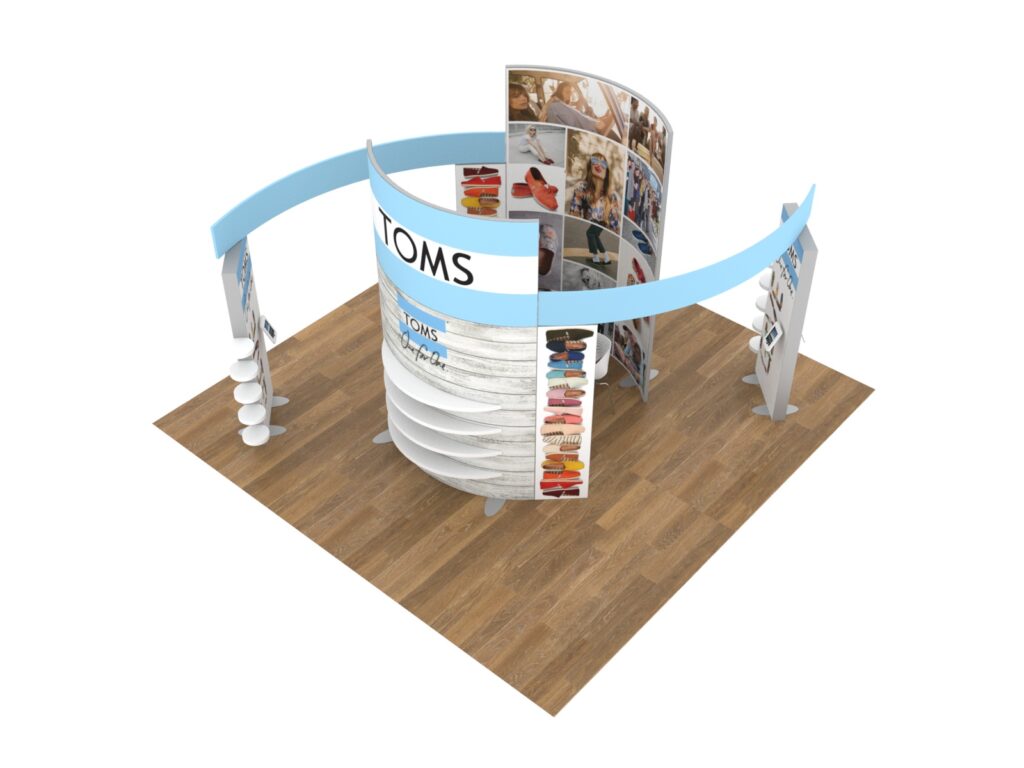
Modular Designs

Any booth can be designed to be reconfigurable, which means you can use a single set of exhibit components to cover your needs for various shows and different footprints. Purchasing components with this in mind reduces the quantity of components that are manufactured and discarded. And while you might opt for modular components as your exhibit’s primary building block, you can use other materials such as wood or foamboard to complement the core elements.

Sustainable Building Materials

Most exhibit builders have access to sustainable building materials. And designing and building with those materials is no different than using the non-sustainable options. An eco-friendly booth will look the same, have the same build quality, and be equal in performance. The only difference might be in price — and higher costs aren’t a given.

For example, while certified Forest Stewardship Council (FSC) wood might be more expensive than noncertified options, recycled plastic, foam, and metal are similar in price or even less expensive than their non-sustainable equivalents.

Eco-Friendly Printing

Sustainable options for direct printing on recycled foamboard and corrugated paper have been around for years, but now, a wide range of recycled fabrics are also available. Most dye-sublimation printers have access to green printing materials, and a few exhibit-industry printers have switched to using only recycled fabrics. These options include backlit and nonbacklit materials, twills, and even light blockers. Prices and quality are typically comparable.
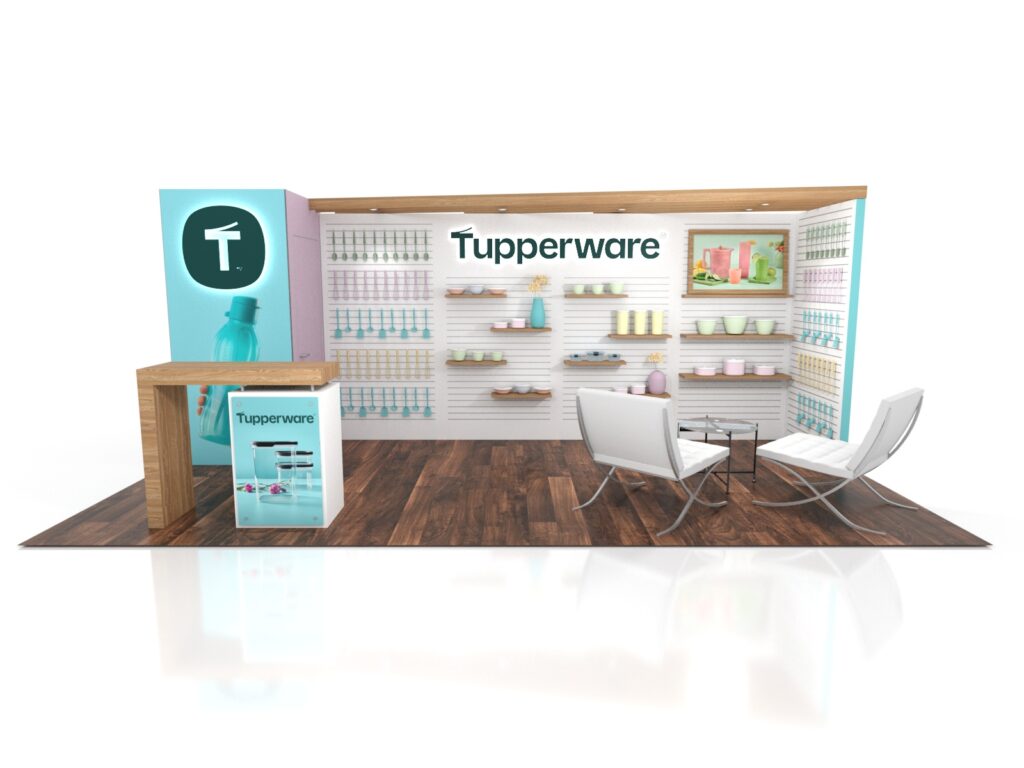
Rentals

Long gone are the days of dingy, dirty, and distressed rentals from the show contractor. Most rentals are now indistinguishable from purchased booths. Rentals are ideal for exhibitors with heavy trade show schedules, dynamic marketing campaigns, or flexible booth space requirements. And rentals are typically the most sustainable exhibit option since the components are often reused for years. Your booth doesn’t need to be 100-percent rental to fly a sustainable flag. Many exhibitors blend custom exhibit components with rental properties for the best of both worlds.

Reusable Flooring

Exhibitors don’t want to abandon their flooring, but given the hassles of packing, shipping, and storing it, many walk away from it when the show is over. However, reusable flooring options, such as raised wood floors, interlocking tiles, and rented flooring, can more easily placate Mother Nature. Plus, they install quickly and easily and allow you to skip padding, which is typically tossed after the show. What’s more, several choices pack flat in boxes for convenient shipping and storage.

LED Lighting

With few exceptions, the industry has switched to LED lighting. Halogen and fluorescent lights disappeared, and no one misses them because the switch to LEDs has expanded the lighting possibilities to backlit graphics and logos and programmable RGB accent lights on counters and ceilings. It’s even gotten easier to backlight hanging signs. If you have a booth with energy-intensive lighting, it’s time to upgrade. The cost is reasonable, and the lights will almost always outlast your exhibit.

Nonprofit Donations

Exhibits have both a functional lifespan and a marketing lifespan. More often than not, the stands last much longer than the marketing strategies behind them. So, if your exhibit no longer fits your needs but still has some life left in it, consider donating it — or at least some of its components — to a charitable cause.

Smaller exhibits, particularly portable in-lines, are ideal for nonprofits, schools, and religious organizations that need displays for educational outreach, events, and fundraising activities. Free-standing elements, such as chairs, tables, and even light fixtures, could go to organizations like Goodwill.

So consider donating your display, or better yet, donate the components and chip in for new, organization-specific graphics. You’ll feel better, your company will receive a taxable donation, and the display won’t end up in a landfill.

Filter by Category

Filter by Year

Recent Posts

How To Make Your Trade Show Backdrop Stand Out!

Many exhibitors assume a backdrop is a simple two-dimensional graphic along the backwall of an exhibit. But it can be so much more. A backdrop in a 10 x 10 or 10 x 20 booth space doesn’t have to be basic. Modern inline displays come in various shapes, heights, and configurations.

Is Your Trade Show Display an Oreo or a Fig Newton?

As an adult I can rate just about everything on a cookie scale. For brevity, I’ll limit this article to Oreos, Fig Newtons, and Nilla Wafers, but be assured that the “science” behind my methodology includes Frosted Animal Cookies, Pepperidge Farms (as a collective group), Girl Scout Thin Mints, and Chips Ahoy.

Does Your Trade Show Exhibit Have To Be Clever?

That’s not to say your trade show exhibit shouldn’t be attractive. It should, but I would encourage you to focus on more practical matters the next time you design or rebrand your display. What do you need in the booth space to conduct business? Make it less about showmanship and more about conversations and information.

What Cats Can Teach Us About Trade Shows

We are a nation devoted to pets, whether they’re on the farm or in a purse. They learn from us, but we learn from them as well. The other day while watching Animal Planet with a cat in my lap, one on the sofa, and another puking upstairs ( it sounded like the world’s worst ventriloquist), I realized that we could learn a thing or two about trade show marketing from our feline companions.

Gravitee One Step — The World’s Easiest Modular Wall System

Gravitee — The World’s Easiest Modular Wall System. Unlike traditional modular wall systems, Gravitee has no loose connectors. The frames are constructed with durable engineered aluminum extrusion and the system uses time-tested patented technology.

Who is Our Biggest Trade Show Competitor?

Recently, I’ve been on the road, visiting Classic Distributors in the Midwest and South. We chat about industry trends, new products, and challenges in their market. Occasionally, they will ask me about competitors. That’s a topic, to be honest, that makes me uncomfortable.

3 Essential Trade Show Marketing Questions

These are questions every designer should ask their client before designing the ideal trade show display. If the client walks in just thinking about the nuts and bolts of the project, they may miss an informed conversation on why they are exhibiting in the first place and that can fundamentally affect the design of a booth. The Why can greatly impact the How in Exhibit Design.

What You Should Know about Exhibit Marketing

Exhibit marketing is all about marketing your products or services to buyers at expositions, conferences, and trade shows. A successful exhibit marketing program will be rewarded with increased revenues, referrals, and industry networking. The goal is to understand how exhibit marketing differs from the other types of marketing.

Managing Your Trade Show Budget

Trade shows are expensive, and some costs are often puzzling to exhibition newbies, but there are multiple ways to manage those expenses with a little planning and some assistance from an experienced trade show professional. Don’t be afraid to tap into that expertise.

Why Are Trade Shows Important for Business Growth and Branding

With the rise of online meetings and ecommerce, business experts have predicted the death of trade shows and live events for 40 years. Yet, the benefits of trade shows and events have never been more important for businesses. There were over 13,000 separate events in North America in 2025 alone.

Best & Biggest Convention Centers in the US for Trade Shows

What are the biggest and best convention centers in the United States? And does overall size and location matter when it comes to a convention center? Unless you’re a trade show nerd (like me), you’ve probably never wondered if the Las Vegas Convention Center is bigger than McCormick Place in Chicago. Or if the Orange County Convention Center is in FL or CA?

People’s Almanac of Trade Show Knowledge

We all love working with an informed client about trade shows and trade show marketing. They ask our advice. We give it. Sometimes we state facts. Sometimes we offer opinions. And sometimes, we should send them to an expert.

Life as a Traveling Sales Representative

Snake Oil Salesman or Snake Charmer. The traveling salesman has always had slightly negative, slightly shady reputation. If you’ve ever seen The Music Man, particularly the opening scene on train, you’ll know what I mean. I would like to think business has changed from the days of the “snake oil salesman” to what we now refer to as a “manufacturer’s rep.

10 Online Tools for Classic Exhibits Distributors

At a recent Shared Knowledge University, we reviewed ten online tools available to all Classic Exhibits Distributors. The attendees told us that these tools are invaluable to their sales, marketing, and customer service teams and are unique within the exhibit industry. 

Why Small Businesses Fail to Grow by Jay Goltz

Excerpt from the “Art of Running a Small Business.” Many, if not most, Classic Exhibits distributors fall into the small business classification as defined by the Small Business Administration. Small businesses have challenges that larger businesses do not.