

How to Improve Exhibitor Satisfaction and Retention Rates
By Robyn Davis, Trade Show Strategy Specialist at WINH
Recent statistics show that the annual retention rate of trade show exhibitors is 76%.
Now, regardless of whether you think this is a good number or not, I’m confident you can do better as a show organizer! In fact, I’ll share eight ways to improve your exhibitor satisfaction and retention rates by focusing on what you can do (as an event organizer) to support your exhibitors.
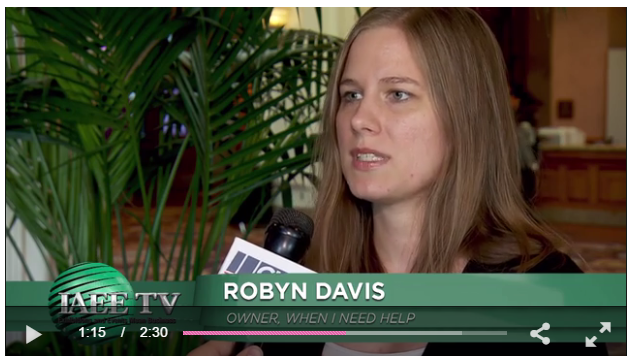
Note: This article was inspired by an interview I did for IAEE-TV. If you’re short on time or prefer to learn via video (instead of text), click here to check it out.
Three Big Themes for Show Organizers:
- Set yourself apart from other competing organizations/activities (by becoming the best version of yourself),
- Respect your exhibitors as the awesome professionals they are, and
- Help them get more value out of their investment in participating in your event.
Specifically, these are the eight suggestions I shared with CNTV for IAEE-TV (International Association of Exhibitions and Events).

1. Add Value During “Off Hours”
A motivated exhibitor will find a way to fill as much of his schedule as possible, but, due to the timing of official activities, a few gaps may remain. Organize alternative activities (like relevant training opposite educational sessions for attendees or bonus networking time after set-up ends, but before the conference officially begins) as an option for exhibitors who want to go above and beyond.
Why? For exhibitors, time is literally money at trade shows – they’ve invested in the opportunity to participate and they’ve had to put a hold on their typical money making activities while away. Even short bursts of wasted time weigh on exhibitors heavily and, in many cases, cloud their opinion of your event overall.
2. Set a Good Example
The golden rule (treat others as you wish to be treated) certainly applies to trade shows! Keep this in mind as you set your expectations for exhibitors:
If you want exhibitors to participate on social media, set a good example by getting the conversation started and mentioning them personally.
If you want exhibitors to prioritize the deadlines you’ve set and read your communications, make sure that you’re reading their messages and responding to their requests in a timely manner as well.
Why? It’s easier for exhibitors to follow your positive example than to try and set their own (it’s your show, after all). Also, once you’ve made an effort to treat them with respect, exhibitors will feel obligated to return the courtesy.
3. Walk a Mile in Their Shoes
 When possible, spend time on your show floor, blending in as much as you can to experience your event as your exhibitors do. Or, if you can’t immerse yourself in your exhibitor’s environment at your own trade show, seek out opportunities to attend the events they attend (for example: EXHIBITORLIVE, HCEA Connect, or Experiential Marketing Summit). Get to know them as people and listen attentively to their stories. Work to understand what they go through on a day-to-day basis and what they want, not just from your event, but from their work and life too.
Why? Without experiencing an exhibitor’s challenges (and triumphs) first hand, it may be difficult to understand their reactions or anticipate which accommodations will be mean the most to them (and which ones won’t). Many conflicts can be avoided with a little extra empathy and many hearts can be won the same way.
4. Be Transparent
Especially for new exhibitors, the policies and requirements of a trade show can be a bit of a mystery. Look for opportunities earlier in your interactions with exhibitors to share the reasoning for your decisions (especially surrounding any seemingly unfriendly policy updates) and provide “sneak peeks” at the little things you’re working on for them (from introducing the staff member who answers their emails to demonstrating how you assemble all of the materials they’ll pick up at registration, etc.).
Why? Exhibitors are reasonable people. Once they can see that there’s a good reason for any inconveniences they encounter (or at least that you are a real person, who is doing your best to support them), they’ll be more understanding of the situation (even if it’s challenging) and happier to work within the guidelines presented.
5. Encourage Collaboration
Point out opportunities for exhibitors to get to know one another (perhaps even during their “off hours,” as above) or, better yet, organize a special mixer or extra exhibit hall hours that are dedicated exclusively to partnering. To make this time as effective as possible for exhibitors, teach them to focus on connecting with the other exhibitors who serve the same segment of your audience, but aren’t in direct competition with them (then, they can recommend one another to outside contacts or make appropriate introductions during/after the event).
Why? Although exhibitors come to your events to meet qualified attendees, they can also benefit from the expertise of each other, as well as more concrete joint efforts in support of their common goals. Realizing this opportunity exists can be game changing for individual exhibitors and, on a larger scale, when they take advantage of the opportunities, your industry as a whole will flourish.
6. Pursue Collaboration
Just as your exhibitors can benefit from the right partnerships, so can you. Use your understanding of yourself (strengths/weaknesses) and your exhibitors (needs/goals) to identify others (individuals or organizations) that can complement your efforts. Don’t be shy in approaching the professionals your exhibitors need you to know! Instead, do your homework and present your proposal confidently, finding an opportunity that benefits each party in a meaningful way.
Why? Many event organizers are strapped for time and cash, so it makes sense that 81% outsource to other service providers when they need “special skills” (instead of trying to obtain that expertise for themselves)… you can do this too, to improve the experience your exhibitors enjoy and the value you’ve equipped them to obtain.
7. Listen
When you ask for feedback from your exhibitors, what do you do with the information they provide? Show exhibitors that you hear them (by responding personally, in a timely manner) and use the input they provide to shape your future decisions (again, noting the reason you’re making changes – in this case, due to the feedback you’ve received). That doesn’t mean you have to do everything they ask, but a little compromise (or “inspiration”) can go a long way towards future good will.
Why? Exhibitors won’t take the time to provide their feedback if they don’t feel like you’re listening to it; however, in order to improve your events, you need their help (as it will be much easier to give the exhibitors what they want, when you’re completely clear as to what that is). Showing that their feedback is heard is a good first step.

8. Be Brave
Trade shows are an iterative process… but not just for exhibitors. Just as they should be constantly looking for opportunities to improve their performance, you should too. Take advantage of the opportunities available to you to incorporate new activities and ideas – keeping up with new technology, trying out the latest trends, etc. Your job is to keep things fresh, so feel free to get inspired by those around you, test an idea, and then reassess for next time.
Why? Without a little risk, life can be very boring. Many exhibitors find themselves falling into old habits, which can be detrimental to their success. If you push yourself to continue growing and changing, you will keep their attention and may inspire them to try harder too.
In conclusion, if you care about your exhibitors, which I have no doubt that you do (as you wouldn’t be working in this role, let alone reading this article, if you didn’t!), heed the advice above and share any successes to inspire your colleagues over on LinkedIn. If you need help doing so, please reach out… I’m here.
 ABOUT THE AUTHOR: Robyn Davis is a Trade Show Strategy Specialist and the Owner of When I Need Help (WINH). Robyn works with event organizers (as a speaker, trainer, and consultant) to help them help their exhibitors squeeze even more value out of each event. To learn more about Robyn and her most popular exhibitor education programs, please visit the WINH Website, request to connect with her on LinkedIn, or tweet to @Robyn_WINH.