

Selecting the Perfect Trade Show Isn’t a Guessing Game

Wouldn’t it be nice if there was “An Idiot’s Guide to Choosing Trade Shows”? There isn’t, nor should there be. Every company is different, and their reasons vary. However, choosing the right shows matters. For many businesses, trade shows are 30% or more of their annual marketing budget. So choosing the right trade shows is crucial to maximizing their ROI. Even companies with smaller trade show budgets face similar challenges. While they typically participate in fewer shows, their trade show marketing is expected to contribute to the overall profitability of the company.
Experience may be the best guide when choosing a trade show schedule, but it can also be a false friend if it’s based solely on tradition rather than on metrics. At the same time, there may be shows you haven’t considered in the past that would introduce new prospects to your products and increase your revenue and profitability.
As you research your trade show options, listen to your colleagues about their experience with certain trade shows, talk to the current show organizers, and put on your espionage hat and see what shows your competitors are attending.
Key Takeaways
- There’s no Idiot’s Guide to choosing the right trade show.
- Your selection process should start with your goals and a budget.
- Do you know your audience? Do you know the show’s reputation?
- Measuring your success with either ROI or ROO may depend on the trade show.
Why Choosing the Right Trade Show Matters
Let’s start with “What is a trade show?” A trade show is an exhibition organized so that companies in a specific industry can showcase and demonstrate their latest products and services, meet with industry partners and customers, study the activities of rivals, and examine recent market trends and opportunities. Trade shows are typically held in convention centers or hotels. There are trade shows for all sorts of industries, from technology to manufacturing to healthcare.
Choosing the right trade show can boost your short- and long-term sales, jumpstart relationships with potential clients, and elevate your brand visibility. Selecting the wrong show means wasting five to six figures on tire-kickers and non-decision makers. And while a show with 45,000 attendees sounds impressive, if those attendees don’t fit your ideal customer profile, the show becomes a vacation for your team rather than a business trip.
It pays to be selective for two reasons. One, you probably have a limited budget. Two, a targeted trade show schedule allows you to customize your messaging and graphics for each trade show audience. All too often, exhibitors will “rinse and repeat” the same graphics for every show. However, even if your product or service applies equally to the electrical or plumbing trades, for example, it’s unwise to use the same graphics for these two audiences.
Define Your Goals Before Selecting a Trade Show
Participating in a trade show without goals is like constructing a home without a blueprint. Relying on intuition alone almost certainly ensures mediocre outcomes. Because trade shows demand significant financial capital and team effort, identifying your targets early shifts that expenditure from a risky cost to a strategic and quantifiable asset.

Brand Awareness
When your primary aim is market visibility, positioning, or launching a rebrand, your focus should be on making a memorable impression on a targeted audience. In other words, who do you need to reach and what are your desired brand awareness outcomes?
Key Performance Indicators:
- Total Foot Traffic / Badge Scans: Volume of floor interactions.
- Media & Press Engagement: Number of press interviews conducted or media mentions generated.
- Digital Reach: Social media impressions/mentions using event hashtags and pre/post-show website traffic spikes.
Lead Generation
If driving revenue is the priority, you’ll want to focus on quality over quantity. Rather than aiming for “500 badge scans,” define targets around qualified prospects (e.g., “Capture 80 Sales Qualified Leads (SQLs) with budget authority within 6 months”).
Key Performance Indicators:
- Cost Per Lead: Total trade show spend divided by qualified leads captured.
- Pipeline Potential: Total potential deal value entered into the CRM from floor leads.
- Conversion Rate: Percentage of total scans that convert into orders or discovery calls.
Product Launches
Introducing a new product or service requires educating the market and gathering real-time user feedback. Often, that means hands-on exposure and market reactions.
Key Performance Indicators:
- Demo Presentations: Number of group or individual demos completed.
- Trial Sign-Ups: Number of prospects agreeing to post-show trials or product demos.
- Product Feedback Volume: Structured survey responses collected from target buyers.
Networking and Relationship Building
Trade shows can be the single best place to meet key executives, existing clients, partners, and industry distributors face-to-face. While it’s tempting to prioritize lead volume, consider a targeted approach of potential key accounts and a manageable number of existing customers.
Key Performance Indicators (KPIs):
- Pre-Booked Meetings: Percentage of scheduled meetings held.
- Account Retention / Expansion: Pipeline retained or upsell opportunities identified with existing clients.
- Strategic Partner Agreements: Number of formal partner/distributor follow-ups or agreements initiated.
Understand Your Target Audience
You’re confident you know your target audience. In most cases, you’ve worked with them for years, sometimes decades. However, if business is flat or you’re expanding into new markets, it may be time to revisit your target audience. Understanding your audience starts with research before the event. This research will guide your booth design so attendees self-select themselves as possible customers. And finally, you’ll qualify them at the show with pre-set questions.
Most importantly, decide who you really want to speak to at the show. Are you looking for decision makers vs. influencers? And how do you qualify serious prospects vs. browsers? Your time is limited on the show floor. You’ll want to be as efficient as possible identifying and segmenting your audience.

Booth conversations move fast. Use this framework to qualify attendees:
| Qualification Metric | Practical Floor Question | What You’re Evaluating |
|---|---|---|
| Role & Authority | “What brings you to the show this year?” | Direct buying authority vs. general research |
| Current Pain Points | “How is your team currently handling [Industry Problem]?” | Frustration with current vendors or systems |
| Project Timeline | “Are you looking at solutions for an active project this year?” | Immediate buyer vs. future exploratory contact |
| Fit & Compatibility | “What tools/platforms are you using alongside this?” | Technical and operational fit |
Evaluate the Trade Show’s Reputation
Evaluating the history and performance of a show mitigates your financial risk. Look beyond the marketing materials, study the metrics, and request firsthand exhibitor insights.
Trade show organizers frequently advertise total registration numbers, which can be misleading (as “registrations” include booth staff, speakers, and press). Focus on audited or verifiable operational metrics:
- Audited Attendance Reports: Look for independent audits (such as those from BPA Worldwide or Center for Exhibition Industry Research) verifying unique buyers versus total badges printed.
- Net Square Footage (NSF): Track whether the show’s floor footprint is growing, stable, or shrinking year-over-year.
- Exhibitor Retention Rate: A healthy, reputable show maintains a re-book rate of 70% or higher. If major industry players consistently return, the show delivers ROI.
Key indicators of a show’s reputation include audience quality, professional show management support, content and speakers, and media presence.
- Audience: Are there C-suite, VP, and director-level attendees? Or is it dominated by job seekers and general swag collectors?
- Professional Show Management: Are the show guidelines accessible, transparent, and reasonable? Or are there surprise fees, poor communication, and general organizational chaos?
- Content & Speakers: Do the keynotes feature industry experts or are they dominated by sponsored sessions from pitching products?
- Media Presence: Are industry journalists and trade publications covering the event?
| Strong Indicators | Warning Signs |
|---|---|
| Consistent attendance growth | Declining attendance |
| Positive exhibitor testimonials | Poor exhibitor retention |
| High-quality educational sessions | Limited industry relevance |
| Established industry reputation | Weak marketing efforts |
| Strong exhibitor list | Few recognizable brands |
Comparing Costs Against Expected ROI
Trade show managers have historically struggled to compare the costs of a show against their expected ROI. Connecting sales with trade show marketing is rarely straightforward. Did Customer A purchase the software package because they visited your booth at Show XYZ or was it the result of a print ad, a salesperson presentation, or because your competitor’s product was too expensive or because they botched their pitch or because the client didn’t like the color red in their logo.
Not straightforward, however, doesn’t mean impossible when it comes to measuring your trade show ROI. Just about any quantifiable measurement, if done with intent and accuracy, can be a useful tool for analyzing your strategy and providing insights into your future trade show marketing goals.
Costs are easy to track. ROI will depend on what you decide to track and measure. Here are 10 possible quantitative measurements categorized across pre-show, during-show, and post-show phases:
Pre-Show
- Total Registrations & Confirmed Attendees: Gauge initial interest and plan staffing accordingly.
- Attendee Demographics: Understand who’s attending to tailor your messaging and booth experience.
- Event Page Engagement & Email Engagement: Measure pre-show interest and identify potential leads.
During the Show
- Booth Traffic: Track visitor flow to see if your booth attracts the right audience.
- Leads Generated (Qualified & Total): Identify potential customers and assess their fit for your offerings.
- Social Media Engagement: Monitor mentions, shares, and reach to gauge brand awareness generated.
Post-Show
- Cost per Lead: Analyze the efficiency of your lead generation efforts.
- Sales Conversion Rate: Track how many leads convert into paying customers.
- Speed & Depth of Follow-up: Measure the effectiveness of your post-show outreach.
- Net Promoter Score (NPS): Gauge customer satisfaction and brand loyalty.
By tracking these metrics, you can gain valuable insights into your trade show performance and optimize your strategy for future events.
Analyze the Competitive Landscape
Reviewing the competitive landscape provides an unfiltered, real-time window into the strategies of your rivals, from their core messaging and product priorities to their staffing levels and attendee engagement tactics. Since these events consolidate an entire industry sector within a single venue, you can efficiently gather information that might otherwise necessitate months of research to assemble.
- Pre-Show: Don’t wait until the show opens to begin gathering intelligence. Note where your competitors are located on the show floor, the size of their booth, and if they are sponsoring any sessions or show promotions. In addition, track press releases, emails to attendees, or any social media posts about product launches, meetings, or promotions.
- Booth Design: Evaluate their booth design. What does it say about their trade show marketing plans and investment? Study their messaging. How do they position themselves, what are their core solutions, and how do they address market pain points?
- Booth Traffic and Engagement: What’s their booth strategy – product demos, meeting rooms, interactive games? What’s the composition of their booth staff (C-level, engineers, sales, etc.) and how do they engage attendees?
- Off the Show Floor: Do your competitors participate in receptions, speaking sessions, and educational events? Do they have client events off the show floor?
- Post-Show: Take the time to gather your team’s insights after the show. Are there competitive opportunities based on your observations? Or gaps in your products or services that competitors are exploiting? Finally, what did you learn from the show that will benefit your future exhibit planning?
6 Common Mistakes to Avoid When Choosing a Trade Show
Choosing the wrong trade show can burn through your budget, waste months of preparation, and yield zero qualified leads. Here are seven critical mistakes to avoid when selecting an event, and how to dodge them.
1. Believing Total Registration Numbers
- The Reality: “50,000 Attendees” often includes student groups, media, press, job seekers, non-buying staff, and booth workers from other companies.
- The Fix: Demand audited attendance reports (such as BPA Worldwide) that break down attendance specifically by verified buyers, job titles, and purchasing authority.
2. Ignoring Exhibitor Retention Rates
- The Reality: A high churn rate of exhibitors indicates that past vendors failed to see a positive ROI.
- The Fix: Look for an exhibitor retention rate of 70% or higher. If major industry players consistently return year after year, the event delivers real value.
3. Assuming the Event’s Focus Matches Your Target Audience
- The Reality: A smaller show with 1,000 verified decision-makers in your specific vertical will generate far higher ROI than a general expo with 20,000 untargeted attendees.
- The Fix: Match your targeted buyer against the show’s actual attendee demographics, job titles, and primary session topics.
4. Selecting Space Based on Price Instead of the Floor Layout
- The Reality: Low-traffic “dead zones” severely reduce visitor walk-bys, resulting in significantly higher costs per qualified lead.
- The Fix: Review floor plan maps carefully. Target spaces near main entrance thoroughfares, food halls, keynote theaters, or non-competing anchor exhibitors.
5. Overlooking Logistics & Labor Costs
- The Reality: Material handling (drayage), electrical drop fees, exclusive venue contractor pricing, union labor rules, and rigging fees can easily double or triple your base footprint cost.
- The Fix: Request the venue’s Exhibitor Service Manual before signing a contract to calculate realistic total event delivery costs.
6. Committing Without Reviewing Past Exhibitor Feedback
- The Reality: Organizers only showcase their happiest top-tier sponsors. They often ignore the other 80%.
- The Fix: Reach out directly to 3–5 current or former exhibitors (preferably mid-tier companies similar in size to yours) and ask candid questions about lead quality, aisle traffic, and organizer support.
Effective event selection prioritizes buyer density over massive registration figures. By analyzing historical performance metrics, verifying exhibitor retention, and calculating all-in logistical expenditures before committing, you safeguard your marketing capital and ensure a successful ROI.
How the Right Exhibit Maximizes Trade Show Success
Strategic selection and audience research are essential, but your physical exhibit remains the ultimate asset on the floor. It acts as both a brand flagship and an asset engineered to command attention on a chaotic trade show floor. An effective booth does more than display features. It converts your value proposition into a visual experience, building immediate authority with key stakeholders even before your team begins a conversation.
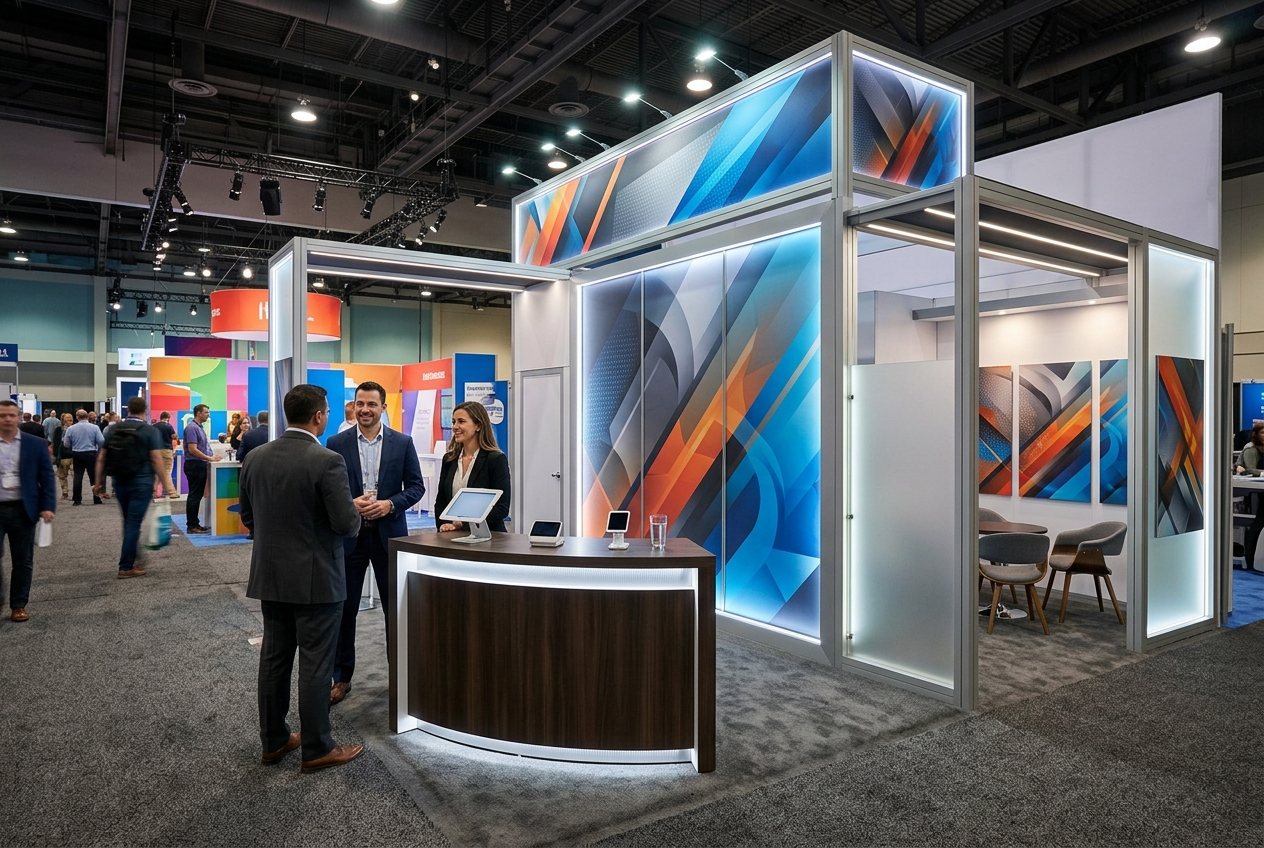
The right exhibit drives success by influencing attendee behavior and accelerating the qualification process. It encourages prospects to self-identify according to their unique pain points. Once engaged, an optimized floor plan maintains smooth traffic flow, enabling your team to host the high-value, focused discussions with prospects, whether that’s a durable rental island exhibit or a set of custom counters built for the conversation.
About Classic Exhibits
Classic Exhibits has been designing and building custom trade show booths since 1993. We’ve been honored as an Exhibitor Magazine Find-It Top 40 Exhibit Producers and an Event Marketer Fab 50 Exhibit Builders multiple times, along with numerous Portable Modular Awards. With over 250 Distributor Partners throughout North America, there’s a Classic representative near you.
Contact us today whether you need a durable 10 x 10 display built to last, a rental display guaranteed to attract trade show attendees, or a custom 30 x 40 exhibit with all the bells and whistles. Learn more about our capabilities. We’re not just different. We’re better.
FAQs
How many trade shows should a business attend each year?
Your trade show schedule will depend on your budget, marketing goals, and any appropriate trade shows. And your schedule may vary from year to year. Always evaluate your show selection each year. Too often, companies participate in trade shows simply because they’ve always gone. That’s not a strategy.
Should first-time exhibitors start with local or national trade shows?
Are your target customers local or national? While your “ideal” customer base may be national, if you are new to trade show marketing, you may want to consider starting with a local show to flex and refine your messaging. Local shows are also a great way to learn about the ABCs of trade shows without blowing your budget.
How far in advance should you register for a trade show?
At larger shows, show management will ask for a commitment about a year in advance. Yes, a year. Which can be a plus for returning exhibitors since they can select their space on the show floor. However, for most shows, six months is sufficient. As an attendee, there’s no right time to register.
Are virtual trade shows worth considering alongside in-person events?
Do your research before committing to a virtual trade show. The jury is still out on whether a virtual trade show is a viable return on your investment.
What information should you request from event organizers before committing to exhibit?
Most event organizers are happy to share their data and take the time to guide you through the basics of attending or exhibiting at their show. After all, they want you there. Always ask for references and a list of exhibitors from the previous year (or several years). Other exhibitors will tell you the pros and cons of a particular show. They may even suggest other shows to consider.