

Introduction
Are you a first-time exhibitor at the Summer Fancy Food Show in NYC? Congratulations! The SFFS is a marathon of tasting, networking, and business deals, open only to qualified members of the food trade. Think retail buyers, distributors, chefs, and the press. Expect to see over 32,000 attendees, 2500 exhibitors, and 180,000 specialty food and beverages on display.
Most new exhibitors start with a 10 ft. exhibit, which is a wise choice. For a modest investment, you can test the waters of trade show marketing. This will include setting goals, developing a strategy, creating a budget, and designing an exhibit. Frankly, it’s a lot and first time exhibitors can find it both exhilarating and overwhelming.
Our task is to make the trade show planning process more digestible (pun intended). That way you will sidestep the mistakes many first-time exhibitors make at the Summer Fancy Food Show, while maximizing your business opportunities. It all starts with a plan and assistance from an exhibit professional.
Small Booth Strategies for First-Time Fancy Food Show Exhibitors
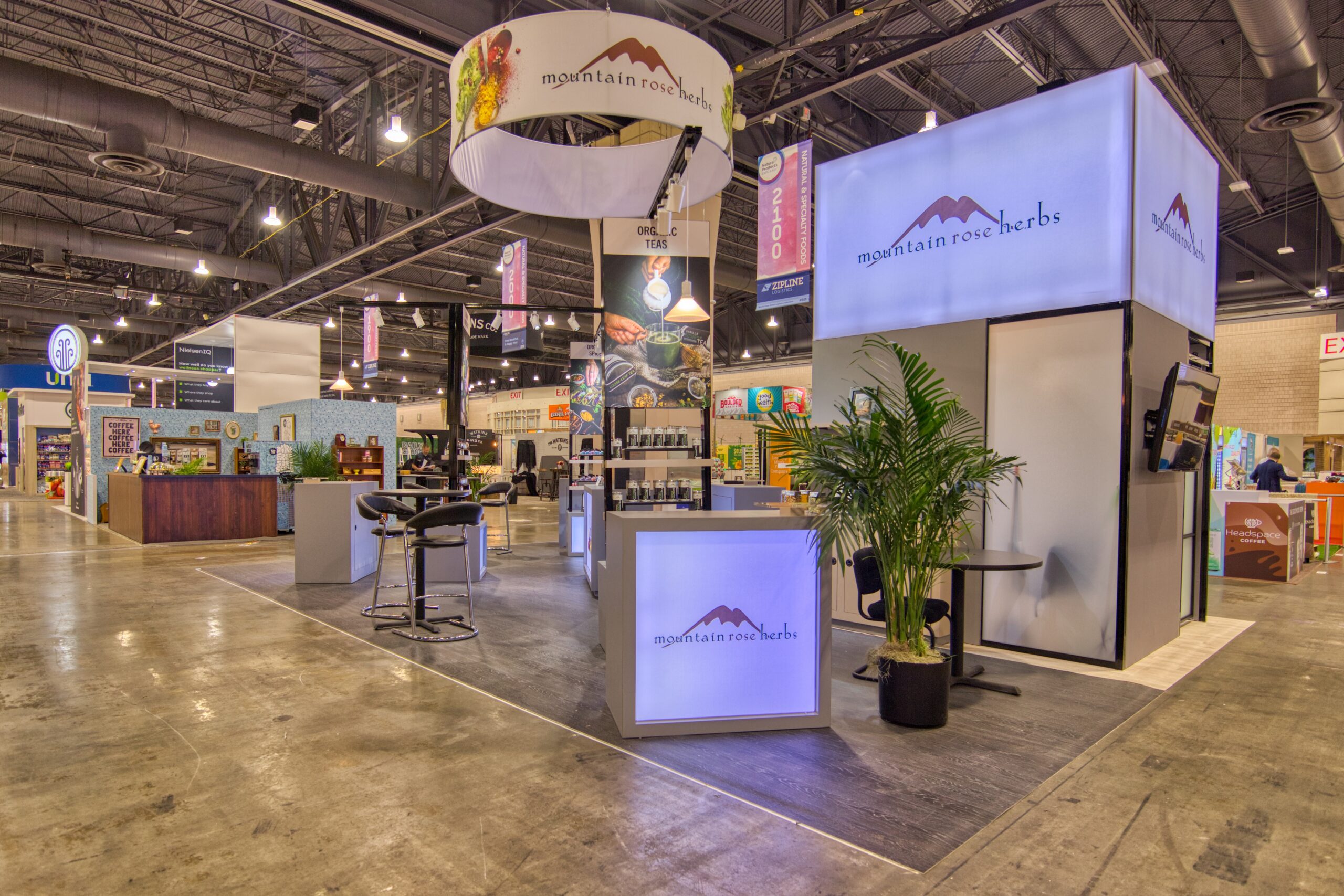
If you have attended the SFFS before, you know there are exhibits of all sizes, shapes, and budgets. The large islands and peninsulas are impressive. When done well, they’ll attract attendees and create crowds eager to sample their products and learn more about the companies. But as a first time exhibitor, you may not have the budget for an island. And that’s OK. To quote Mark Twain, “It’s not about the size of the dog in the fight, it’s the size of the fight in the dog.”
A small 10 ft. display can be just as compelling and effective as a larger exhibit. Your goal should be to attract attention before the show, which we will discuss later, create curiosity at the show, and finally, have a plan for contacting qualified leads after the show.
5 Easy Design Tips.
- Spark Conversations: With a 10×10 space, every square inch is valuable real estate. Large corporations can afford a “vibe” booth, but exhibitors in a smaller space need a “conversion” booth.
- Lighting: Small booths often rely on the facilities overhead fluorescent lights, which are notoriously flat and unflattering for food. Instead, invest in clamp-on LED arm lights for your backdrop. Warm-spectrum lighting makes food packaging pop and draws the eye toward your booth like a moth to a flame.
- Hero Products: Exhibitors often try to display their entire catalog in the booth. That creates visual clutter and chaos. Instead, pick one “Hero” product and feature it prominently in a large mockup or graphic. Showcase the rest of the line neatly on side or back shelves.
- Professional Displays: it’s tempting to use a banquet table or furniture from IKEA. These items often look flimsy or “unprofessional” next to displays designed for trade shows. It signals to a buyer you’re not quite ready for the “big time.” Instead, consider a portable or modular display with large format graphics, slatwall, shelves, and storage.
- Branding: You want to show attendees EVERYTHING about you and your products. As a result, graphics are chaotic and don’t guide the buyer to your most important messaging. Even worse, many brands put their key information where its blocked by staff and visitors in the booth.
The Summer Fancy Food Show is a high-stakes, high-reward arena where a small brand’s success depends less on the size of their budget and more on the clarity of their presentation. Success at this level isn’t about being the biggest name in the room—it’s about being the most memorable and easiest to work with for the buyers walking the aisles.(H2) What Makes the Fancy Food Show Unique
The Summer Fancy Food Show (SFFS), unlike the Natural Products Expo West or the National Restaurant Association (NRA) Show, is distinct because of its hyper-focus on the Specialty Food segment — a $219 billion industry built on high-margin, artisanal, and “story-driven” products.
Qualified Attendees
Every attendee must be a qualified business professional (retailer, distributor, or chef). For a small exhibitor, this means you are talking almost exclusively to people with the power to write a purchase order.
Launching Pad for Brands
The “Debut District” is a dedicated area for first-time exhibitors. While other shows might bury small booths in the back, the SFFS prioritizes this section because it is where major retailers go to find the “next big thing.”
International Focus
The SFFS is notably more international than regional US shows. In 2025, it featured pavilions from over 59 countries. You can source PDO-protected balsamic vinegar from Italy and viral “Dubai chocolate” in the same afternoon.
Higher ROI
Because the show is smaller, it offers a different pace. Attendees and exhibitors report that the “magic” of the show is the ability to have real, 10-minute conversations with senior buyers rather than 30-second elevator pitches in a crowded aisle.
In conclusion, while other shows focus on the sheer volume of the grocery industry or the technicalities of food science, this show is uniquely dedicated to the art and business of premium food.
Compact Booth Layouts That Maximize Space
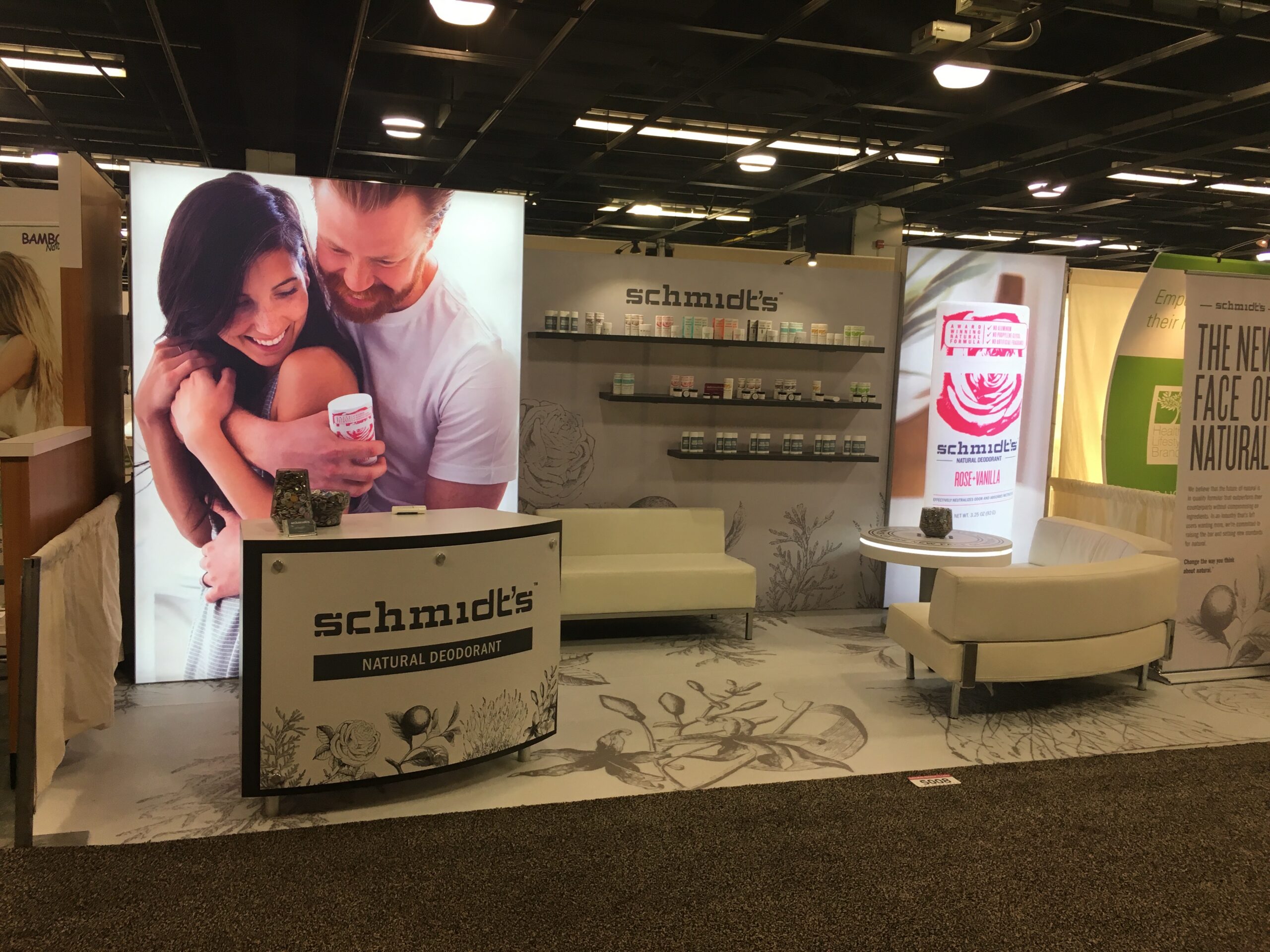
In a standard 10×10 foot space, the goal is to create a “flow” that pulls people in rather than a “wall” that keeps them out. In a specialty food environment, you need to balance branding, product display, and sampling without looking like a storage unit.
Three layout concepts designed to maximize a 10 x 10 space
- The “Open L” (Best for Engagement)
This is the most popular modern layout because it removes the “counter barrier” at the front of the booth. Place a slim counter or pedestal on one front corner. Your main graphic backdrop runs along the back wall and one side wall.
Why It Works: It creates a “funnel” where a buyer can fully enter your space. It feels like a boutique shop rather than a stall.
- The “Gallery” (Best for Premium Brands)
If you are an exhibitor with high-end packaging and limited products, this minimalist approach creates the aura of luxury. Keep the floor entirely empty except for a small, sleek “floating” counter in the center-back. Use the walls for shelving or “shadow boxes” that highlight individual hero products.
Why It Works: It forces people to focus on the product as art. It also makes the 10×10 space feel significantly larger because the floor-to-ceiling sightlines are unobstructed.
- The “In-and-Out” Station
If your product requires a “tasting” to understand it (like a sauce or snack), use a high-utility layout. Place two small, high-top “demo” pedestals at the very front corners of the booth. Place a large, high-impact storage counter against the back wall.
Why It Works: It allows two staff members to handle two different groups of people simultaneously at the “edges” of the booth, leaving the middle open for people to walk in and look at the full product line on the back wall.
Using Space for Branding and Messaging
Branding, messaging, and traffic flow are rarely issues in an island booth. In a 10 ft. or 20 ft inline, it’s more challenging. You have to balance a welcoming and open floorplan with coherent and visible messaging in a much smaller space. Start by dividing the space into functional zones.
The Top 3 Feet. Assume you’ll be busy, which means attendees in the aisle and in your booth will block the middle and lower sections of your display. So position your primary branding and messaging at the top. Then divide it into three categories based on time: 3 seconds, 30 seconds, and 3 minutes.
- 3 Seconds: Your logo and “category” (e.g. condiments) should be at the very top of your back wall.
- 30 Seconds: Your “Value Prop” (e.g., authentic Spanish sauces) should be at chest level.
- 3 Minutes: Detailed info (ingredients, pricing) should be on a handheld sell-sheet or a small digital screen.
The Middle 3 Feet: Think of this as the space where engagement happens. Whether it’s sampling or conversation.
- Open Sesame: Consider placing your sampling table along the sidewall so attendees can enter the booth. This pulls them away from the crowded aisle and opens the door for in-depth conversations
- Focal Point: Create a product wall using floating shelves or backlit graphics. Both become focal points once the client is in your booth space and can used to amplify your message.
The Back 3 Feet: This is your operations center. It needs to be functional but invisible.
- Storage: Most counters are between 36-42 inches high with either open or locking storage. In addition, the countertop can hold giveaways, business cards, and personal items.
- A/V: Many exhibitors reserve space on the backwall for a monitor. Monitors can be an effective sales and marketing tool when done well, but a distraction when the video or web connection doesn’t contribute to the messaging or sales process.
Product Sampling Setup That Stays Organized
In a 10×10 booth at the Summer Fancy Food Show, your sampling strategy needs to be an efficient “stop-and-engage” machine. You want to move people through the “tasting” phase quickly so you can get to the “business” phase.
Here are five creative sampling ideas tailored for small-footprint exhibitors:
- The “Pre-Portioned” Flight Tray: Instead of handing out individual cups one by one, prepare “flights” on a sleek wooden or acrylic tray.
- If you have three flavors (e.g., Mild, Spicy, and Ghost Pepper), place three tiny biodegradable cups on a small branded card.
- Why it works for small booths: It allows you to explain your entire product range in one interaction. It also looks premium and “Instagrammable,” which attracts more traffic.
- Space Hack: Keep the trays on a shelf behind you and bring them forward as a group approaches.
- The “Pairing” Hook: Don’t just sample your product; show the buyer how it solves a menu problem.
- If you sell a spread or a jam, don’t serve it on a generic cracker. Pair it with a high-end cheese or a specific “functional” ingredient (like a gluten-free crisp).
- Why it works for small booths: It positions you as a category expert rather than just a vendor. It also makes your sample more memorable in a sea of 180,000 products.
- The “Grab-and-Go” Cup: On the fast-paced show floor, some buyers are in a “scanning” mode and don’t want to stop for a full conversation yet.
- Use clear compostable cups with lids. Pre-fill them and place them on a tiered riser at the very front corner of your booth.
- Why it works for small booths: It prevents a “logjam” in your 100 sq. ft. space. A buyer can grab a cup, keep walking, and if they love the taste, they will circle back to talk business.
- The “Dry” Visual Sample: If your product is best used in cooking (like a simmer sauce or a spice blend), don’t just offer a wet dip.
- Have a “Visual Jar” filled with the raw, beautiful ingredients (whole peppercorns, dried hibiscus, etc.) next to your tasting samples.
- Why it works for small booths: In a small space, you need to engage the sense of smell and sight before taste. The visual jar acts as a “scent station” that pulls people in by their nose.
- The “QR Code” Napkin: Every person who takes a sample will be holding a napkin.
- Print custom napkins (or use a high-quality stamp) that features a QR code leading directly to your digital “Sell Sheet” or wholesale pricing.
- Why it works for small booths: It turns your waste into a marketing tool. If your booth is too crowded for a buyer to step in and talk, they leave with your digital contact info literally in their hand.
Planning Ahead to Avoid Common First-Time Mistakes
Trade shows, and in particular trade show marketing and exhibition, requires careful and systematic planning to be successful. Yet, there are companies that devote less time to their trade show planning than they would to a 4-year-old’s birthday party.
Any “live event” can be unpredictable and trade shows are no exception. However, what’s often described as “unpredictable” by some exhibitors, like shipping, labor, or show services, is more often the result of poor planning. Everyone and every company that provides services to exhibitors understands that communicating deadlines, pricing, timelines, and expectations makes everyone’s job easier.
With comprehensive trade show planning, businesses can maximize their chances of achieving their goals, generating new leads, building brand awareness, and securing new business opportunities.
Define Clear Goals and Objectives: Without clear goals, it’s impossible to measure the success of a trade show participation. Thorough planning helps identify specific objectives, such as generating leads, increasing brand awareness, or launching new products.
Develop a Strategic Budget: Trade shows can be costly, so creating a detailed budget is essential to avoid overspending. Planning allows for accurate budgeting for booth space, staff expenses, travel, accommodation, and marketing materials.
Design an Engaging Booth: The booth is the company’s face at the trade show, so it needs to be visually appealing, informative, and functional. Planning ensures that the booth design aligns with the brand message and effectively attracts visitors.
Prepare a Pre-Show Marketing Campaign: Trade show success often hinges on pre-show marketing efforts. Planning allows for strategic campaigns to generate interest, drive traffic to the booth, and schedule appointments with potential customers.
Train Your Staff: Trade show staff should be knowledgeable about the company’s products or services and well-prepared to engage with visitors. Planning ensures that staff is trained on sales techniques, lead capture methods, and answering common questions.
Establish Lead Capture and Follow-Up Systems: Effective lead capture is crucial for converting trade show interactions into future business opportunities. Planning involves setting up systems to capture leads digitally or on paper and establishing a follow-up process to nurture those leads.
Measure and Evaluate Results: After the trade show, it’s important to evaluate the results and identify areas for improvement. Planning facilitates the collection of relevant data, such as lead generation, booth traffic, and customer interactions, to measure the success of the event.
Know Show Rules and Food Safety Requirements
The Summer Fancy Food Show has strict rules for sampling and waste to maintain food safety at the Javits Center. Because the event is strictly for trade professionals, the rules are more rigorous than a public food festival.
- Sampling Size & Serving Rules
Exhibitors are only permitted to sample products they manufacture, process, or distribute.
Portion Sizes:
- Food: Maximum 2 oz. portion (often encouraged to be “bite-sized”).
- Non-Alcoholic Beverages: Maximum 4 oz. portion.
- Alcoholic Beverages: 2 oz. for Beer/Wine/Spirit Coolers; 0.25 oz. for Liquor/Liqueurs.
- Alcohol Requirements: All alcohol must be purchased or handled through Cultivated (the exclusive caterer). A Cultivated-certified bartender must be hired to oversee all alcohol distribution, and you must obtain a Marketing Permit from the NYS Liquor Authority.
- Protection: Samples must be protected from contamination using a transparent sneeze guard or be pre-portioned and served individually by staff (inaccessible for attendees to grab themselves).
- Utensils: You must provide single-use gloves or suitable utensils (tongs, spoons) for handling ready-to-eat food. Samples should be handed out on a napkin or in a disposable cup.
- Health & Food Safety Guidelines
- Preparation: No food prepared at home is allowed. All food must be from an approved source or cooked in a commercial facility.
- Clean-up Stations: You are strictly prohibited from using public restrooms to wash utensils or dispose of food. You must use the designated “Clean-Up Stations” located on the show floor.
- Temperature Control: Perishable foods must be kept at proper temperatures (41°F or colder, or 135°F or hotter). Stem thermometers must be available at your booth.
- Equipment: The use of LP gases (propane/butane) is prohibited. Any fry equipment must include a grease-shield and a dedicated fire extinguisher.
- Waste & Disposal Guidelines
- Garbage: Exhibitors are responsible for disposing of waste in a sanitary manner.
- Specialty Disposal: Grease bins and food scrap bins are provided specifically within the “Clean-Up Stations” around the floor. Never dump grease or solids into floor drains or sinks.
- Prohibited Materials: The use of expanded polystyrene foam (Styrofoam) is prohibited for any sampling, giveaways, or booth signage.
- Daily Maintenance: Booths must be kept clean, and waste should not be allowed to accumulate in view of the aisles.
At the close of the show, exhibitors are encouraged to donate their remaining perishable and non-perishable products to City Harvest. Volunteers will “sweep” the floor to collect these donations, which helps reduce waste and supports local hunger relief.
Final Thoughts for Food Exhibitors Attending Fancy Food
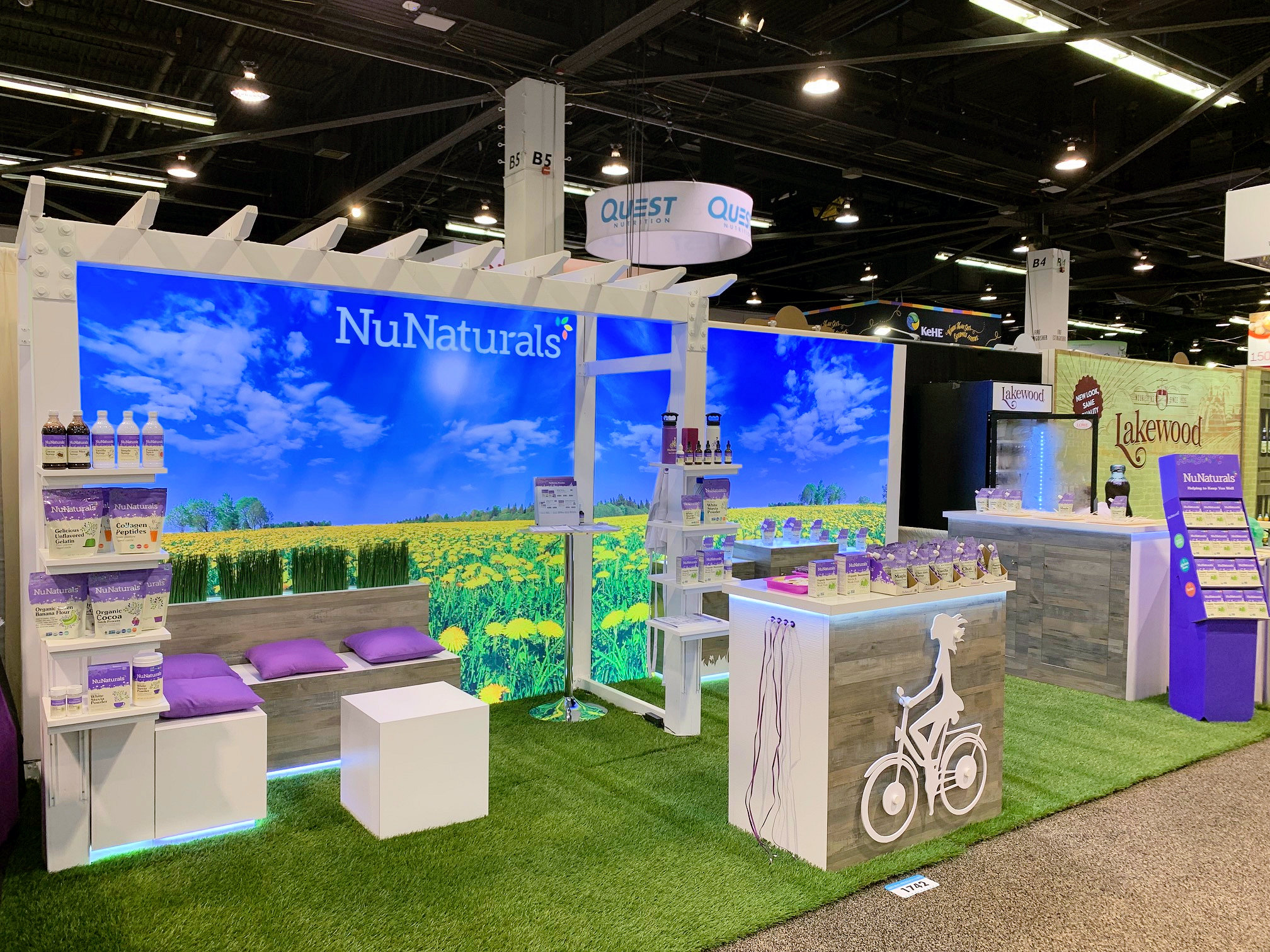
The Summer Fancy Food Show is the premier destination for discovering what will be on tomorrow’s grocery shelves. For a small exhibitor in 2026, the show is less about the size of your booth and more about the intentionality of your presence.
By mastering the balance of a high-impact, open-floor exhibit with a smart, sustainable sampling strategy, you can turn a 10×10 space into a powerhouse of brand discovery.
Classic Exhibits has been designing and building trade show exhibit solutions since 1993. We’ve been honored as an Exhibitor Magazine Find-It Top 40 Exhibit Producers and an Event Marketer Fab 50 Exhibit Builders multiple times. Along with numerous Portable Modular Awards. With over 250 Distributor Partners throughout North America, there’s a Classic representative closer by.
Contact us today whether you need a durable hand sanitizer stand built to last, a rental display guaranteed to attract trade show attendees, or a custom 30 x 40 exhibit with all the bells and whistles. We’re not just different. We’re better.