

Many companies are increasingly focused on sustainability. When it comes to exhibitions, they wonder how they can I reduce the environmental impact of their booth and their overall trade show marketing.
Exhibitors often think they need to make an either/or decision regarding sustainability. Either choose a 100-percent eco-friendly exhibit or a booth that gives Mother Nature a symbolic middle finger. Exhibitors with this mindset often fail to realize there’s a middle ground where they can make sustainable choices that align with their marketing goals and budget without going 100-percent granola. Whether you opt for 75-, 50-, or even 30-percent sustainable components, you’re still making a big impact. Here are several eco-friendly, mix-and-match ways to decrease the environmental impact of your exhibit.
Modular Designs
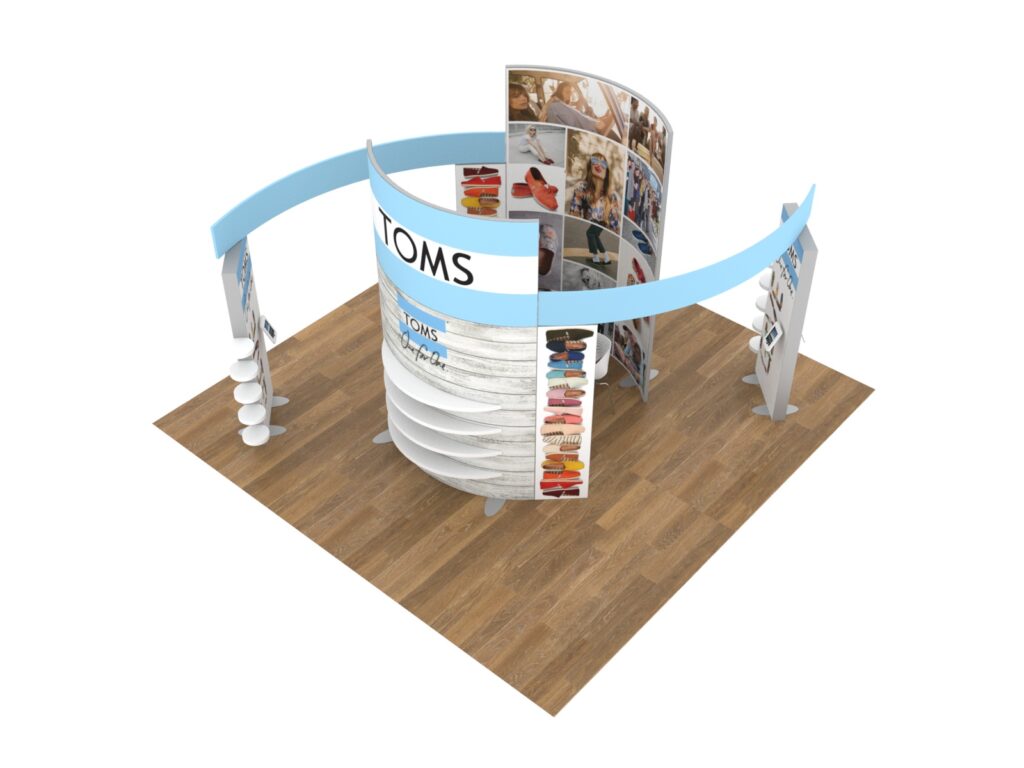
Any booth can be designed to be reconfigurable, which means you can use a single set of exhibit components to cover your needs for various shows and different footprints. Purchasing components with this in mind reduces the quantity of components that are manufactured and discarded. And while you might opt for modular components as your exhibit’s primary building block, you can use other materials such as wood or foamboard to complement the core elements.
Sustainable Building Materials
Most exhibit builders have access to sustainable building materials. And designing and building with those materials is no different than using the non-sustainable options. An eco-friendly booth will look the same, have the same build quality, and be equal in performance. The only difference might be in price — and higher costs aren’t a given.
For example, while certified Forest Stewardship Council (FSC) wood might be more expensive than noncertified options, recycled plastic, foam, and metal are similar in price or even less expensive than their non-sustainable equivalents.
Eco-Friendly Printing
Sustainable options for direct printing on recycled foamboard and corrugated paper have been around for years, but now, a wide range of recycled fabrics are also available. Most dye-sublimation printers have access to green printing materials, and a few exhibit-industry printers have switched to using only recycled fabrics. These options include backlit and nonbacklit materials, twills, and even light blockers. Prices and quality are typically comparable.
Rentals
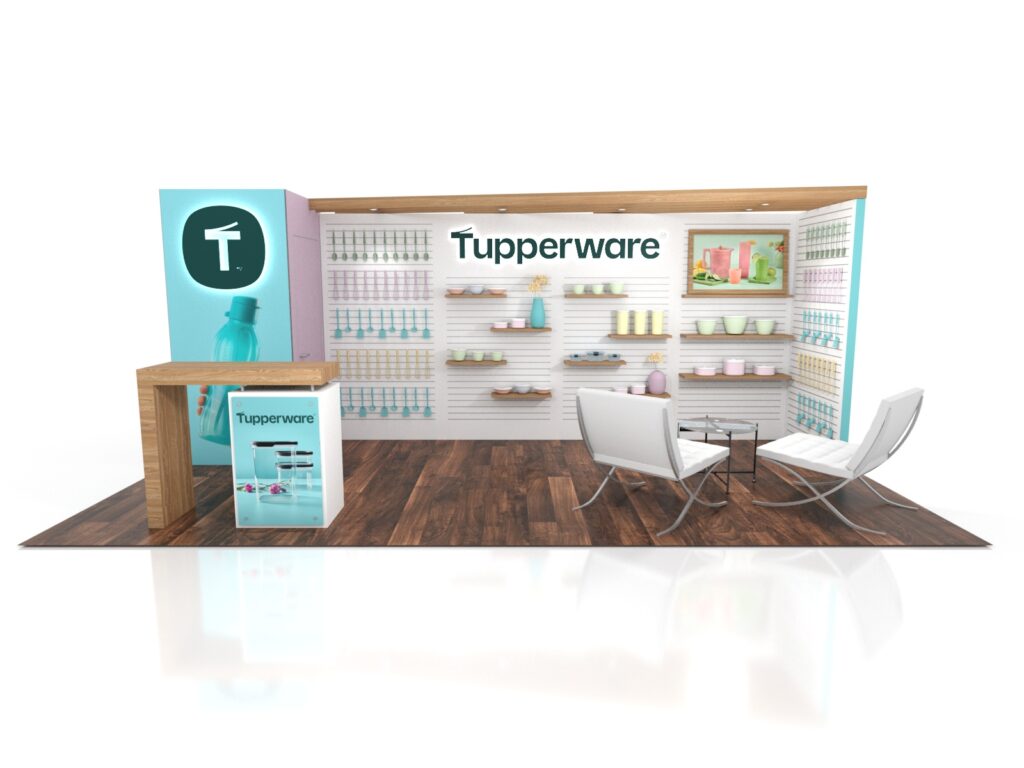
Long gone are the days of dingy, dirty, and distressed rentals from the show contractor. Most rentals are now indistinguishable from purchased booths. Rentals are ideal for exhibitors with heavy trade show schedules, dynamic marketing campaigns, or flexible booth space requirements. And rentals are typically the most sustainable exhibit option since the components are often reused for years. Your booth doesn’t need to be 100-percent rental to fly a sustainable flag. Many exhibitors blend custom exhibit components with rental properties for the best of both worlds.
Reusable Flooring
Exhibitors don’t want to abandon their flooring, but given the hassles of packing, shipping, and storing it, many walk away from it when the show is over. However, reusable flooring options, such as raised wood floors, interlocking tiles, and rented flooring, can more easily placate Mother Nature. Plus, they install quickly and easily and allow you to skip padding, which is typically tossed after the show. What’s more, several choices pack flat in boxes for convenient shipping and storage.
LED Lighting
With few exceptions, the industry has switched to LED lighting. Halogen and fluorescent lights disappeared, and no one misses them because the switch to LEDs has expanded the lighting possibilities to backlit graphics and logos and programmable RGB accent lights on counters and ceilings. It’s even gotten easier to backlight hanging signs. If you have a booth with energy-intensive lighting, it’s time to upgrade. The cost is reasonable, and the lights will almost always outlast your exhibit.
Nonprofit Donations
Exhibits have both a functional lifespan and a marketing lifespan. More often than not, the stands last much longer than the marketing strategies behind them. So, if your exhibit no longer fits your needs but still has some life left in it, consider donating it — or at least some of its components — to a charitable cause.
Smaller exhibits, particularly portable in-lines, are ideal for nonprofits, schools, and religious organizations that need displays for educational outreach, events, and fundraising activities. Free-standing elements, such as chairs, tables, and even light fixtures, could go to organizations like Goodwill.
So consider donating your display, or better yet, donate the components and chip in for new, organization-specific graphics. You’ll feel better, your company will receive a taxable donation, and the display won’t end up in a landfill.